
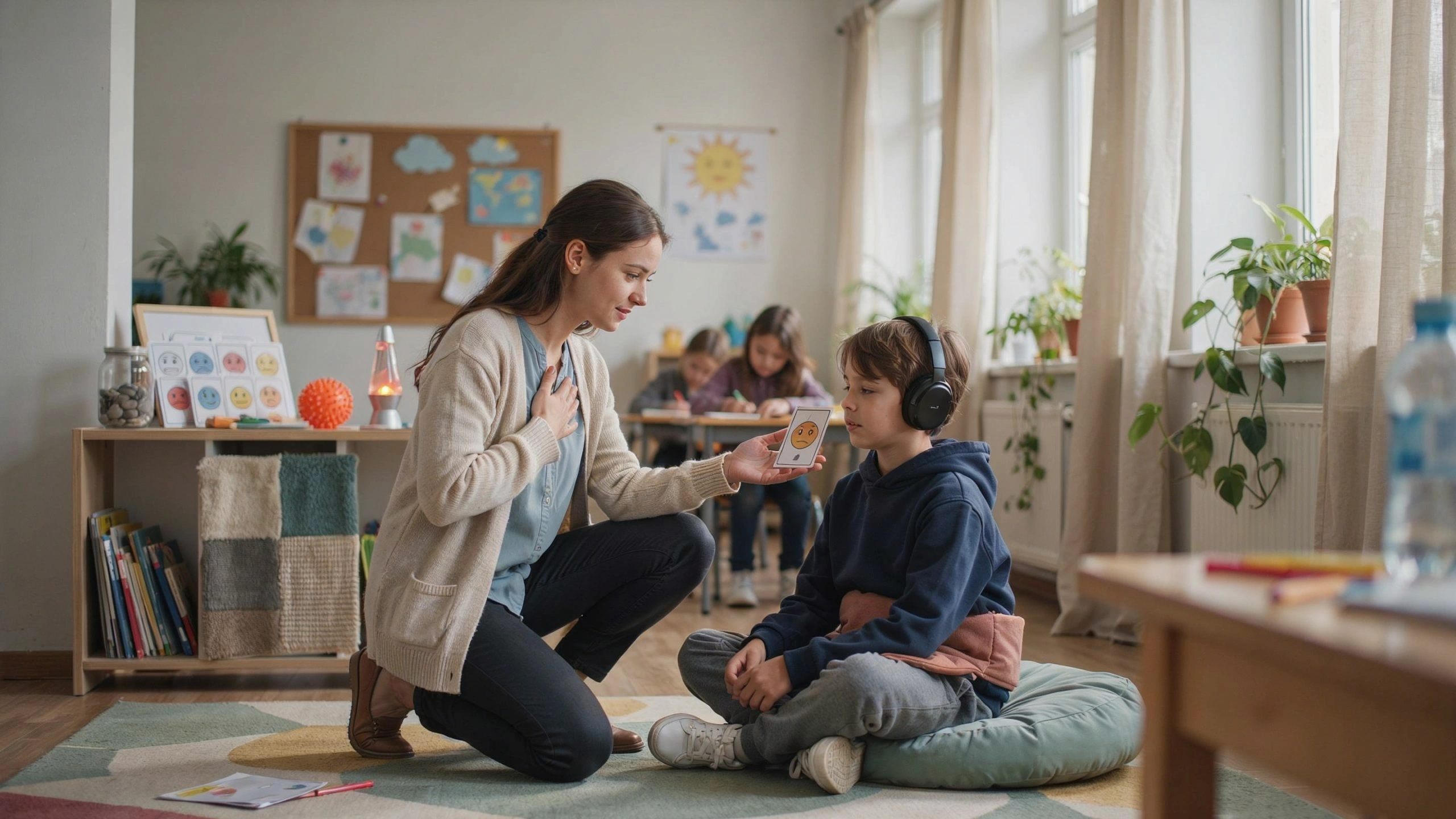
Introduction
Anxiety is a common experience among many students with Autism Spectrum Disorder (ASD). While all children may feel worried or stressed at times, autistic learners may experience anxiety more frequently or intensely due to differences in communication, sensory processing, social interaction, and adapting to change.
In the classroom, anxiety can affect a student’s ability to concentrate, participate, communicate, and engage in learning activities. Understanding the causes of anxiety and providing effective support can help educators create a safer and more inclusive learning environment.
Supporting anxious autistic students is not about removing every challenge; it is about giving them the tools, understanding, and confidence needed to manage difficult situations.
1. Understanding Anxiety in Autistic Students
Anxiety is a feeling of worry, fear, or stress that occurs when a person perceives a situation as difficult, uncertain, or threatening.
For autistic students, anxiety may be connected to:
- Unexpected changes.
- Sensory overload.
- Social situations.
- Academic pressure.
- Communication difficulties.
- Fear of making mistakes.
- Unclear expectations.
Because every autistic student is different, anxiety may appear in different ways.
2. Recognizing Signs of Anxiety in the Classroom
Students may show anxiety through:
Emotional Signs
- Worry.
- Frustration.
- Fear.
- Crying.
- Irritability.
Behavioral Signs
- Avoiding activities.
- Refusing tasks.
- Leaving the classroom.
- Repetitive movements.
- Increased need for reassurance.
Physical Signs
- Restlessness.
- Tiredness.
- Changes in breathing.
- Difficulty concentrating.
Teachers should remember that these behaviors may be expressions of stress rather than intentional difficulties.
3. Identifying Common Anxiety Triggers
Understanding triggers helps teachers provide effective support.
Common triggers include:
Unexpected Changes
Examples:
- A different teacher.
- A change in schedule.
- A cancelled activity.
Sensory Overload
Examples:
- Loud noises.
- Crowded classrooms.
- Bright lights.
Academic Challenges
Examples:
- Difficult assignments.
- Time pressure.
- Fear of failure.
Social Situations
Examples:
- Group discussions.
- Making presentations.
- Interacting with peers.
4. Creating a Predictable Classroom Environment
Predictability can reduce anxiety.
Teachers can support students by providing:
Visual Schedules
A visual schedule helps students know:
- What activities are coming.
- When changes will happen.
- What is expected.
Example:
📖 Reading
↓
➕ Mathematics
↓
🍎 Break
↓
🎨 Art
Clear Classroom Routines
Consistent routines help students feel secure.
Examples:
- Starting lessons the same way.
- Having predictable transitions.
- Explaining classroom expectations.
5. Preparing Students for Changes
Changes are unavoidable, but preparation makes them easier.
Teachers can:
- Give advance warnings.
- Explain what will happen.
- Use visual reminders.
- Practice possible changes.
Example:
“Tomorrow, we will have a substitute teacher. The classroom routine will stay the same.”
This reduces uncertainty.
6. Creating a Calm and Supportive Environment
A calm classroom helps students regulate emotions.
Teachers can:
- Reduce unnecessary noise.
- Provide quiet spaces.
- Organize materials clearly.
- Allow short breaks when needed.
A calm environment benefits all learners.
7. Teaching Emotional Regulation Skills
Students can learn strategies to manage anxiety.
Useful skills include:
Recognizing Feelings
Students learn to identify:
😊 Calm
😟 Worried
😡 Frustrated
😢 Sad
Breathing Techniques
Examples:
- Slow breathing.
- Counting breaths.
- Relaxation exercises.
Using Coping Strategies
Students can learn to:
- Ask for help.
- Request a break.
- Use calming tools.
- Talk about feelings.
8. Using Visual Supports for Anxiety Management
Visual tools help students understand emotions and coping strategies.
Examples:
Emotion Charts
Students identify their current emotional state.
Coping Cards
Cards can show:
“When I feel stressed, I can:”
✅ Take deep breaths
✅ Ask for help
✅ Go to the calm area
✅ Use my sensory tool
Social Stories
Social stories explain situations that may cause anxiety.
Examples:
- Going on a school trip.
- Taking a test.
- Meeting new people.
9. Supporting Communication About Anxiety
Some autistic students may struggle to explain when they feel anxious.
Teachers can encourage communication through:
- Emotion cards.
- Communication devices.
- Visual scales.
- Simple questions.
Example:
“Show me how you feel from 1 to 5.”
This helps students communicate their needs before anxiety becomes overwhelming.
10. Adjusting Academic Expectations When Needed
Teachers can reduce anxiety by adapting learning tasks.
Strategies include:
- Breaking assignments into smaller steps.
- Providing extra processing time.
- Offering different ways to show understanding.
- Giving clear instructions.
The goal is to maintain learning goals while reducing unnecessary stress.
11. Encouraging Positive Relationships
A strong relationship with teachers can reduce anxiety.
Teachers can build trust by:
- Listening to students.
- Showing patience.
- Respecting communication differences.
- Recognizing strengths.
- Celebrating progress.
Students who feel understood are more likely to seek support.
12. Supporting Social Anxiety
Social situations may create stress for some autistic learners.
Teachers can help by:
- Teaching social skills explicitly.
- Providing structured group activities.
- Allowing gradual participation.
- Creating supportive peer partnerships.
Students should be encouraged, not forced, into social situations.
13. Working with Families and Specialists
Families can provide important information about:
- Anxiety triggers.
- Effective calming strategies.
- Communication methods.
- Student preferences.
Specialists such as counselors or therapists can also provide additional support.
A collaborative approach creates consistent strategies.
14. Preventing Anxiety Escalation
Early support is often more effective than responding after anxiety becomes severe.
Teachers can watch for early signs:
- Increased movement.
- Withdrawal.
- Repeated questions.
- Difficulty focusing.
Early intervention may include:
- Offering a break.
- Providing reassurance.
- Adjusting the environment.
15. Building Long-Term Coping Skills
The goal is not only to reduce anxiety at school but to help students develop lifelong skills.
Students can learn to:
- Understand their emotions.
- Identify triggers.
- Choose coping strategies.
- Advocate for their needs.
These skills support independence and confidence.
Conclusion
Anxiety can create significant challenges for autistic learners, but supportive classroom practices can make a meaningful difference. Through predictable routines, emotional regulation strategies, visual supports, communication tools, and positive relationships, educators can help students feel safer and more confident.
A classroom that understands anxiety does more than reduce stress; it creates an environment where autistic students can participate, learn, and achieve their full potential.