In today’s fast-paced world, children experience many distractions and daily pressures. Schoolwork, busy schedules, extracurricular activities, and constant stimulation can sometimes leave them feeling overwhelmed or anxious. Teaching mindfulness offers children a simple yet powerful way to slow down, manage their emotions, and improve their focus.
Mindfulness is the practice of paying attention to the present moment with curiosity and without judgment. Through fun and age-appropriate activities, children can learn to calm their minds, regulate their emotions, and build healthy habits that support lifelong well-being.
Why Mindfulness Matters for Children
Mindfulness benefits children’s emotional, mental, and physical development. Regular practice can help them:
- Improve concentration.
- Reduce stress and anxiety.
- Develop emotional awareness.
- Strengthen self-control.
- Build resilience.
- Improve relationships with family and friends.
These skills support both academic success and overall happiness.
Start with Simple Breathing Exercises
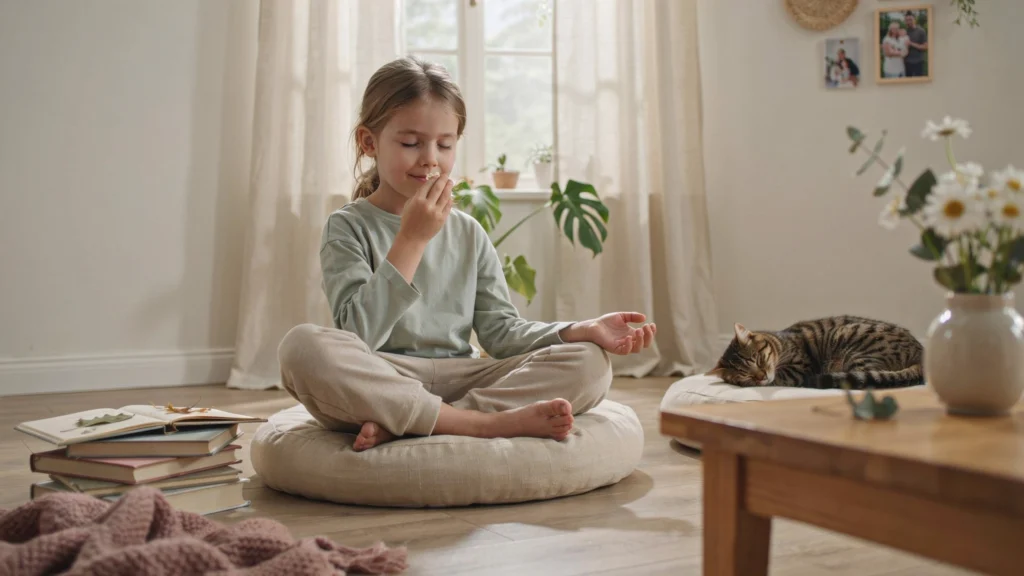
Breathing is one of the easiest mindfulness techniques for children to learn.
Try this activity:
Ask your child to imagine they are slowly smelling a flower through their nose and then gently blowing out a birthday candle through their mouth.
Repeat this five to ten times while encouraging slow, deep breaths.
This simple exercise helps calm the nervous system and improve focus within just a few minutes.
Practice the Five Senses Activity
Encourage children to notice the world around them by using all five senses.
Ask them to identify:
- Five things they can see.
- Four things they can touch.
- Three things they can hear.
- Two things they can smell.
- One thing they can taste.
This activity helps children become more present and reduces feelings of worry or distraction.
Take Mindful Nature Walks
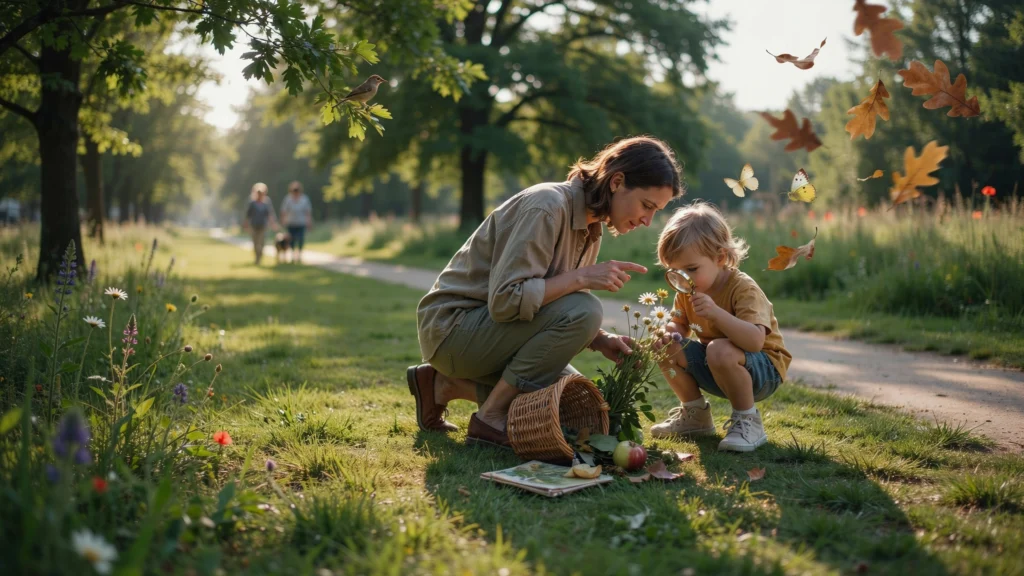
Nature provides the perfect environment for practicing mindfulness.
During a walk, invite your child to observe:
- Birds singing.
- Leaves moving in the wind.
- Different flower colors.
- The feeling of the sun or breeze.
- The sound of footsteps.
Encourage quiet observation without rushing. Nature helps children slow down and appreciate the present moment.
Introduce Gratitude Moments
Practicing gratitude helps children focus on positive experiences.
Each evening, ask your child to share:
- Three things they are thankful for.
- One kind act they experienced.
- One thing that made them smile.
This habit encourages optimism and emotional well-being.
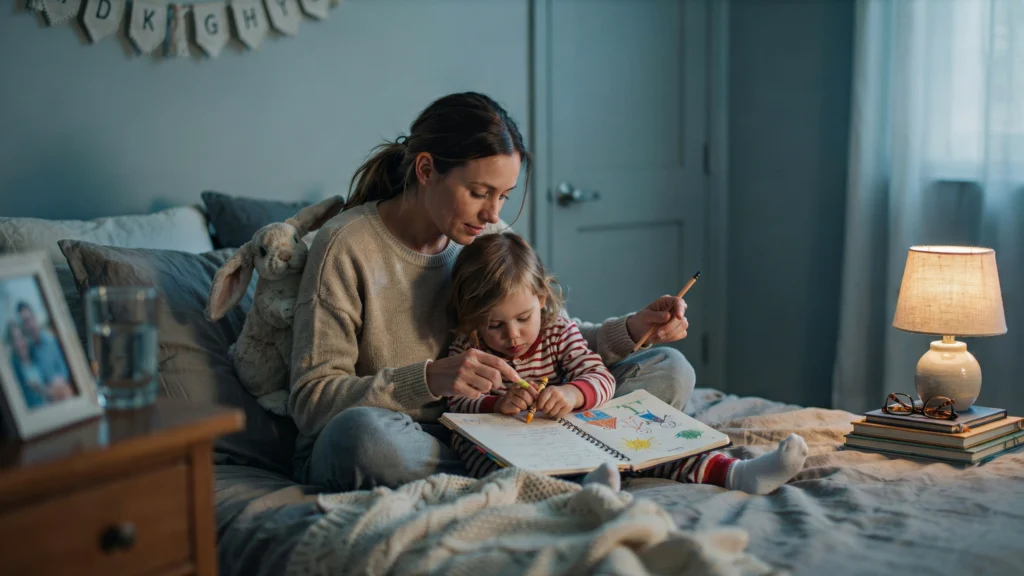
Use Mindful Coloring
Coloring detailed pictures or simple patterns allows children to focus their attention while relaxing.
Encourage them to:
- Color slowly.
- Notice different colors.
- Pay attention to each movement.
- Enjoy the creative process rather than rushing to finish.
Mindful coloring combines creativity with relaxation.
Try Gentle Stretching and Movement
Mindfulness doesn’t always require sitting still.
Simple movements such as:
- Stretching.
- Yoga poses.
- Slow balancing exercises.
- Gentle dancing.
- Controlled movements.
help children become more aware of their bodies while improving coordination and reducing tension.
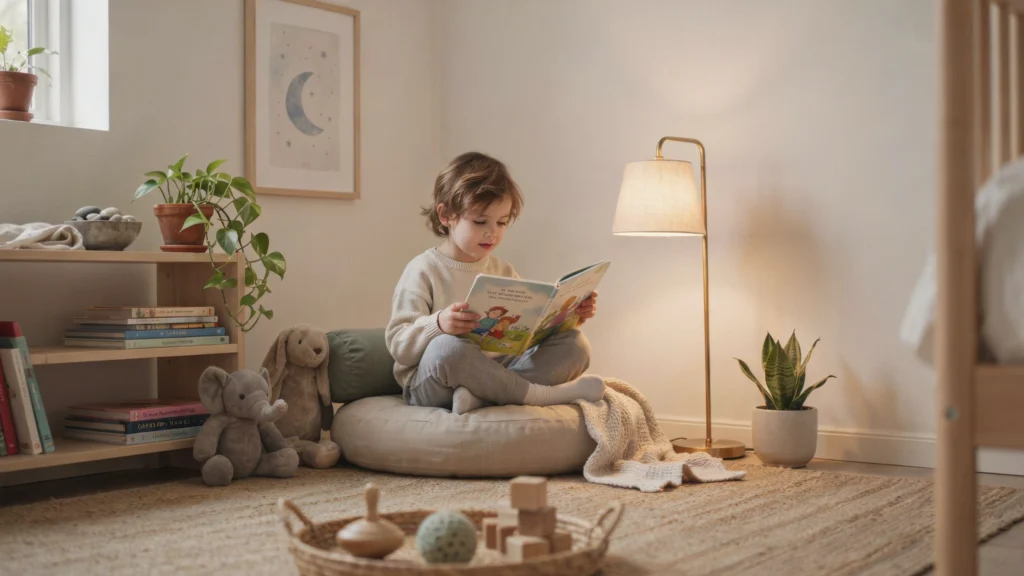
Create a Calm Corner
Designate a quiet space in your home where children can relax when they feel overwhelmed.
Include comforting items such as:
- Soft cushions.
- Favorite books.
- Stuffed animals.
- Calm artwork.
- Quiet sensory toys.
The calm corner becomes a safe place to pause, breathe, and regain emotional balance.
Encourage Mindful Listening
Choose a natural sound, a piece of gentle music, or the ringing of a small bell.
Ask your child to listen carefully until the sound completely disappears.
This activity strengthens attention and teaches children to focus on one thing at a time.
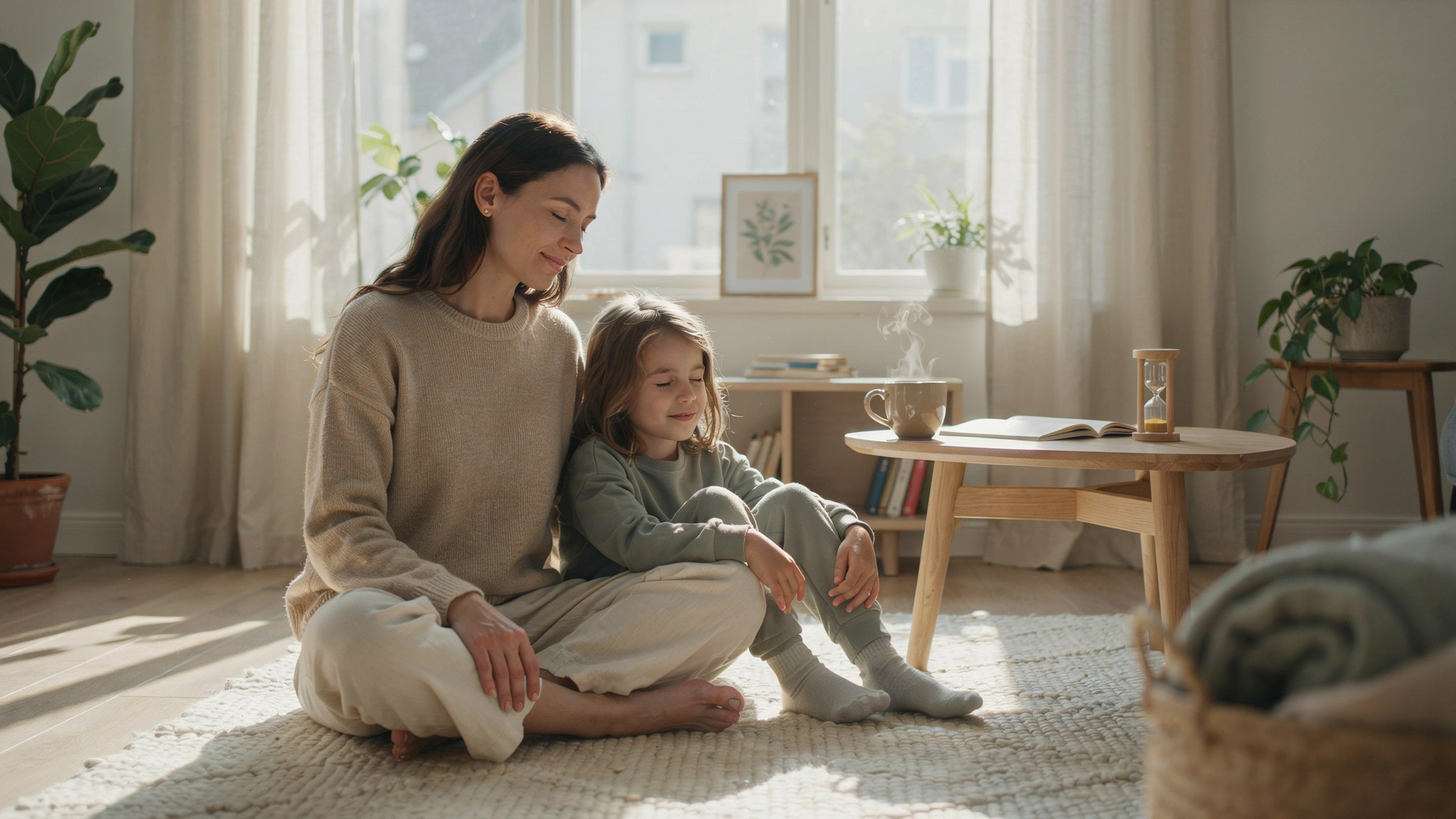
Be Mindful Together
Children learn mindfulness best by watching adults.
Practice together by:
- Taking slow breaths.
- Eating meals without distractions.
- Enjoying quiet moments outdoors.
- Talking calmly about emotions.
- Showing patience during difficult situations.
Your example teaches children that mindfulness is a healthy lifelong habit.
Small Moments, Lasting Benefits
Mindfulness doesn’t require long sessions or special equipment. Just a few minutes each day can help children become calmer, more focused, and better able to manage their emotions.
By incorporating simple mindfulness activities into everyday routines, parents give children valuable tools for handling stress, improving concentration, and building emotional resilience. These skills will support them throughout childhood and continue benefiting them as they grow into confident, compassionate, and balanced adults.
Sometimes, the most meaningful learning begins with something as simple as taking a slow, deep breath and fully appreciating the present moment.