Music is much more than entertainment. From singing lullabies to clapping along with a favorite song, musical experiences play an important role in a child’s growth and development. Long before children learn to read or write, they respond to rhythm, melody, and sound.
Music education helps children build cognitive, emotional, social, and physical skills while making learning enjoyable. Whether through singing, dancing, playing simple instruments, or listening to different styles of music, every musical experience supports a child’s overall development.
Why Music Matters in Early Childhood
Young children naturally enjoy music. They move to rhythms, imitate sounds, and remember songs with surprising ease.
Participating in musical activities helps children:
- Strengthen memory and concentration.
- Improve listening skills.
- Develop language and communication.
- Build coordination and motor skills.
- Express emotions in healthy ways.
- Increase confidence and creativity.
Music engages multiple areas of the brain at the same time, making it a powerful learning tool.
Music Supports Language Development
Songs introduce children to new vocabulary, sentence patterns, and pronunciation.
Nursery rhymes and action songs help children:
- Recognize rhyming words.
- Improve speech clarity.
- Expand vocabulary.
- Strengthen listening comprehension.
- Develop early reading readiness.
Repeating lyrics also improves memory and verbal fluency.
Rhythm Improves Math Skills
Music and mathematics share many similarities.
When children clap beats, count rhythms, or recognize repeating musical patterns, they practice important mathematical concepts such as:
- Counting.
- Sequencing.
- Patterns.
- Fractions.
- Timing.
These playful activities build a strong foundation for later mathematical learning.
Playing Instruments Builds Coordination
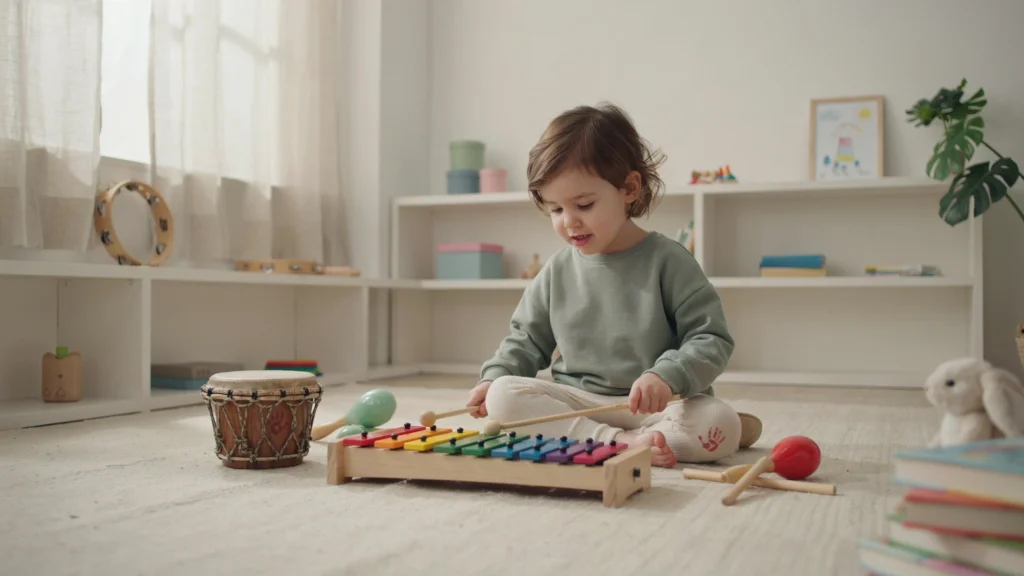
Simple instruments like tambourines, maracas, drums, recorders, or xylophones encourage children to coordinate their hands, eyes, and ears.
Playing music helps improve:
- Fine motor skills.
- Hand-eye coordination.
- Finger strength.
- Bilateral coordination.
- Timing and precision.
These physical skills also support writing, drawing, and other classroom activities.
Music Encourages Emotional Expression
Children often experience emotions they cannot yet describe with words.
Music provides a safe outlet for expressing feelings through singing, dancing, or creating rhythms.
Listening to different types of music can also help children:
- Relax after a busy day.
- Feel energized.
- Manage frustration.
- Build emotional awareness.
- Develop empathy by connecting with different moods and cultures.
Music becomes a valuable tool for emotional well-being.
Singing Together Strengthens Family Bonds
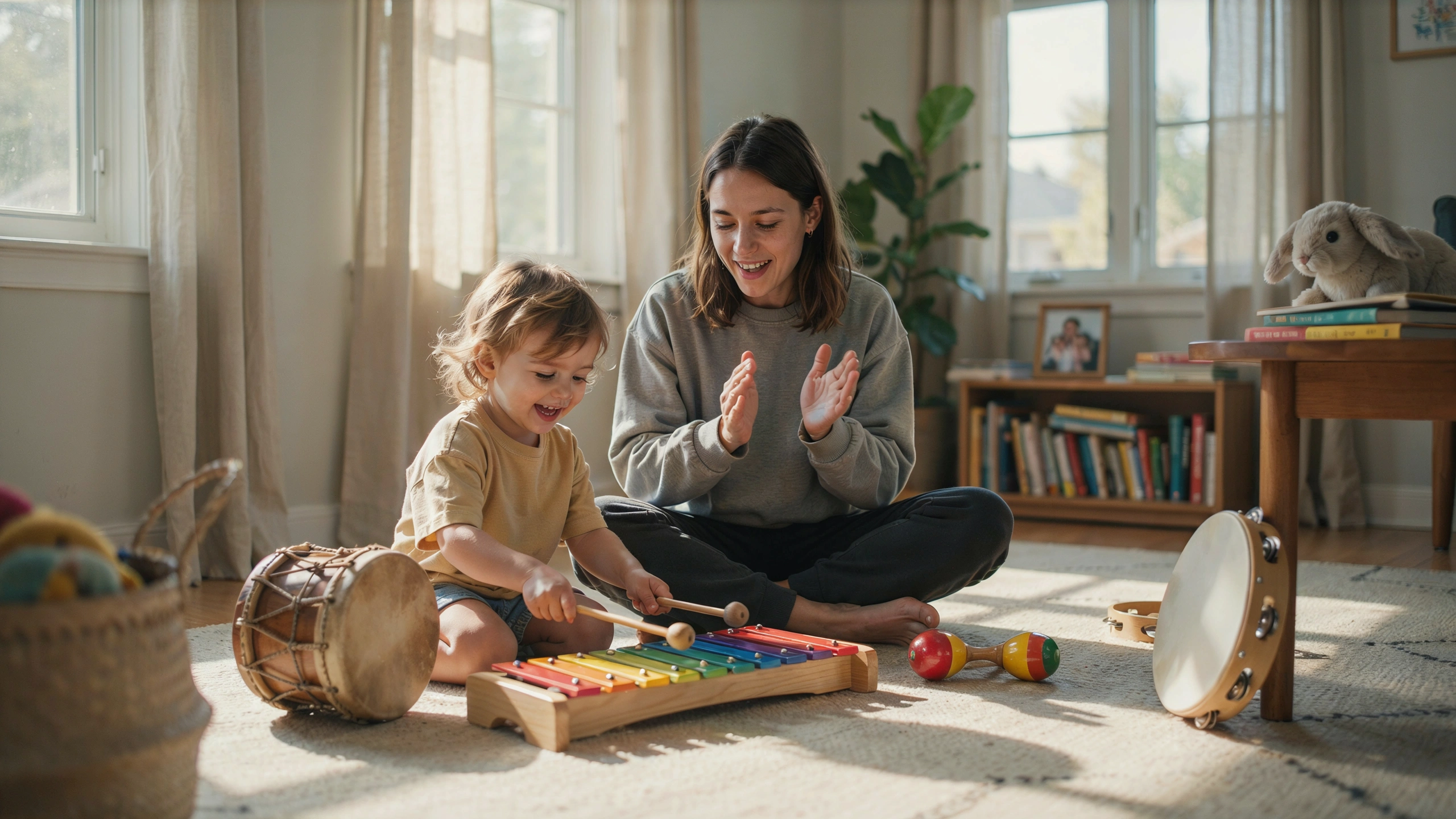
Family music time creates joyful memories while strengthening relationships.
Parents and children can:
- Sing favorite songs together.
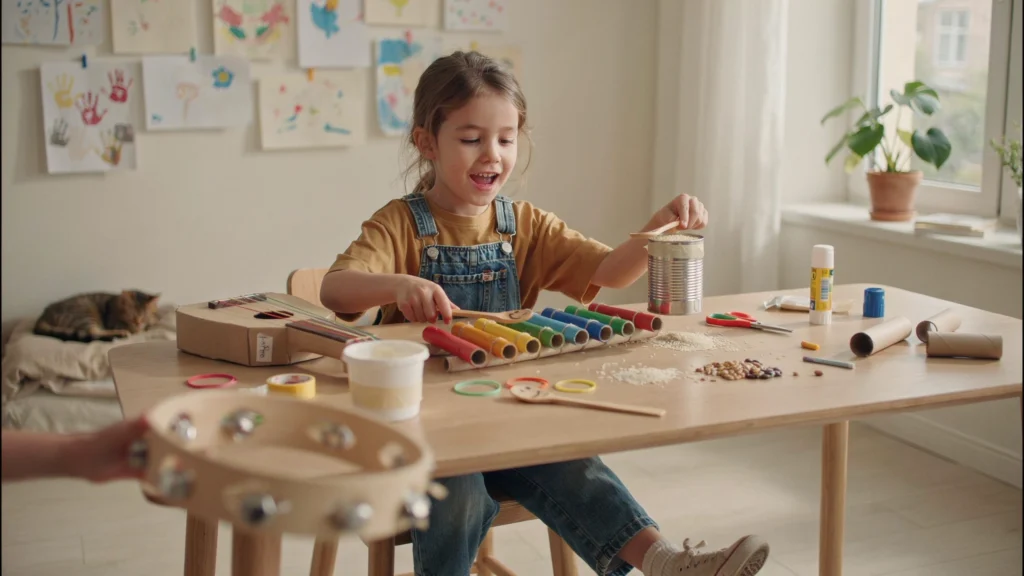
- Create homemade instruments.
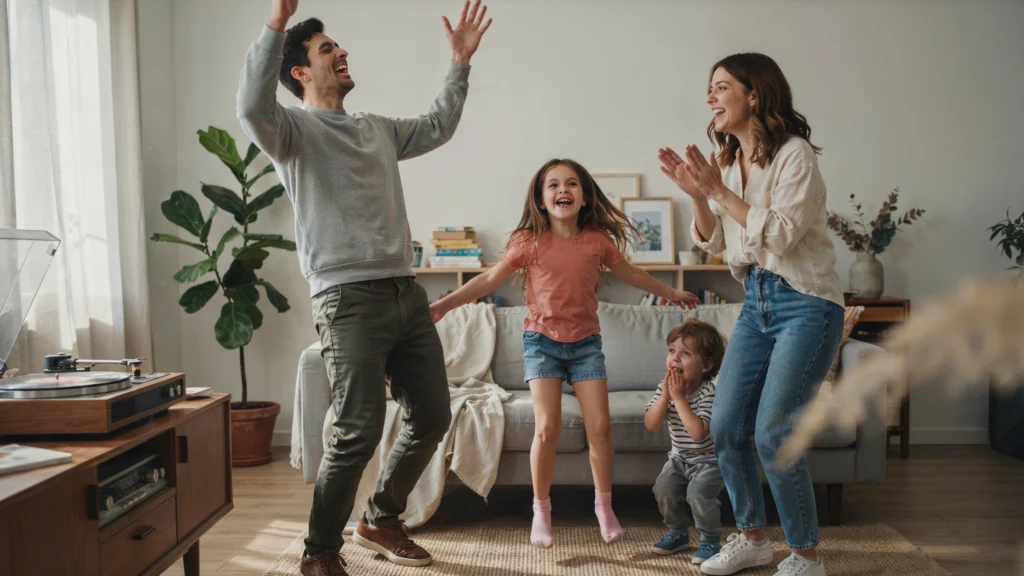
- Dance around the living room.
- Make up silly songs.
- Listen to music from different cultures.
These shared experiences encourage communication, laughter, and connection.
Music Inspires Creativity
There is no single “correct” way to enjoy music.
Children can:
- Invent their own songs.
- Create rhythms using household objects.
- Dance freely.
- Write simple lyrics.
- Imagine stories inspired by music.
Creative musical activities encourage imagination and independent thinking.
Music Builds Social Skills
Group musical activities teach children how to cooperate and work with others.
They learn to:
- Listen carefully.
- Take turns.
- Follow directions.
- Perform as part of a group.
- Respect different ideas and talents.
These social skills support friendships and classroom success.
Bringing Music into Everyday Life
Parents don’t need formal music lessons to make music part of daily routines.
Simple ideas include:
- Singing while getting dressed.
- Playing calming music before bedtime.
- Listening to different musical styles.
- Clapping rhythm games.
- Dancing during breaks.
- Exploring sounds during nature walks.
Even a few minutes of music each day can make learning more enjoyable.
Choosing the Right Musical Experiences
Expose children to a variety of musical styles, including:
- Classical music.
- Folk songs.
- Jazz.
- World music.
- Children’s songs.
- Instrumental music.
Hearing different rhythms, instruments, and cultures broadens their understanding of the world while encouraging open-mindedness.
A Lifelong Gift
Music is one of the few activities that combines learning, creativity, movement, and emotional expression all at once. It teaches children to listen, communicate, collaborate, and imagine while strengthening important academic and life skills.
By making music a regular part of everyday life, parents help children develop confidence, curiosity, and a lifelong appreciation for learning and creativity. Whether through a simple song, a homemade drum, or a family dance party, every musical moment becomes an opportunity to grow.
The greatest melodies often create the strongest memories—and the lessons learned through music can last a lifetime.