Science is all around us. From watching rain fall to seeing plants grow, children encounter fascinating scientific wonders every day. The best part is that learning science doesn’t require a laboratory or expensive equipment. Simple experiments at home can turn ordinary moments into exciting opportunities for discovery.
Hands-on activities encourage children to ask questions, make predictions, observe results, and think like young scientists. More importantly, they show that learning can be fun, interactive, and full of surprises.
Why Hands-On Science Matters
Children learn best by doing. When they can touch, mix, build, and observe, they gain a deeper understanding of how the world works.
Simple science activities help children:
- Develop critical thinking skills.
- Improve observation and attention to detail.
- Strengthen problem-solving abilities.
- Build confidence through experimentation.
- Encourage creativity and curiosity.
Each experiment teaches that asking questions and testing ideas are essential parts of learning.
The Magic of Baking Soda and Vinegar
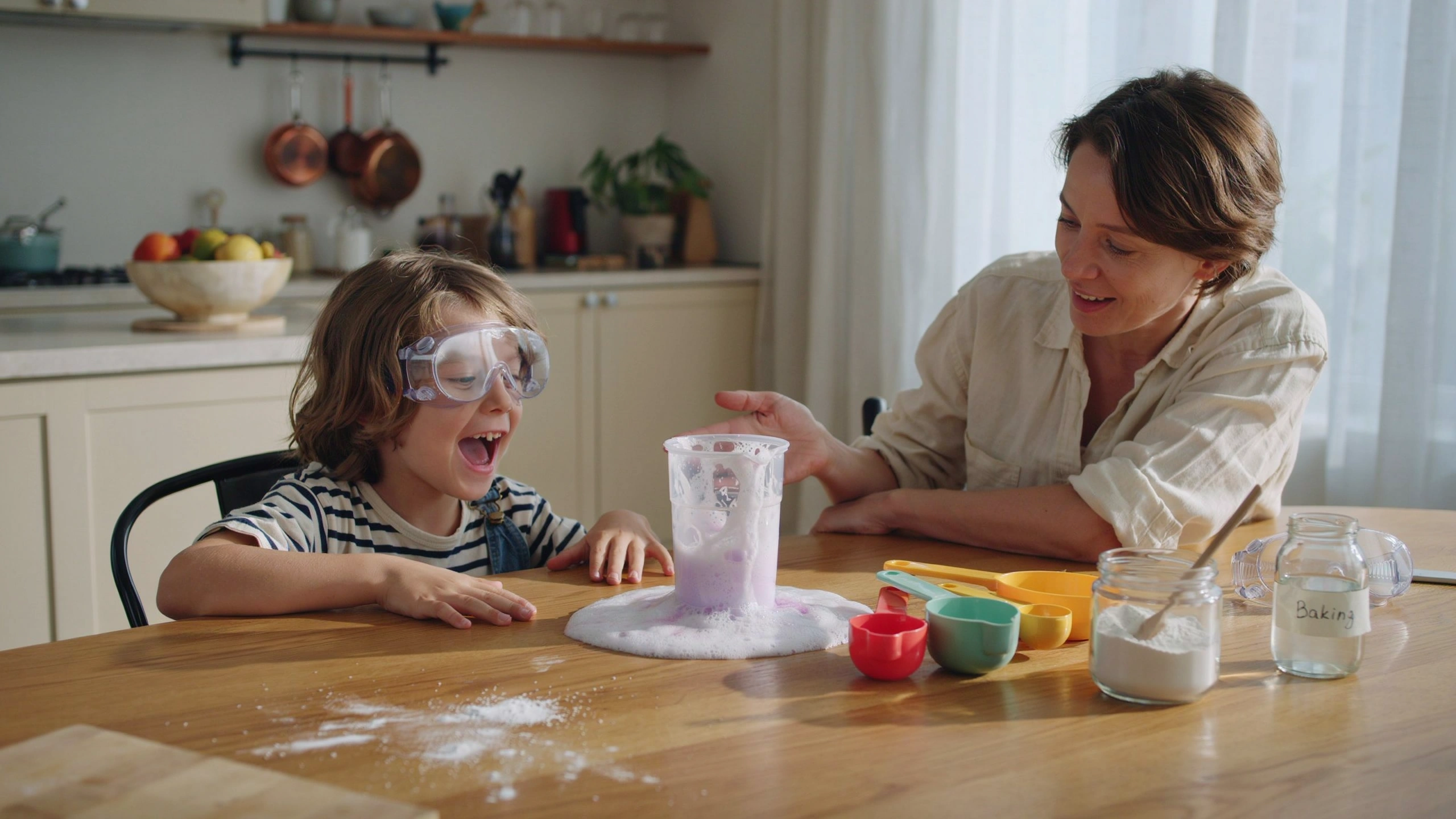
One of the most popular science activities is creating a fizzy reaction with baking soda and vinegar.
Children can:
- Predict what will happen.
- Observe bubbles forming.
- Discuss why the reaction occurs.
- Experiment with different amounts of each ingredient.
This activity introduces the concept of chemical reactions in a safe and exciting way.
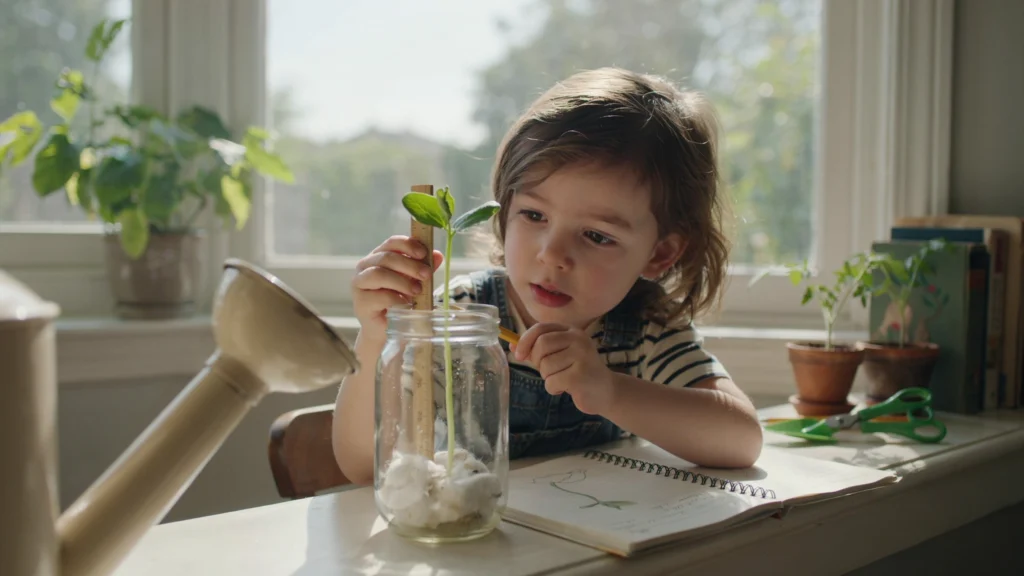
Growing a Bean Plant
Watching a seed transform into a plant teaches patience and observation.
Materials needed:
- A bean seed.
- A clear plastic cup or jar.
- Cotton balls or paper towels.
- Water.
Children can record daily changes, measure growth, and draw pictures of the plant as it develops. This experiment introduces the life cycle of plants and the importance of sunlight and water.
Exploring Floating and Sinking
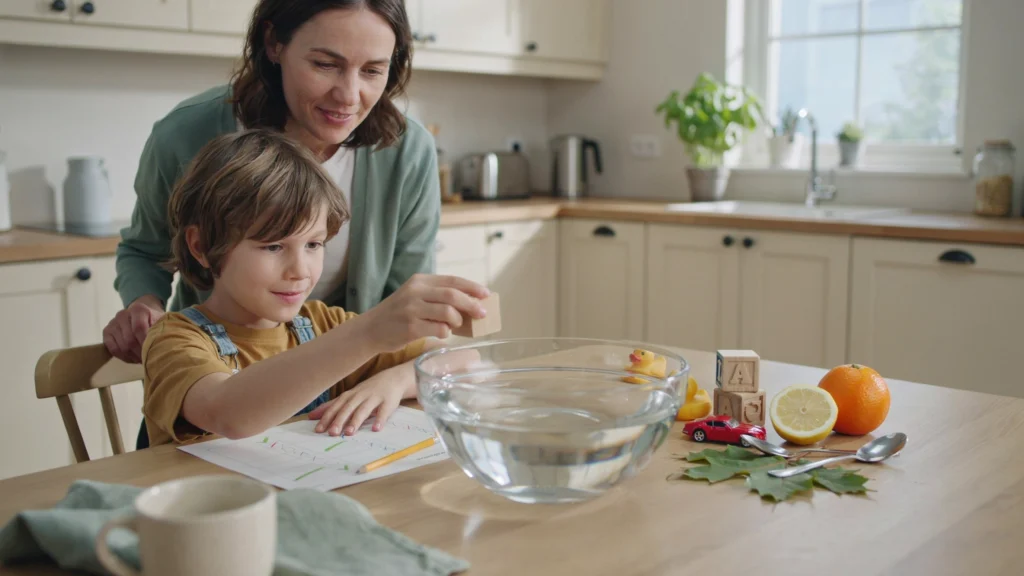
Fill a large bowl with water and gather a variety of household objects.
Ask your child:
- Which objects will float?
- Which ones will sink?
- Why do you think that happens?
After testing each item, discuss the results and compare predictions with observations.
This activity introduces basic concepts of density and buoyancy.
Make a Homemade Rainbow
Using a glass of water, a flashlight, or even a prism, children can observe how light separates into different colors.
Talk about:
- Where rainbows appear in nature.
- How sunlight interacts with water droplets.
- Why we see different colors.
This simple activity introduces children to the science of light.
Create a Weather Journal
Encourage children to become young meteorologists by recording the weather each day.
They can observe:
- Temperature.
- Cloud shapes.
- Wind.
- Rainfall.
- Sunrise and sunset times.
Over several weeks, they may begin noticing weather patterns and seasonal changes.
Discover Static Electricity
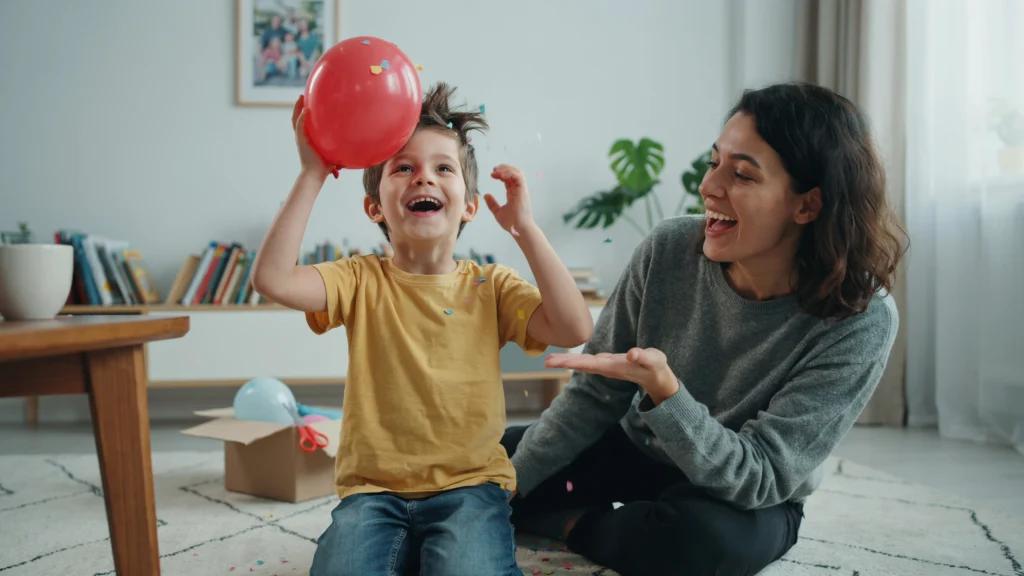
Rub an inflated balloon on your child’s hair and watch what happens.
Try using the balloon to:
- Pick up small pieces of paper.
- Stick to a wall.
- Move a stream of water slightly.
Children quickly discover that invisible forces can produce surprising effects.
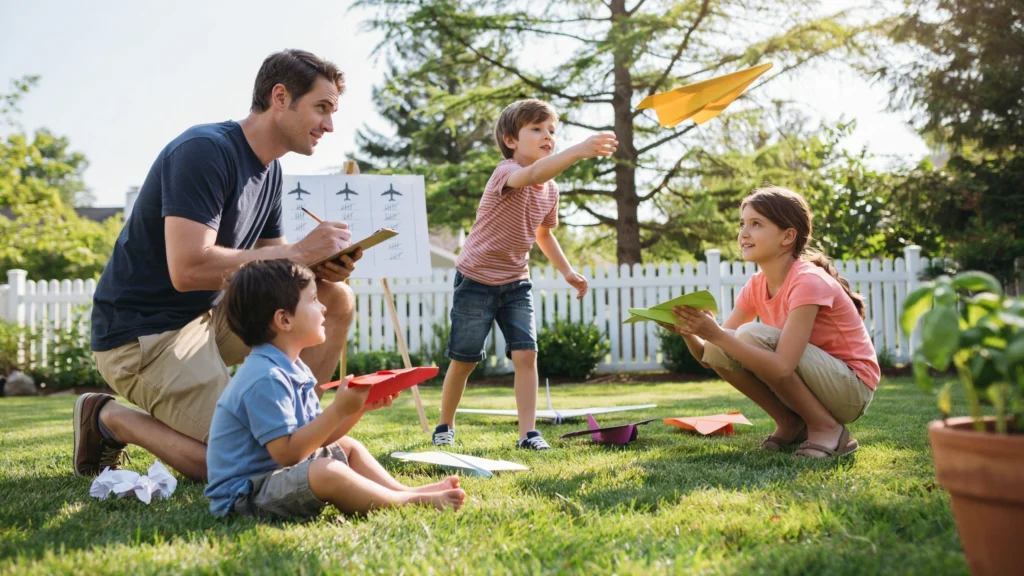
Build a Paper Airplane Challenge
Paper airplanes provide an excellent opportunity to explore engineering and physics.
Encourage children to design several airplanes with different wing shapes.
Discuss questions such as:
- Which airplane flies the farthest?
- Which one stays in the air the longest?
- How does changing the wings affect flight?
This activity combines creativity with scientific thinking.
Encourage Scientific Thinking
During every experiment, ask questions that help children think like scientists:
- What do you think will happen?
- Why do you think that happened?
- What surprised you?
- What would you change next time?
- How could we test a different idea?
There are no wrong questions in science—only opportunities to learn.
Safety First
Even simple experiments should be supervised by an adult.
Remember to:
- Use child-safe materials.
- Wash hands after activities.
- Wear protective clothing if needed.
- Avoid tasting unknown substances.
- Keep small objects away from very young children.
A safe environment allows children to explore with confidence.
Building a Lifelong Love of Science
Science isn’t about memorizing facts—it’s about discovering how the world works. Every experiment teaches children to observe carefully, ask thoughtful questions, and learn from their results.
By making science a regular part of everyday life, parents can nurture curiosity, creativity, and confidence. These experiences help children develop a love of discovery that extends far beyond the classroom.
Sometimes, the biggest scientific adventures begin with the simplest experiment on the kitchen table.