
Introduction
The rapid growth of digital technology and the global experience of remote education have permanently changed the way schools and universities approach teaching. While online learning offers flexibility and accessibility, traditional face-to-face instruction provides valuable opportunities for social interaction, hands-on activities, and direct teacher support.
As a result, many educational institutions are adopting hybrid learning, an approach that combines the strengths of online and in-person education. Rather than viewing digital and classroom learning as competing models, hybrid learning integrates both to create a more flexible, personalized, and engaging educational experience.
Today, hybrid learning is emerging as one of the most important trends in modern education, preparing students for a world where digital and physical environments increasingly work together.
What Is Hybrid Learning?
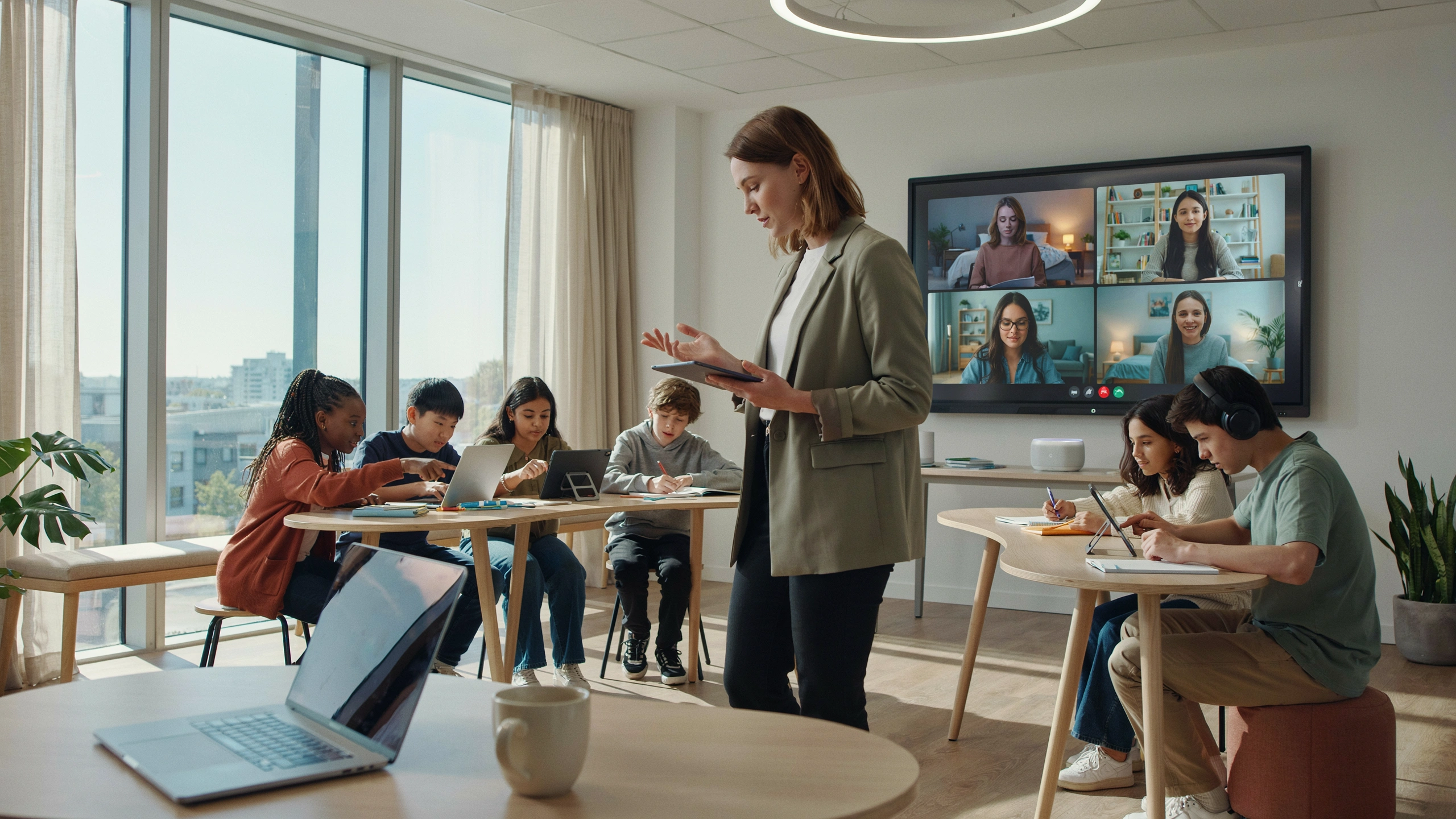
Hybrid learning is an educational model that combines classroom instruction with online learning activities. Students participate in face-to-face lessons while also using digital platforms to complete assignments, access learning resources, collaborate with classmates, and receive personalized support.
A hybrid classroom may include:
- Traditional classroom teaching.
- Live online lessons.
- Recorded video lectures.
- Digital assignments.
- Interactive quizzes.
- Online discussion forums.
- Virtual group projects.
- Educational mobile applications.
The goal is to provide greater flexibility while maintaining meaningful teacher-student interaction.
Why Hybrid Learning Is Growing
Several factors have contributed to the rise of hybrid learning.
These include:
- Advances in educational technology.
- Increased access to digital devices.
- Growing demand for flexible learning.
- Personalized education.
- Better online collaboration tools.
- The need for continuity during unexpected disruptions.
Schools have recognized that combining online and in-person learning can improve educational opportunities while meeting diverse student needs.
Benefits of Hybrid Learning
Hybrid learning offers numerous advantages for both students and teachers.
Greater Flexibility
Students can access learning materials anytime and from almost anywhere, allowing them to review lessons at their own pace.
Personalized Learning
Digital platforms can provide adaptive learning experiences that match individual learning levels, interests, and progress.
Improved Student Engagement
Interactive videos, educational games, online discussions, and multimedia resources make learning more dynamic and motivating.
Better Time Management
Students develop important organizational and self-management skills by balancing independent online work with classroom activities.
Increased Access to Resources
Learners can explore digital libraries, educational websites, simulations, and virtual laboratories beyond what is available in traditional classrooms.
The Role of Teachers
In hybrid learning environments, teachers become facilitators, mentors, and learning designers.
Their responsibilities include:
- Planning balanced online and classroom activities.
- Monitoring student progress.
- Providing timely feedback.
- Encouraging collaboration.
- Supporting independent learning.
- Integrating technology effectively into instruction.
Teachers remain essential in creating meaningful learning experiences despite increased technology use.
Technology Supporting Hybrid Learning
A successful hybrid learning model depends on reliable digital tools.
Common technologies include:
- Learning Management Systems (LMS).
- Video conferencing platforms.
- Cloud-based collaboration software.
- Interactive whiteboards.
- Educational apps.
- Artificial Intelligence learning assistants.
- Digital assessment platforms.
- Virtual and Augmented Reality resources.
These technologies help create seamless connections between classroom and online learning.
Supporting Student Independence
Hybrid learning encourages students to become more responsible for their own education.
Students learn to:
- Manage their schedules.
- Set learning goals.
- Monitor their progress.
- Complete independent assignments.
- Communicate effectively online.
- Develop digital literacy.
These lifelong learning skills are increasingly valuable in higher education and the workplace.
Challenges of Hybrid Learning
Although hybrid learning provides many benefits, successful implementation requires careful planning.
Technology Access
Not all students have equal access to reliable internet connections or digital devices.
Teacher Training
Educators need professional development to design effective hybrid learning experiences.
Student Motivation
Independent online learning requires self-discipline, time management, and consistent engagement.
Maintaining Social Interaction
Schools must ensure that digital learning does not reduce opportunities for collaboration, friendship, and emotional support.
Addressing these challenges helps maximize the effectiveness of hybrid education.
The Role of Artificial Intelligence
Artificial Intelligence is strengthening hybrid learning by providing personalized educational support.
AI can:
- Recommend learning resources.
- Adapt lesson difficulty.
- Provide instant feedback.
- Identify students who need additional support.
- Automate routine administrative tasks.
- Assist teachers in analyzing student progress.
AI allows educators to devote more time to personalized instruction and meaningful classroom interactions.
The Future of Hybrid Learning
Hybrid learning will continue to evolve as technology advances.
Future classrooms may feature:
- AI-powered personalized learning pathways.
- Virtual Reality collaborative lessons.
- Smart classrooms connected to cloud learning platforms.
- Real-time language translation for international collaboration.
- Adaptive assessments.
- Seamless integration between physical and digital learning spaces.
These innovations will create increasingly flexible, inclusive, and student-centered educational experiences.
Conclusion
Hybrid learning represents a major transformation in modern education by combining the strengths of online and face-to-face instruction. It offers flexibility, personalization, improved access to educational resources, and opportunities for lifelong learning while preserving the valuable human connections that traditional classrooms provide.
Although challenges such as technology access and teacher preparation remain, hybrid learning has demonstrated its ability to support diverse learners and adapt to changing educational needs.
As schools continue to embrace innovation, hybrid learning is likely to become a permanent feature of education, creating classrooms that are more flexible, engaging, and prepared for the future of learning.