
Introduction
Before children can write letters neatly, they need to develop strong fingers, steady hand movements, and good coordination. These essential pre-writing skills can be built through playful activities that strengthen the muscles used for holding and controlling a pencil. One engaging activity that children love is the Pom-Pom Tweezers Challenge.
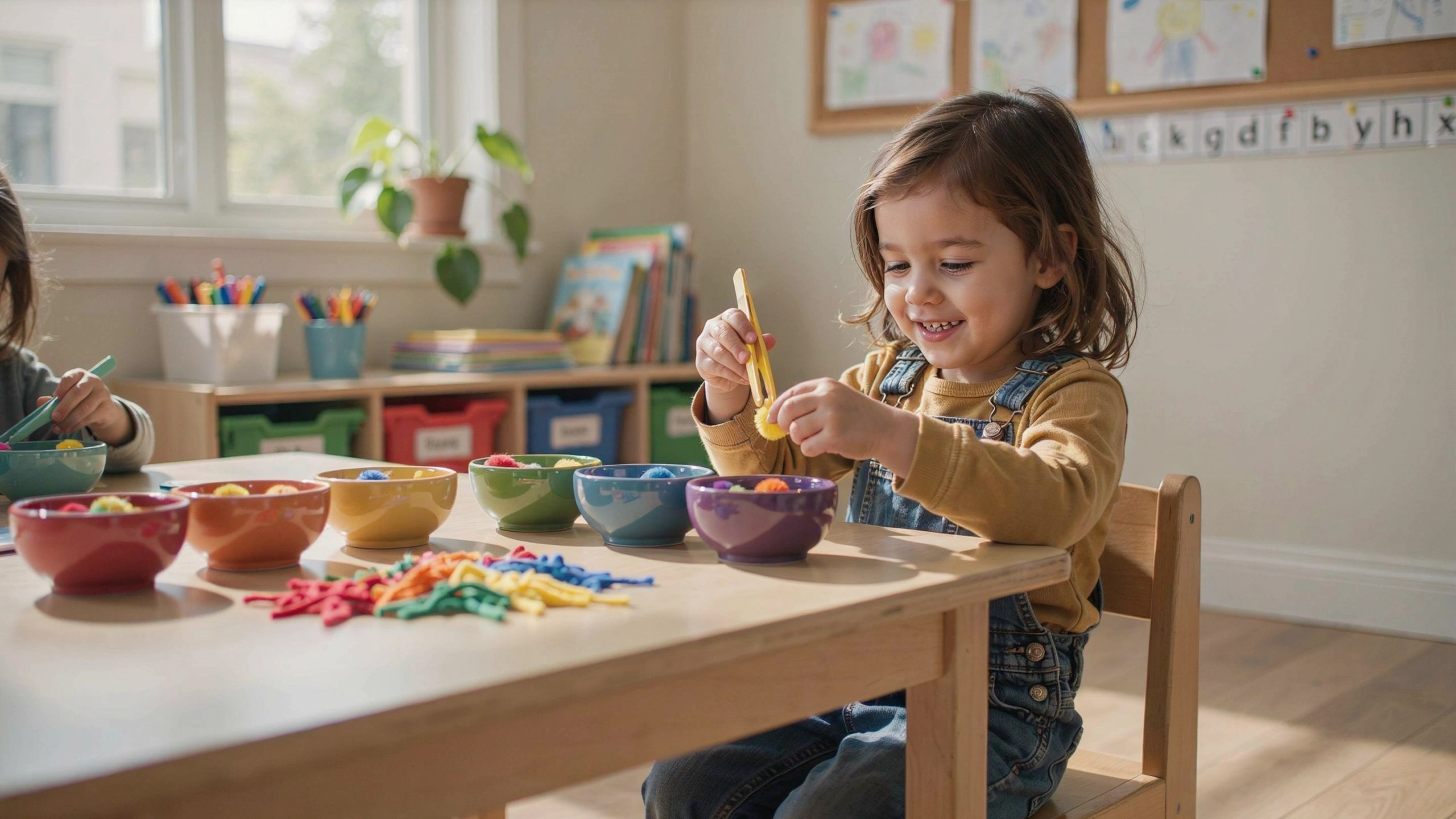
In this fun game, children use tweezers to pick up colorful pom-poms and sort or transfer them into different containers. Although the task seems simple, it encourages precise finger movements, concentration, and hand-eye coordination—all important foundations for handwriting success.
This activity is suitable for preschoolers, kindergarten learners, homeschooling families, and early childhood classrooms.
Why Finger Coordination Is Important Before Writing
Writing requires children to make small, controlled movements with their fingers while keeping their hands steady. Finger coordination develops gradually through activities that involve grasping, pinching, and releasing objects.
Practicing these movements helps children:
- Develop a stronger pencil grip.
- Improve hand stability.
- Build finger strength.
- Increase hand-eye coordination.
- Perform everyday tasks more independently.
- Gain confidence before beginning handwriting lessons.
Activities like the Pom-Pom Tweezers Challenge make this practice enjoyable and motivating.
Materials You’ll Need
You only need a few simple supplies:
- Colorful pom-poms in different sizes
- Child-safe plastic tweezers
- Small bowls, cups, or muffin tins
- Colored paper or stickers for sorting (optional)
- Dice or number cards (optional)
- Timer (optional)
Choose large pom-poms for younger children and smaller ones for older learners who need an extra challenge.
How to Play
- Place a collection of pom-poms in one container.
- Arrange several empty bowls or cups nearby.
- Give your child a pair of child-friendly tweezers.
- Ask them to pick up one pom-pom at a time.
- Transfer or sort each pom-pom into the correct container.
- Continue until all the pom-poms have been moved.
Encourage children to use slow, controlled movements instead of rushing.
Skills Children Develop
The Pom-Pom Tweezers Challenge supports a wide range of early learning skills.
Fine Motor Strength
Using tweezers strengthens the small muscles in the fingers and hands that are essential for handwriting.
Finger Coordination
Children learn to control individual finger movements while opening and closing the tweezers.
Pencil Grip Development
The pinching motion closely resembles the grip used to hold a pencil correctly.
Hand-Eye Coordination
Children carefully guide each pom-pom into the correct container, improving visual and motor coordination.
Focus and Patience
Completing the challenge requires concentration, helping children develop longer attention spans and greater persistence.
Creative Ways to Play
Keep the activity exciting with different game variations.
Color Sorting Game
Assign a bowl to each color and ask children to sort the pom-poms accordingly.
Size Sorting Challenge
Separate large, medium, and small pom-poms into different containers.
Number Match Activity
Label bowls with numbers and have children place the matching number of pom-poms into each one.
Pattern Building
Create simple color patterns such as red, blue, yellow, red, blue, yellow, and let children continue the sequence.
Relay Race
For small groups, children can take turns transferring pom-poms, encouraging teamwork and cooperative play.
Tips for Parents and Teachers
Help children succeed by following these simple suggestions:
- Demonstrate how to hold the tweezers before starting.
- Begin with larger pom-poms for beginners.
- Encourage children to use their dominant hand while stabilizing the bowl with the other hand.
- Praise careful effort rather than speed.
- Offer short activity sessions of 10 to 15 minutes.
- Supervise younger children to ensure safe play.
Regular practice leads to noticeable improvements in hand strength and coordination.
Extending the Learning Experience
You can combine this activity with other early learning concepts by asking children to:
- Count each pom-pom as they transfer it.
- Identify colors while sorting.
- Spell simple words by placing pom-poms on letter cards.
- Follow verbal instructions such as “Place three blue pom-poms in the yellow bowl.”
- Create pictures or shapes using the sorted pom-poms.
These additions reinforce math, language, and listening skills while maintaining the focus on fine motor development.
Benefits Beyond Pre-Writing
The Pom-Pom Tweezers Challenge supports more than handwriting readiness. It also encourages:
- Problem-solving
- Visual discrimination
- Bilateral coordination
- Independent learning
- Confidence
- Concentration
- Early math skills through counting and sorting
Because the activity feels like a game, children remain engaged while practicing valuable developmental skills.
Conclusion
The Pom-Pom Tweezers Challenge is a simple yet highly effective pre-writing activity that helps children strengthen their fingers, improve coordination, and prepare for handwriting. By using colorful pom-poms and child-friendly tweezers, young learners develop essential fine motor skills through playful, hands-on exploration.
Whether used at home or in the classroom, this enjoyable game builds confidence, supports early learning, and lays a strong foundation for successful writing. With regular practice, children will be better prepared to hold a pencil, control their movements, and enjoy the journey toward becoming confident writers.