
Introduction
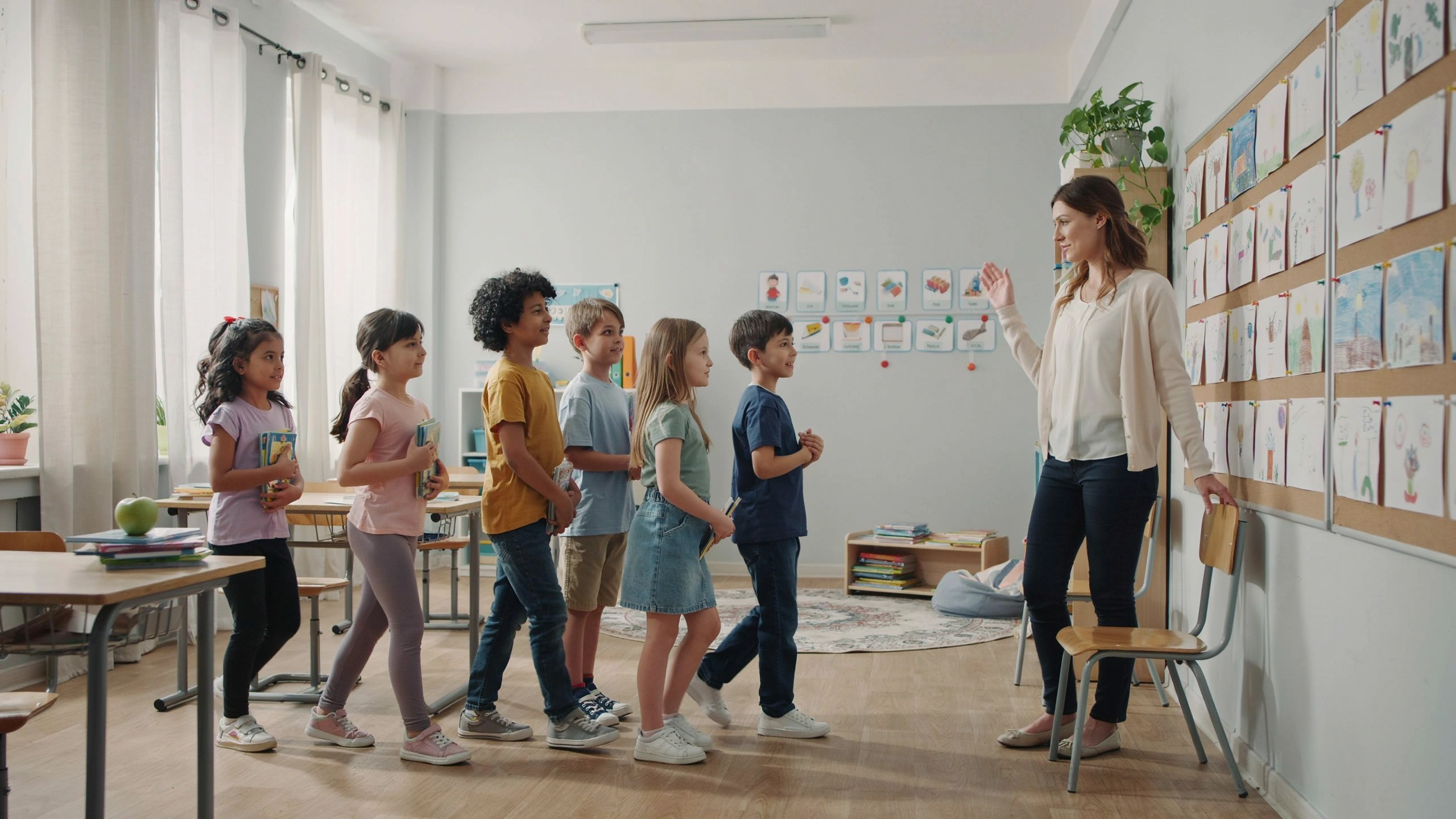
Every school day involves numerous transitions. Students move from one subject to another, shift between individual and group work, prepare for recess, return from lunch, and pack up at the end of the day. While these changes may seem routine, they can be particularly challenging for students with Attention-Deficit/Hyperactivity Disorder (ADHD).
Students with ADHD often need additional time to adjust to new activities, organize materials, and shift their attention. Without clear guidance, transitions may lead to confusion, distraction, frustration, or disruptive behavior.
By implementing thoughtful transition strategies, teachers can create a smoother, more predictable classroom environment that helps students with ADHD remain focused, organized, and ready to learn.
Why Transitions Can Be Difficult for Students with ADHD
Transitions require students to use several executive function skills at once, including:
- Stopping one activity.
- Shifting attention to a new task.
- Organizing materials.
- Following instructions.
- Managing emotions.
- Controlling impulses.
Students with ADHD may struggle with these skills, making transitions more demanding than the learning activities themselves.
Teachers who understand these challenges can provide support that reduces stress and improves classroom success.
1. Establish Predictable Daily Routines
Predictability helps students know what will happen next.
Teachers can create consistent routines by:
- Beginning each day in the same way.
- Following a regular lesson sequence.
- Ending lessons with familiar closing activities.
- Maintaining consistent classroom expectations.
When students know what to expect, they spend less mental energy adjusting to change and more energy focusing on learning.
2. Provide Advance Warnings Before Transitions
Unexpected changes can be difficult for students with ADHD.
Teachers can prepare students by giving advance notice.
Examples include:
- “We have five minutes left before we begin science.”
- “Finish your sentence because we will clean up in two minutes.”
- “After this activity, we will work in small groups.”
Advance warnings allow students to finish their current task and prepare mentally for the next one.
3. Use Visual Schedules
Visual schedules help students understand the structure of the day.
A classroom schedule may include:
- Morning meeting.
- Reading.
- Mathematics.
- Break.
- Science.
- Lunch.
- Art.
- Review and dismissal.
As activities are completed, teachers can check them off or move a marker along the schedule.
Visual schedules reduce uncertainty and help students anticipate upcoming transitions.
4. Give Clear and Simple Instructions
During transitions, students with ADHD may become overwhelmed if they receive too many directions at once.
Instead of saying:
“Put away your books, take out your science notebook, move into groups, and wait quietly.”
Break the instructions into smaller steps:
- Put away your reading book.
- Take out your science notebook.
- Move to your group.
- Wait for further instructions.
Simple directions increase understanding and reduce confusion.
5. Use Visual and Auditory Cues
Consistent signals help students recognize when it is time to transition.
Teachers may use:
- A classroom timer.
- A bell or chime.
- Hand signals.
- Countdowns.
- Color cards.
- Interactive whiteboard reminders.
For example, displaying a countdown timer allows students to monitor the remaining time independently.
6. Allow Extra Time When Needed
Some students with ADHD require a little more time to organize materials or complete a task before moving on.
Teachers can support these students by:
- Giving early transition notices.
- Allowing a few additional moments to finish organizing.
- Checking that materials are ready before the next lesson begins.
Providing extra time helps reduce anxiety without lowering academic expectations.
7. Teach Organizational Routines
Transitions become smoother when students know exactly what to do.
Teachers can establish routines such as:
Before Leaving an Activity
- Put materials away.
- Check the desk.
- Record homework if needed.
- Prepare the next subject.
Beginning a New Lesson
- Sit in the correct place.
- Take out required materials.
- Read the learning objective.
- Listen for instructions.
Repeated practice turns these routines into habits.
8. Incorporate Movement During Transitions
Movement can help students with ADHD reset their attention.
Examples include:
- Stretching for one minute.
- Walking quietly to a new learning station.
- Performing simple physical exercises.
- Taking deep breaths before beginning the next lesson.
Purposeful movement helps students manage energy while preparing for learning.
9. Reinforce Successful Transitions
Positive reinforcement encourages students to repeat appropriate behaviors.
Teachers can praise specific actions, such as:
- “You packed your materials quickly and were ready for the next lesson.”
- “Excellent job following the transition routine today.”
- “I noticed how calmly your group moved to the science station.”
Recognizing successful transitions builds confidence and motivation.
10. Prepare Students for Unexpected Changes
Even with routines, unexpected events will occur.
Examples include:
- Substitute teachers.
- School assemblies.
- Schedule changes.
- Emergency drills.
- Special classroom activities.
Teachers can reduce stress by explaining changes clearly and reassuring students about what will happen next.
Developing flexibility is an important long-term goal for students with ADHD.
The Role of Parents in Supporting Transitions
Parents can strengthen transition skills by creating consistent routines at home.
Helpful routines include:
- Morning preparation.
- Homework time.
- Bedtime routines.
- Packing the school bag each evening.
Using visual schedules and checklists at home reinforces the organizational habits learned at school.
Common Mistakes to Avoid
When managing transitions for students with ADHD, avoid:
- Giving multiple instructions at once.
- Rushing students without warning.
- Frequently changing routines without explanation.
- Using only verbal directions.
- Assuming students remember every step independently.
Small adjustments can significantly improve students’ ability to move smoothly from one activity to another.
Conclusion
Classroom transitions are an essential part of every school day, and for students with ADHD, they can present unique challenges. By providing predictable routines, visual supports, advance warnings, clear instructions, and positive reinforcement, teachers can make transitions smoother and less stressful.
Effective transition strategies not only reduce classroom disruptions but also help students develop organization, independence, and self-management skills that will benefit them throughout their education.
When transitions are carefully planned, they become opportunities for learning, confidence, and success rather than moments of confusion and frustration.