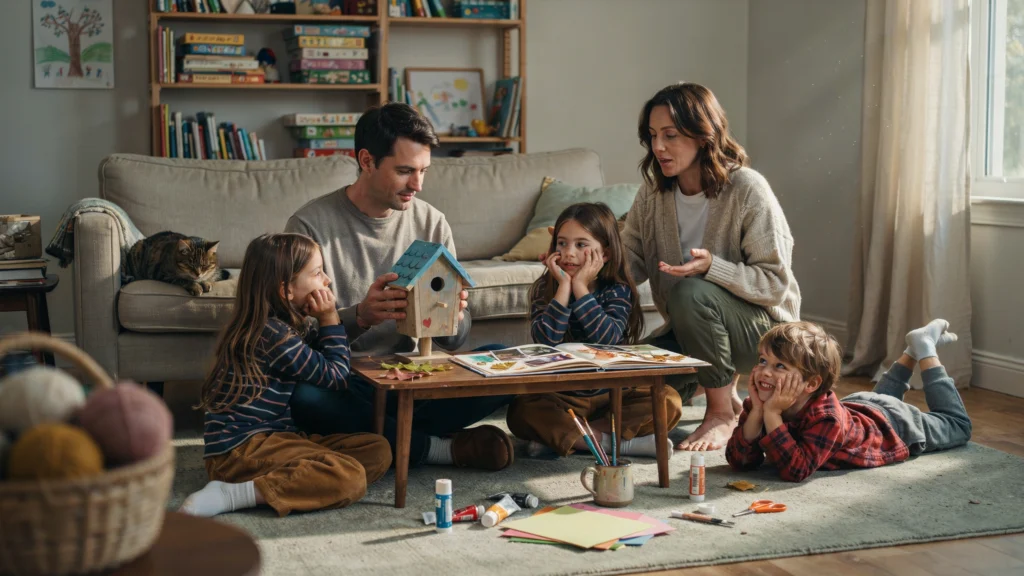
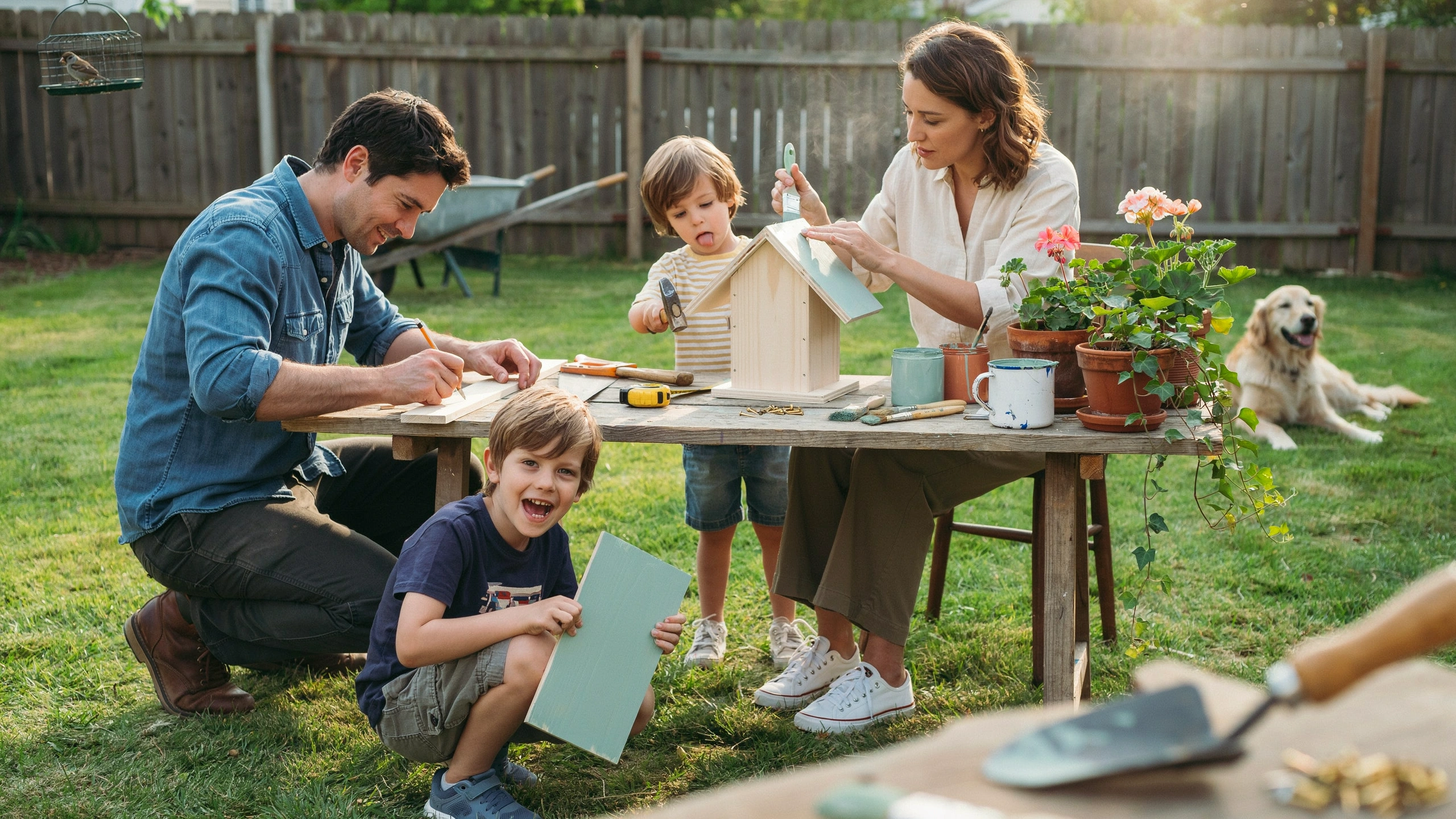
Some of the most valuable lessons children learn happen when families work together toward a common goal. Whether building a birdhouse, planning a picnic, or creating a garden, family projects encourage children to communicate, solve problems, and think creatively. These shared experiences strengthen family bonds while developing important life skills that will benefit children for years to come.
The best family projects don’t require expensive materials or advanced skills. What matters most is working together, sharing ideas, and enjoying the learning process.
Why Family Projects Matter
Working as a team teaches children that great results often come from cooperation rather than individual effort.
Family projects help children:
- Develop teamwork skills.
- Improve communication.
- Strengthen critical thinking.
- Build creativity.
- Increase confidence.
- Learn responsibility and patience.
Every project becomes an opportunity to practice listening, planning, and problem-solving.
Plan a Family Garden
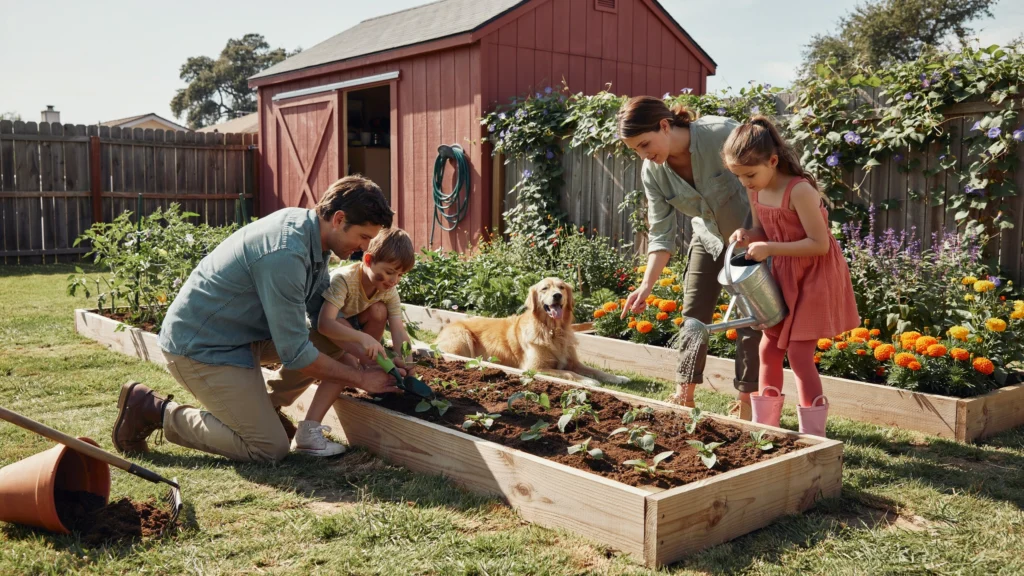
Gardening is an enjoyable way to combine science, responsibility, and teamwork.
Children can help:
- Choose plants or vegetables.
- Prepare the soil.
- Plant seeds.
- Water regularly.
- Observe growth.
- Harvest fruits or vegetables.
Along the way, they learn about plant life cycles, weather, and the importance of caring for living things.
Build Something Together
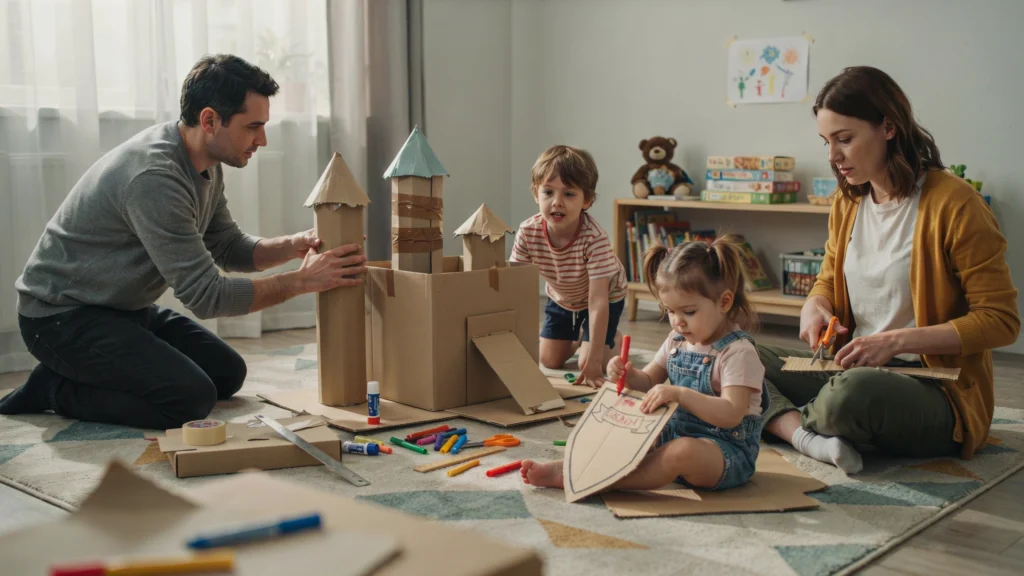
Construction projects encourage creativity and engineering skills.
Ideas include:
- A bird feeder.
- A cardboard castle.
- A toy garage.
- A simple bookshelf.
- A kite.
- A miniature bridge using craft sticks.
As children build, they naturally practice measuring, testing, improving, and solving problems.
Organize a Family Treasure Hunt
Create clues that require children to think carefully before finding the next location.
Treasure hunts encourage:
- Logical reasoning.
- Reading comprehension.
- Observation skills.
- Teamwork.
- Decision-making.
Allow every family member to contribute ideas for clues or hiding places.
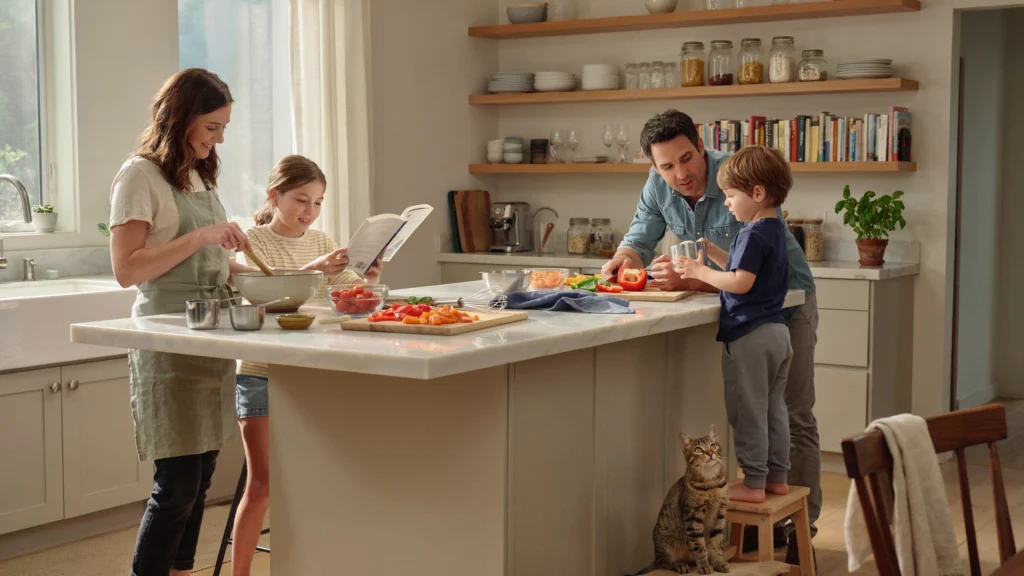
Cook a Meal as a Team
Preparing a meal together teaches practical life skills while encouraging cooperation.
Children can:
- Read recipes.
- Measure ingredients.
- Wash vegetables.
- Mix ingredients.
- Set the table.
- Help with cleanup.
Cooking naturally incorporates math, science, reading, and communication.
Create a Family Art Project
Collaborative art activities encourage children to express their creativity while respecting the ideas of others.
Try making:
- A family mural.
- A seasonal collage.
- A memory scrapbook.
- Painted flowerpots.
- A recycled art sculpture.
Working on one shared piece teaches patience, cooperation, and creative problem-solving.
Design a Community Kindness Project
Family projects can also help children understand the importance of helping others.
Ideas include:
- Creating thank-you cards for community helpers.
- Collecting books for a local library.
- Preparing care packages.
- Cleaning a neighborhood park.
- Planting flowers in a community space.
These activities teach empathy, responsibility, and teamwork.
Encourage Children to Make Decisions
Whenever possible, let children participate in planning.
Ask questions such as:
- What should we build?
- Which materials would work best?
- How should we organize this project?
- What should we do if our first idea doesn’t work?
Allowing children to make decisions strengthens leadership and independent thinking.
Reflect on the Experience
After completing a project, spend a few minutes discussing what everyone learned.
Ask questions like:
- What was the most enjoyable part?
- What challenge did we overcome together?
- What would we change next time?
- What new skill did you learn?
Reflection helps children recognize the value of teamwork and continuous improvement.
Building Strong Families Through Shared Learning
Family projects offer much more than entertainment. They teach children how to communicate, cooperate, solve problems, and support one another. These experiences create lasting memories while helping children develop confidence and practical life skills.
By making family projects a regular part of home life, parents create an environment where learning feels exciting, meaningful, and connected to everyday experiences. Children discover that success is often achieved through collaboration, creativity, and persistence.
The greatest family projects are not measured by perfect results but by the laughter, teamwork, and learning shared along the way. Those moments become memories—and lessons—that children will carry with them for a lifetime.