
Introduction
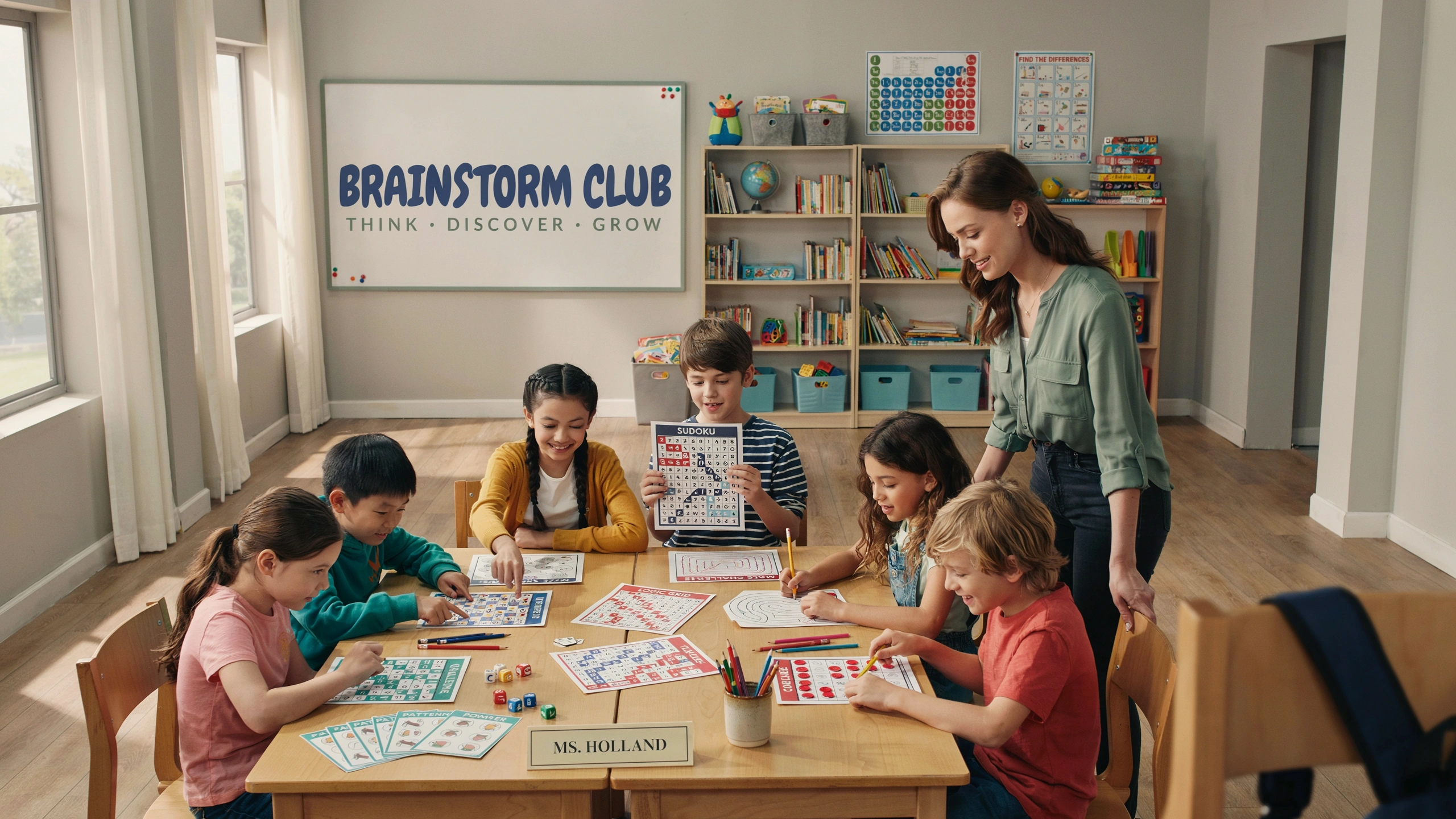
Brain teasers are one of the most enjoyable ways to help children strengthen their logic, creativity, and problem-solving skills. Unlike traditional worksheets or quizzes, brain teasers challenge young minds to think carefully, recognize patterns, and find solutions using reasoning rather than memorization.
Whether solving riddles, puzzles, visual challenges, or word games, children learn to approach problems from different angles. These activities build confidence, improve concentration, and encourage a lifelong love of learning.
What Are Brain Teasers?
Brain teasers are puzzles or challenges designed to make children think deeply. Some require logical reasoning, while others test observation, memory, or creative thinking.
Common types of brain teasers include:
- Logic puzzles
- Riddles
- Visual puzzles
- Number challenges
- Pattern games
- Word puzzles
- Spot-the-difference activities
Each type strengthens different thinking skills while keeping children engaged.
Why Brain Teasers Are Good for Children
Regularly solving brain teasers helps children:
- Improve logical reasoning
- Strengthen memory
- Develop patience
- Increase concentration
- Build confidence
- Enhance creativity
- Learn persistence
Because every puzzle presents a unique challenge, children become more flexible and adaptable thinkers.
1. Classic Riddles
Riddles encourage children to analyze clues instead of making quick guesses.
Example:
Riddle: What has hands but cannot clap?
Answer: A clock.
Skills Developed:
- Logical reasoning
- Vocabulary
- Deductive thinking
- Listening skills
2. Spot the Difference
Show two similar pictures with small differences and ask children to find them.
This simple activity strengthens careful observation and attention to detail.
Skills Developed:
- Visual discrimination
- Concentration
- Observation
- Patience
3. Pattern Completion
Create sequences using numbers, shapes, or colors.
Example:
Circle – Square – Circle – Square – ?
Children identify the missing item and explain the pattern.
Skills Developed:
- Pattern recognition
- Prediction
- Logical thinking
- Analytical reasoning
4. Number Logic Puzzles
Challenge children with age-appropriate number sequences or Sudoku puzzles.
Examples include:
- 3, 6, 9, 12, __
- Picture Sudoku
- Number matching games
Skills Developed:
- Mathematical reasoning
- Critical thinking
- Sequencing
- Concentration
5. Word Brain Teasers
Play games that encourage children to think about language.
Examples:
- Unscramble words.
- Find hidden words.
- Complete analogies.
- Guess the missing letter.
These activities combine vocabulary with logical reasoning.
Skills Developed:
- Language development
- Reading skills
- Critical thinking
- Memory
6. Mystery Object Challenge
Place an object inside a bag.
Children ask yes-or-no questions until they identify it.
This encourages careful questioning and deductive reasoning.
Skills Developed:
- Observation
- Deduction
- Communication
- Problem-solving
7. Visual Logic Mazes
Provide simple mazes that require children to plan the best route before starting.
After completing the maze, discuss whether another path might have worked better.
Skills Developed:
- Spatial reasoning
- Planning
- Decision-making
- Logical analysis
8. Memory Tray Game
Arrange several household objects on a tray.
Allow children one minute to study the objects before covering the tray.
Ask them to recall:
- Which objects they remember
- The position of each item
- Any missing objects
Skills Developed:
- Working memory
- Observation
- Concentration
- Attention to detail
9. What Doesn’t Belong?
Show a group of related items with one object that doesn’t fit.
Example:
Apple – Banana – Carrot – Orange
The correct answer is Carrot, because it is a vegetable while the others are fruits.
Encourage children to explain their reasoning.
Skills Developed:
- Classification
- Logical reasoning
- Communication
- Critical thinking
10. Create Your Own Brain Teaser
Invite children to invent their own puzzles, riddles, or logic challenges.
They can:
- Write a riddle.
- Design a maze.
- Create a number pattern.
- Draw a spot-the-difference picture.
- Build a mystery game.
Creating puzzles strengthens higher-order thinking skills.
Skills Developed:
- Creativity
- Planning
- Leadership
- Problem-solving
Tips for Parents and Teachers
To make brain teaser activities more effective:
- Choose puzzles that match the child’s age.
- Encourage children to explain their thinking.
- Allow enough time to solve each challenge.
- Celebrate effort rather than speed.
- Mix different puzzle types to maintain interest.
- Play together to make learning social and enjoyable.
Remember, the goal is to encourage curiosity and perseverance.
Everyday Brain Teaser Opportunities
Brain teasers can easily become part of everyday life.
Try them:
- During breakfast conversations
- On family road trips
- Before bedtime
- During classroom warm-up activities
- While waiting at appointments
- During family game nights
Just a few minutes each day can strengthen important thinking skills over time.
Long-Term Benefits
Children who regularly solve brain teasers often develop:
- Stronger logical reasoning
- Better memory
- Improved concentration
- Greater creativity
- Better decision-making
- Increased confidence
- More effective problem-solving abilities
These skills support academic achievement and lifelong learning.
Conclusion
Brain teaser activities are a fun and effective way to develop children’s logic and critical thinking skills. From riddles and mazes to number puzzles and memory games, every challenge encourages children to observe carefully, analyze information, and think creatively.
By making brain teasers a regular part of playtime, parents and teachers can inspire curiosity, strengthen problem-solving abilities, and help children become confident, independent thinkers. Every puzzle solved is another step toward building a sharper, more creative mind.