
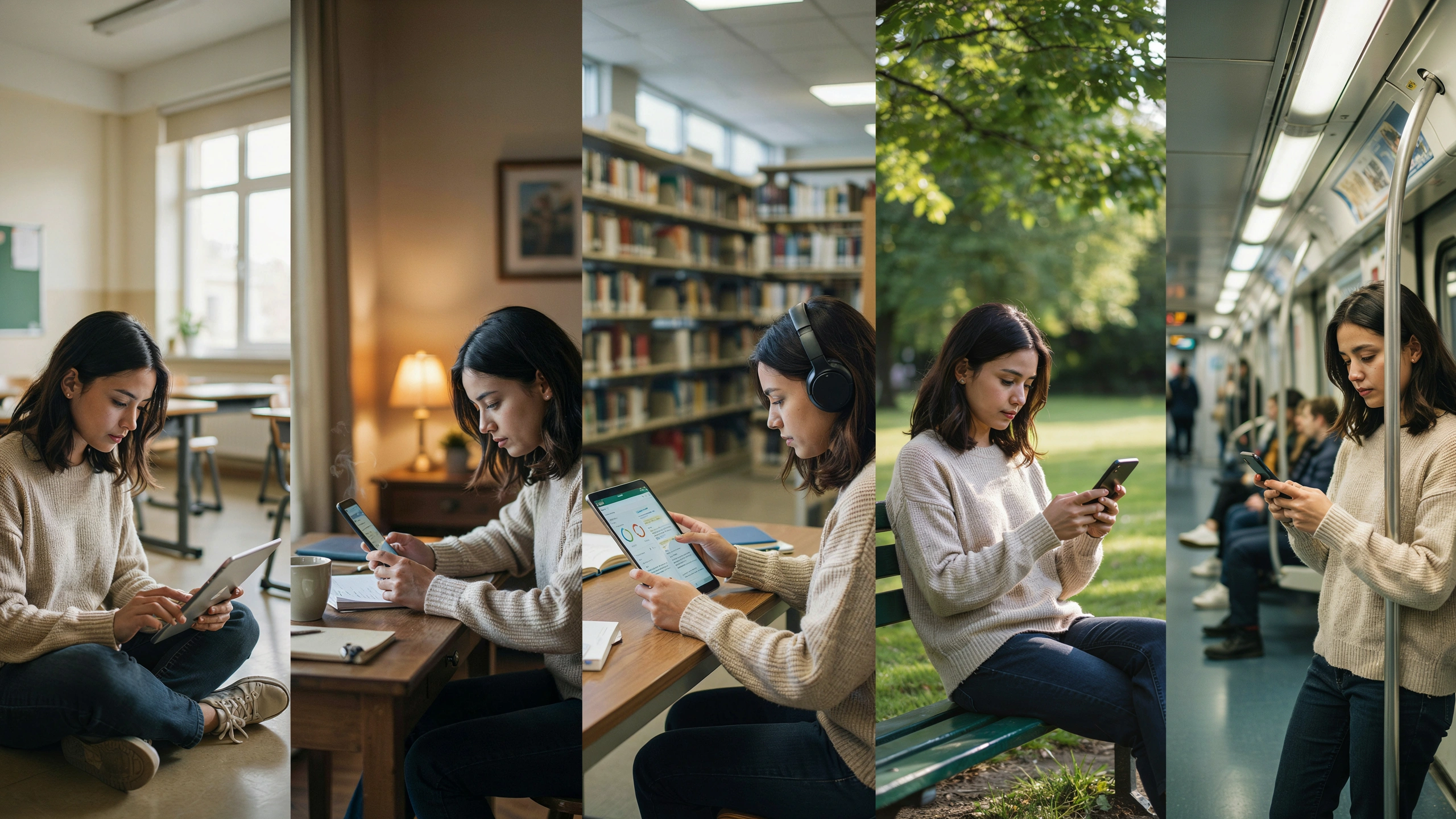
The widespread use of smartphones, tablets, and other portable devices has revolutionized the way people access information and learn new skills. Education is no exception. Mobile Learning (M-Learning) has emerged as one of the most influential trends in educational technology, enabling students to learn anytime and anywhere through internet-connected mobile devices.
Unlike traditional classroom instruction, mobile learning removes many of the barriers associated with time and location. Students can review lessons during their commute, participate in online discussions from home, complete assignments while traveling, or access educational resources with just a few taps on their devices. As technology continues to evolve, mobile learning is reshaping education by making learning more flexible, personalized, and accessible.
What Is Mobile Learning?
Mobile learning, often called M-Learning, refers to the use of mobile devices such as smartphones, tablets, laptops, and e-readers to support teaching and learning. These devices allow students to access educational content, communicate with teachers, complete assignments, and collaborate with classmates from virtually any location.
Mobile learning may include:
- Educational apps
- Digital textbooks
- Video lessons
- Podcasts
- Interactive quizzes
- Online discussion forums
- Virtual classrooms
- Cloud-based learning platforms
By combining mobility with internet connectivity, M-Learning creates continuous learning opportunities beyond the traditional classroom.
Why Mobile Learning Matters
Modern learners expect education to be as flexible as the technology they use every day.
Mobile learning offers several important advantages:
- Learning without location restrictions
- Flexible study schedules
- Immediate access to information
- Greater student independence
- Continuous communication with teachers
- Personalized learning experiences
These benefits help students integrate learning into their daily lives rather than limiting education to school hours.
Learning Anytime, Anywhere
One of the greatest strengths of mobile learning is flexibility.
Students can study:
- At home
- During travel
- In libraries
- Between classes
- While waiting for appointments
- Outdoors
- During internships
This accessibility increases learning opportunities while encouraging students to use their available time productively.
Learning becomes a continuous process rather than an activity limited to the classroom.
Supporting Personalized Learning
Every student learns differently.
Mobile learning platforms often use adaptive technologies that recommend content based on each learner’s progress, strengths, and interests.
Students can:
- Review difficult lessons.
- Skip concepts they have mastered.
- Choose preferred learning formats.
- Practice at their own pace.
- Receive personalized feedback.
This individualized approach helps improve motivation and academic achievement.
Increasing Student Engagement
Mobile devices naturally attract students’ attention because they support interactive and multimedia experiences.
Educational apps often include:
- Gamification
- Interactive simulations
- Educational videos
- Virtual flashcards
- Digital storytelling
- Collaborative activities
These features make learning more engaging while encouraging active participation.
Students become creators and collaborators rather than passive recipients of information.
Supporting Collaborative Learning
Mobile technology enables students to communicate and collaborate wherever they are.
Using mobile devices, learners can:
- Share documents
- Join discussion forums
- Participate in video meetings
- Complete group projects
- Exchange ideas instantly
- Provide peer feedback
Collaboration extends beyond the classroom, strengthening teamwork and communication skills.
Improving Access to Educational Resources
Mobile learning provides instant access to a vast range of educational materials.
Students can explore:
- Online libraries
- Academic journals
- Open educational resources
- Digital textbooks
- Educational videos
- Research databases
- Language-learning tools
Access to diverse resources encourages independent learning and critical thinking.
Enhancing Inclusive Education
Mobile learning supports students with different learning needs through accessibility features such as:
- Text-to-speech
- Speech recognition
- Adjustable font sizes
- Screen readers
- Closed captions
- Language translation
- Voice assistants
These tools help ensure that students with disabilities or language barriers can participate fully in educational activities.
Supporting Lifelong Learning
Learning no longer ends with graduation.
Mobile learning enables individuals to continue developing new knowledge and skills throughout their lives.
Professionals can complete online courses, earn certifications, and participate in training programs directly from their mobile devices.
This flexibility supports continuous professional development and career advancement.
Challenges of Mobile Learning
Although mobile learning offers many benefits, schools should also address potential challenges.
Digital Distractions
Mobile devices provide access to educational resources but also to social media, games, and entertainment.
Teachers should establish clear expectations that encourage focused learning.
Screen Time
Extended mobile device use may contribute to eye strain, fatigue, and reduced physical activity.
Students should balance digital learning with offline experiences and regular breaks.
Internet Access
Reliable internet connectivity remains a challenge for some students.
Schools can help by providing downloadable resources and offline learning options whenever possible.
Device Inequality
Not every student owns the same type of mobile device or has equal access to technology.
Educational institutions should work to reduce the digital divide through equitable technology initiatives.
Best Practices for Implementing Mobile Learning
Successful M-Learning programs typically include:
- Mobile-friendly educational content
- Clear learning objectives
- Interactive activities
- Secure digital platforms
- Teacher training
- Responsible technology policies
- Balanced online and offline learning experiences
These practices help maximize educational value while minimizing distractions.
The Future of Mobile Learning
Mobile learning continues to evolve alongside emerging technologies.
Future developments may include:
- Artificial Intelligence learning assistants
- Augmented Reality educational experiences
- Virtual Reality mobile simulations
- 5G-powered interactive learning
- Wearable educational devices
- Intelligent adaptive learning platforms
- Voice-controlled mobile tutoring systems
These innovations will make learning even more personalized, immersive, and accessible.
Conclusion
Mobile learning has transformed education by giving students the freedom to learn anytime and anywhere. Through smartphones, tablets, and other portable devices, learners can access educational resources, collaborate with peers, receive personalized instruction, and continue developing knowledge beyond the classroom.
Although challenges such as digital distractions, screen time, internet access, and device inequality must be carefully managed, the advantages of mobile learning are substantial. As technology continues to advance, M-Learning will remain a cornerstone of modern education, empowering students to become independent, engaged, and lifelong learners in an increasingly connected world.