
Introduction
Education is most powerful when students connect what they learn in the classroom with meaningful action in their communities. Service-learning is an educational approach that combines academic learning with community service, allowing students to apply their knowledge while addressing real-world needs. Unlike traditional volunteer work, service-learning is intentionally linked to curriculum goals and includes structured reflection, helping students understand the impact of their actions.
In the context of global education, service-learning encourages students to recognize that local actions can contribute to solving global challenges. Whether planting trees, organizing food drives, promoting environmental conservation, or supporting literacy programs, students develop empathy, responsibility, and a deeper understanding of the interconnected world in which they live.
By engaging in service-learning projects, children become active participants in creating positive change rather than passive observers of global issues.
What Is Service-Learning?
Service-learning is a teaching method that integrates academic instruction with meaningful community service. Students identify a community need, plan a project, take action, and reflect on their experiences to deepen both academic understanding and personal growth.
A successful service-learning project includes three essential components:
- Learning: Students acquire knowledge and skills through classroom instruction.
- Service: Students apply what they have learned to benefit their community.
- Reflection: Students analyze their experiences and consider how their actions contribute to broader social goals.
This process helps learners understand that education can be a powerful tool for improving society.
Why Service-Learning Supports Global Education
Connecting Local and Global Issues
Many global challenges have local dimensions. For example, reducing waste in a school contributes to environmental sustainability, while supporting local food banks raises awareness about hunger and poverty.
Students begin to see that individual actions can contribute to larger global solutions.
Developing Empathy
Working directly with people or environmental causes helps students understand different life experiences and appreciate the importance of kindness, compassion, and cooperation.
Empathy encourages students to become more responsible and caring members of society.
Encouraging Active Citizenship
Service-learning teaches students that citizenship involves participation, responsibility, and a willingness to contribute to the common good.
Rather than waiting for others to solve problems, students learn that they can make a difference themselves.
Strengthening Academic Learning
Research, planning, teamwork, and reflection strengthen students’ understanding of academic concepts while making learning more meaningful.
Examples of Service-Learning Projects
Schools can organize projects that address a wide range of community needs.
Examples include:
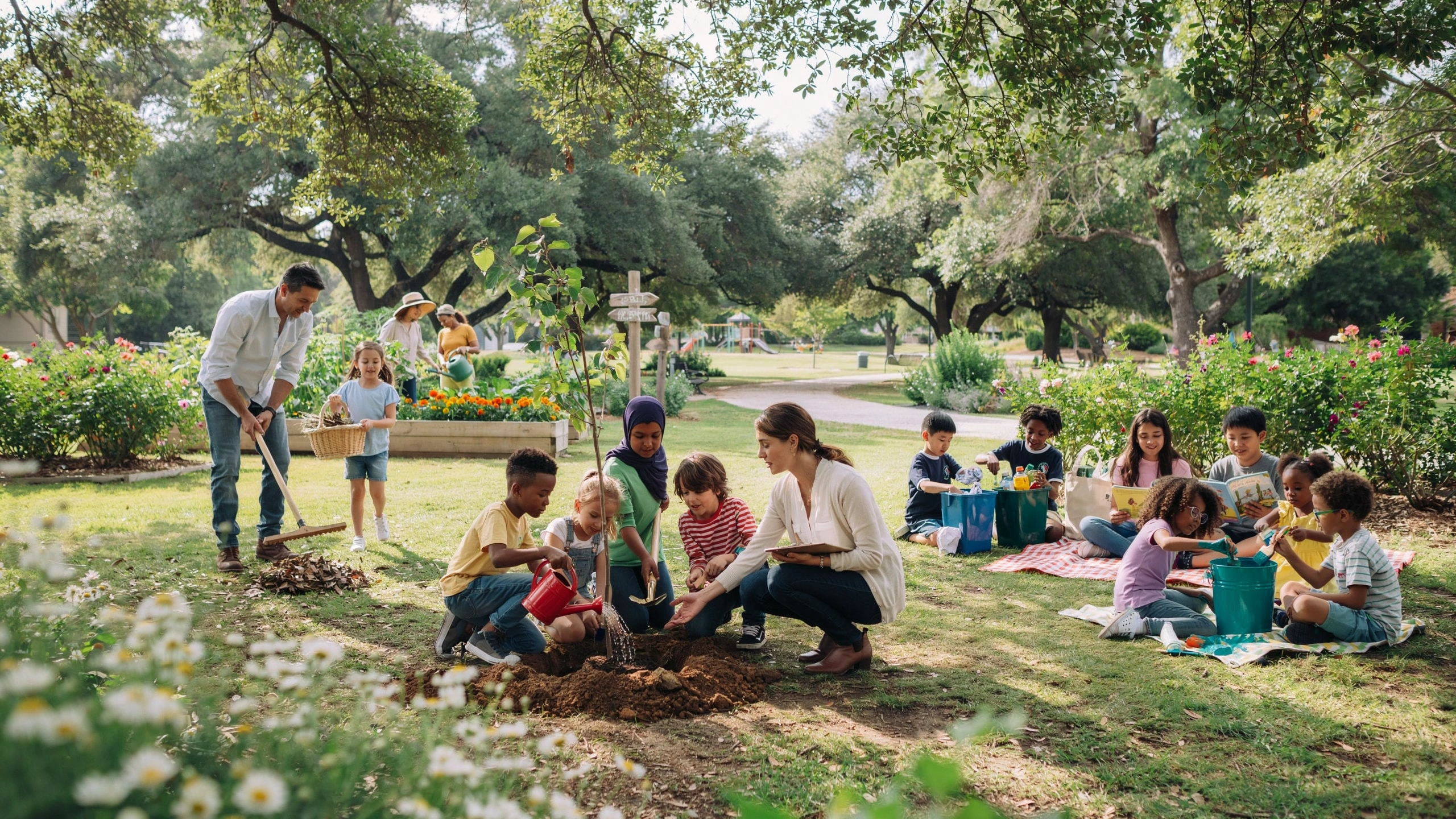
- Tree planting campaigns.
- Recycling and waste reduction initiatives.
- School garden projects.
- Food collection drives.
- Reading programs for younger children.
- Community clean-up events.
- Water conservation campaigns.
- Fundraising for humanitarian organizations.
- Animal shelter support.
- Environmental awareness exhibitions.
Each project connects classroom knowledge with practical action.
Integrating Service-Learning Across Subjects
Science
Students investigate environmental issues, biodiversity, renewable energy, and conservation while participating in sustainability projects.
Mathematics
Learners collect and analyze data related to recycling rates, water consumption, or community surveys.
Language Arts
Students write reflective journals, persuasive essays, awareness brochures, and project reports.
Social Studies
Community service provides opportunities to study citizenship, social responsibility, public policy, and sustainable development.
Art
Creative projects such as posters, murals, and digital campaigns help raise awareness about community issues.
Reflection: The Heart of Service-Learning
Reflection distinguishes service-learning from ordinary volunteer work.
Teachers encourage students to consider questions such as:
- What did we learn?
- Who benefited from our project?
- What challenges did we encounter?
- How did this experience change our thinking?
- What could we improve next time?
Reflection helps students connect experience with academic learning and personal growth.
Building Global Competencies
Service-learning develops many of the competencies associated with global citizenship.
Students strengthen their ability to:
- Collaborate effectively.
- Solve problems creatively.
- Communicate clearly.
- Respect diversity.
- Think critically.
- Demonstrate leadership.
- Take responsibility for their actions.
These skills prepare learners for future education, careers, and civic participation.
The Role of Teachers
Teachers guide students throughout every stage of the service-learning process.
Their responsibilities include:
- Identifying meaningful projects.
- Connecting service to curriculum goals.
- Encouraging student leadership.
- Supporting reflection.
- Promoting teamwork.
- Ensuring projects benefit the community respectfully.
Teachers help students recognize that service is both an opportunity to help others and a powerful learning experience.
The Role of Families
Parents strengthen service-learning by encouraging participation and modeling community involvement.
Families can:
- Volunteer together.
- Support local charities.
- Participate in environmental activities.
- Discuss community issues.
- Celebrate children’s contributions.
- Encourage acts of kindness.
Family engagement reinforces the values learned at school.
Technology and Service-Learning
Technology expands opportunities for community engagement.
Students can:
- Create digital awareness campaigns.
- Design educational websites.
- Produce informational videos.
- Organize virtual fundraising events.
- Collaborate with international schools on shared service projects.
- Use mapping tools to identify community needs.
Digital tools allow service-learning to reach wider audiences.
Overcoming Challenges
Schools may encounter obstacles such as:
- Limited funding.
- Scheduling difficulties.
- Transportation issues.
- Community partnerships.
- Balancing service with academic requirements.
Careful planning and collaboration with local organizations can help address these challenges.
Measuring Success
Effective service-learning can be evaluated through:
- Student portfolios.
- Reflection journals.
- Community feedback.
- Project presentations.
- Team evaluations.
- Research reports.
- Observable community impact.
Assessment should value both academic learning and personal development.
Long-Term Benefits
Students who participate in service-learning often become adults who:
- Volunteer regularly.
- Participate in civic life.
- Demonstrate empathy.
- Protect the environment.
- Lead community initiatives.
- Collaborate across cultures.
- Continue lifelong learning.
These habits contribute to healthier and more engaged communities.
Preparing Compassionate Global Citizens
Global education encourages students to understand that every community is connected to the wider world. Service-learning transforms this understanding into meaningful action.
By serving others, students discover that leadership is rooted in responsibility, empathy, and collaboration. They learn that positive change often begins with small, consistent efforts made by ordinary people working together.
These experiences nurture confident learners who believe they can contribute to solving local and global challenges.
Conclusion
Service-learning is one of the most effective ways to bring global education to life. By connecting classroom learning with meaningful community action, students develop academic knowledge alongside empathy, leadership, critical thinking, and social responsibility.
Through projects that improve their schools, neighborhoods, and environment, children recognize that they have the ability to make a positive difference. They also learn that local actions contribute to global progress, reinforcing the idea that responsible citizenship begins close to home.
As schools continue preparing students for an interconnected future, service-learning provides a powerful pathway for developing compassionate, engaged, and globally minded citizens who are committed to building stronger communities and a more sustainable world.