
Introduction
The challenges facing our world today—poverty, climate change, inequality, hunger, lack of access to quality education, and environmental degradation—cannot be solved by one country alone. They require international cooperation, innovative thinking, and responsible action from governments, organizations, communities, and individuals. Recognizing this need, the United Nations introduced the Sustainable Development Goals (SDGs) in 2015 as a shared global blueprint for building a better future by 2030.
Education plays a central role in achieving these goals. Schools not only prepare students academically but also help them develop the knowledge, values, and skills needed to create more sustainable, peaceful, and inclusive societies. By integrating the SDGs into classroom learning, educators encourage students to become informed global citizens who understand that their everyday choices can contribute to positive change.
Teaching the Sustainable Development Goals is not about memorizing a list of objectives—it is about inspiring students to become active participants in solving the world’s most pressing challenges.
What Are the Sustainable Development Goals?
The Sustainable Development Goals are 17 global objectives adopted by all United Nations Member States as part of the 2030 Agenda for Sustainable Development. They provide a framework for improving social well-being, protecting the environment, and promoting economic prosperity while ensuring that no one is left behind.
The 17 SDGs are:
- No Poverty
- Zero Hunger
- Good Health and Well-being
- Quality Education
- Gender Equality
- Clean Water and Sanitation
- Affordable and Clean Energy
- Decent Work and Economic Growth
- Industry, Innovation, and Infrastructure
- Reduced Inequalities
- Sustainable Cities and Communities
- Responsible Consumption and Production
- Climate Action
- Life Below Water
- Life on Land
- Peace, Justice, and Strong Institutions
- Partnerships for the Goals
Together, these goals address the interconnected challenges affecting people and the planet.
Why the SDGs Matter in Education
Encouraging Global Awareness
Teaching the SDGs helps students understand that local actions often have global consequences. They begin to recognize how environmental protection, social justice, and economic development are connected.
Developing Responsible Citizens
Students learn that they can contribute to sustainable development through everyday actions such as conserving water, reducing waste, respecting diversity, and helping others.
Promoting Critical Thinking
The SDGs encourage learners to analyze complex issues, evaluate evidence, and explore practical solutions rather than relying on simple answers.
Inspiring Hope
While global challenges may seem overwhelming, the SDGs emphasize cooperation and positive action. Students discover that meaningful progress is possible when individuals and communities work together.
Integrating the SDGs Across the Curriculum
Science
Students investigate renewable energy, biodiversity, climate change, ecosystems, pollution, and sustainable resource management.
Mathematics
Learners analyze global statistics related to poverty, education, health, population growth, and environmental indicators.
Language Arts
Students read articles, biographies, and literature addressing sustainability, equality, and human rights while developing reading and writing skills.
Social Studies
Lessons explore international cooperation, citizenship, economic development, governance, and cultural diversity.
Art
Creative projects allow students to design sustainability campaigns, environmental posters, and multimedia presentations promoting the SDGs.
Practical Classroom Activities
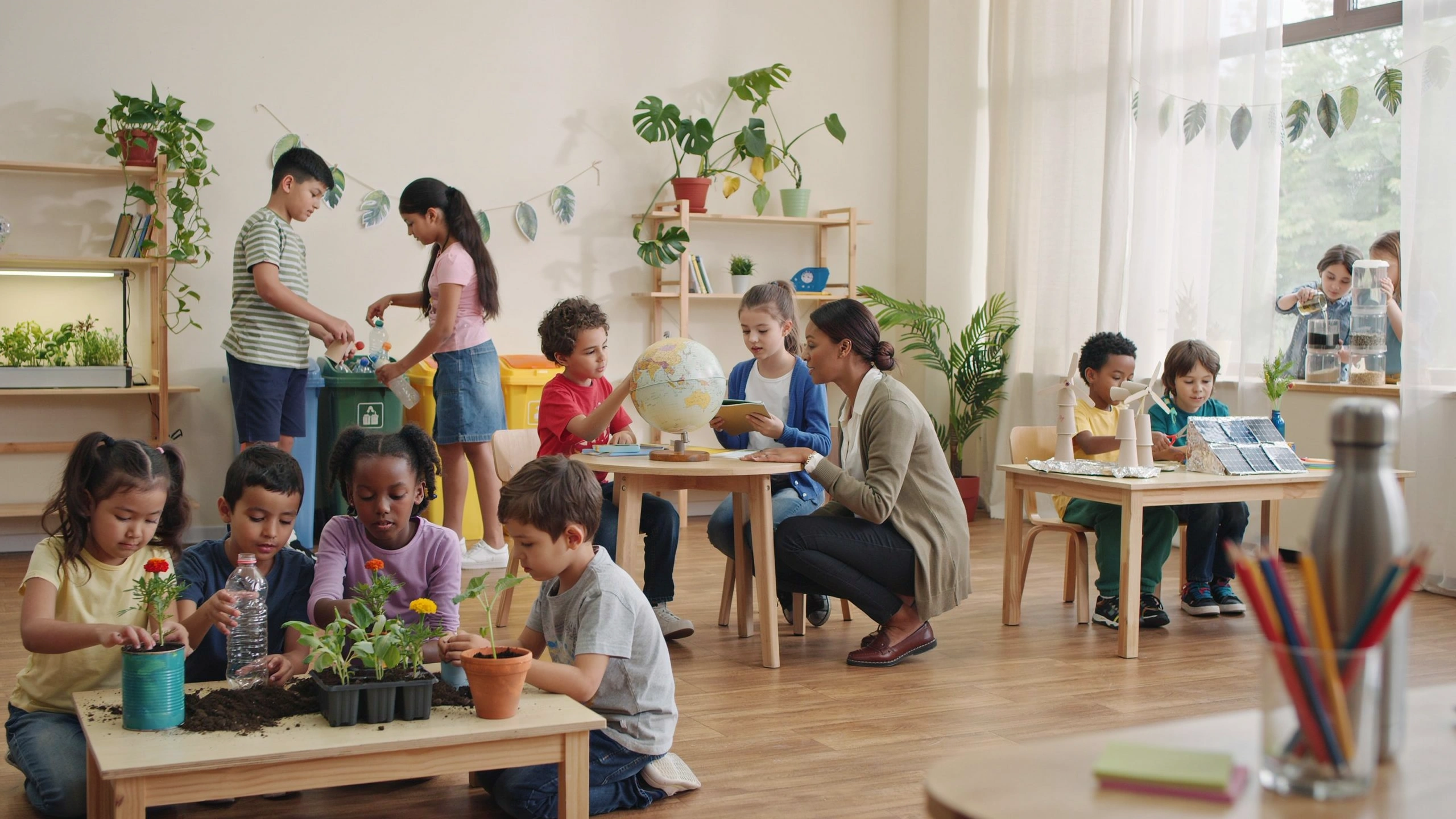
Teachers can make the SDGs meaningful through hands-on experiences such as:
- Organizing recycling initiatives.
- Planting school gardens.
- Conducting water conservation projects.
- Creating awareness campaigns about climate action.
- Participating in community service.
- Designing sustainable city models.
- Researching global environmental issues.
- Holding classroom debates on sustainable development.
These activities encourage students to connect knowledge with action.
Focusing on Goal 4: Quality Education
Among the 17 goals, Quality Education has a special place because education supports the achievement of all the others.
Quality education helps people:
- Escape poverty.
- Improve health.
- Protect the environment.
- Promote equality.
- Strengthen economies.
- Build peaceful societies.
By ensuring inclusive and equitable education for all, societies create opportunities for lifelong learning and sustainable development.
The Role of Teachers
Teachers are essential in bringing the SDGs to life.
Effective educators:
- Connect lessons to real-world challenges.
- Encourage inquiry and discussion.
- Promote collaboration.
- Inspire community involvement.
- Model sustainable behaviors.
- Foster optimism and problem-solving.
Students are more likely to adopt sustainable habits when they see them practiced consistently.
The Role of Families
Parents reinforce sustainability through everyday routines.
Families can:
- Reduce household waste.
- Recycle regularly.
- Save water and electricity.
- Support local environmental projects.
- Volunteer in community activities.
- Discuss global issues positively.
- Encourage kindness and inclusion.
Home experiences strengthen classroom learning.
Technology and the SDGs
Technology expands opportunities for learning about sustainable development.
Students can:
- Explore interactive SDG resources.
- Participate in virtual international projects.
- Analyze environmental data.
- Watch educational documentaries.
- Connect with classrooms worldwide.
- Create digital awareness campaigns.
Technology makes global learning more engaging and collaborative.
Challenges in Teaching the SDGs
Schools may encounter challenges such as:
- Limited curriculum time.
- Lack of instructional resources.
- Teacher training needs.
- Complex global topics.
- Balancing local and global perspectives.
Despite these obstacles, even small classroom projects can foster meaningful understanding.
Long-Term Benefits
Students who learn about the SDGs often become adults who:
- Make environmentally responsible decisions.
- Support social inclusion.
- Value lifelong learning.
- Participate actively in their communities.
- Think critically about global challenges.
- Collaborate across cultures.
- Promote sustainable development.
These qualities contribute to stronger communities and a healthier planet.
Preparing Future Leaders
The next generation will play a crucial role in achieving sustainable development.
Through education, students develop:
- Leadership.
- Innovation.
- Responsibility.
- Compassion.
- Collaboration.
- Resilience.
These competencies prepare them to address future global challenges with confidence and creativity.
Conclusion
The United Nations Sustainable Development Goals provide an inspiring framework for educating responsible global citizens. By integrating the SDGs into everyday learning, schools help students understand that sustainability, equality, peace, and prosperity are shared responsibilities that require cooperation and commitment.
Education empowers young people to see themselves not merely as learners but as problem-solvers, innovators, and leaders capable of making meaningful contributions to the world. Whether planting trees, reducing waste, promoting inclusion, or supporting their communities, students discover that every positive action matters.
As schools continue to prepare children for the future, teaching the Sustainable Development Goals ensures that the next generation is equipped with the knowledge, skills, and values needed to build a more just, peaceful, and sustainable world for everyone.