
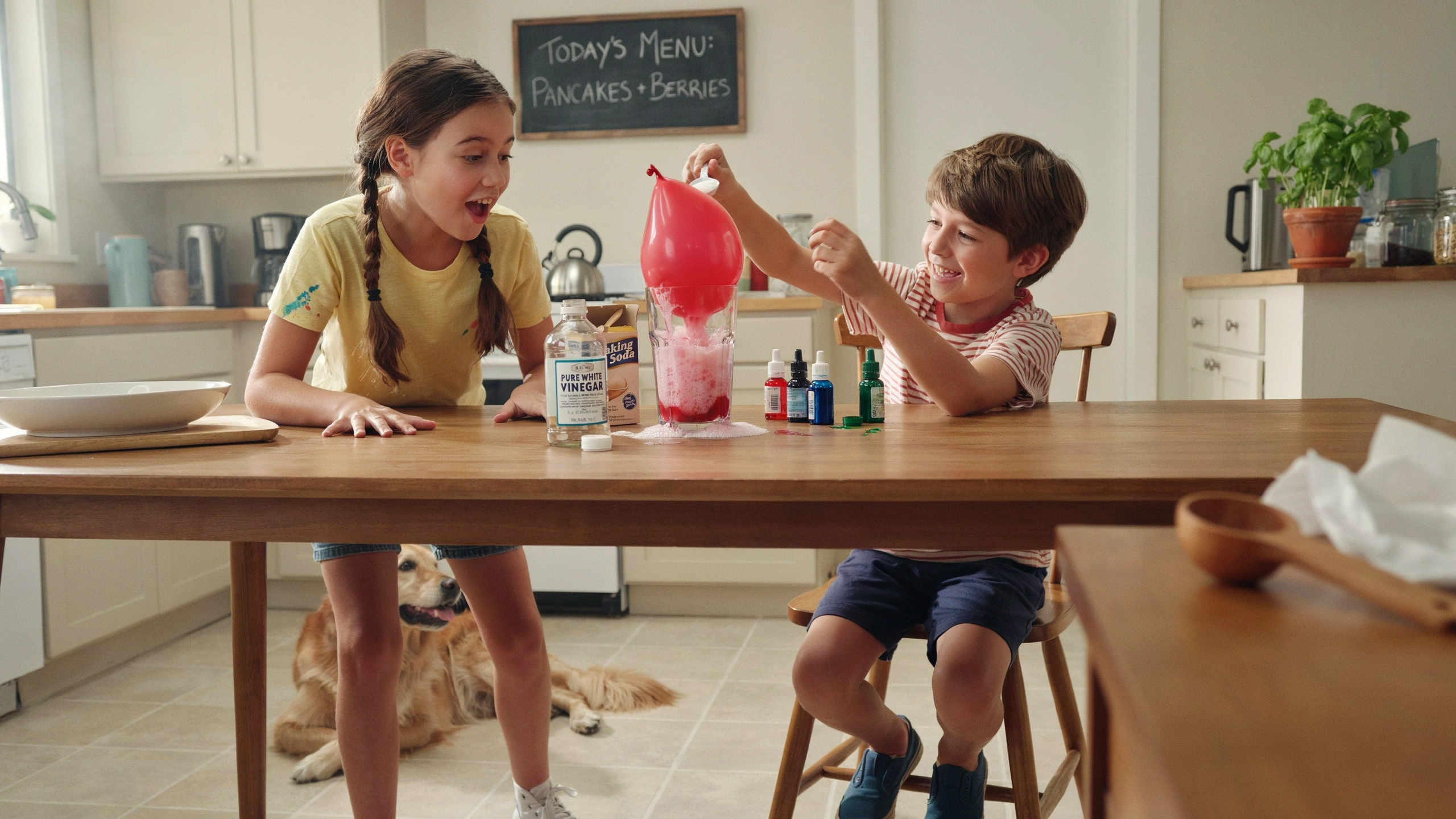
Science doesn’t have to happen in a laboratory. Some of the best learning experiences take place right at home using common household items. Children are naturally curious, and simple experiments help them explore the world while developing observation, prediction, and problem-solving skills.
Whether you’re a parent, teacher, or caregiver, these easy science activities can turn an ordinary afternoon into an exciting discovery session.
Why Simple Science Experiments Matter
Hands-on experiments encourage children to:
- Develop critical thinking skills
- Learn through observation and exploration
- Build confidence by testing ideas
- Improve communication by explaining results
- Understand basic scientific concepts in a fun way
- Stay engaged through active learning
Most importantly, these activities teach children that science is about asking questions and discovering answers.
Safety First
Before beginning any experiment:
- Always supervise young children.
- Use only non-toxic household materials.
- Wash hands after activities.
- Protect tables with newspaper or a plastic mat.
- Keep experiments simple and age-appropriate.
Experiment 1: Dancing Raisins
Materials
- Clear glass
- Sparkling water
- A handful of raisins
Instructions
- Fill the glass with sparkling water.
- Drop several raisins into the glass.
- Watch carefully.
What Happens?
Tiny bubbles attach to the raisins, making them float to the surface. When the bubbles pop, the raisins sink again, creating a fun dancing motion.
Science Behind It
Carbon dioxide bubbles are lighter than water. When enough bubbles stick to a raisin, they lift it upward. Once the bubbles burst, gravity pulls the raisin back down.
Experiment 2: Color-Changing Milk
Materials
- Milk
- Food coloring
- Dish soap
- Cotton swab
- Shallow plate
Instructions
- Pour milk into the plate.
- Add several drops of different food coloring.
- Dip a cotton swab into dish soap.
- Touch the center of the milk.
What Happens?
The colors quickly swirl and spread across the milk, creating beautiful patterns.
Science Behind It
Dish soap breaks apart the fat molecules in the milk. As the molecules move, they carry the food coloring along, creating colorful movement.
Experiment 3: Floating Egg
Materials
- Two glasses
- Water
- Salt
- Egg
Instructions
- Fill both glasses with water.
- Add several tablespoons of salt to one glass and stir.
- Place the egg in each glass.
What Happens?
The egg sinks in fresh water but floats in salty water.
Science Behind It
Salt increases the density of the water, making it easier for the egg to float.
Experiment 4: Homemade Lava Lamp
Materials
- Clear bottle
- Vegetable oil
- Water
- Food coloring
- Effervescent tablet
Instructions
- Fill two-thirds of the bottle with oil.
- Add water until nearly full.
- Add a few drops of food coloring.
- Drop in half an effervescent tablet.
What Happens?
Colorful bubbles move up and down like a lava lamp.
Science Behind It
Oil and water do not mix because they have different molecular properties. The tablet releases carbon dioxide gas, carrying colored water upward before it sinks again.
Experiment 5: Magic Pepper Trick
Materials
- Plate
- Water
- Ground black pepper
- Dish soap
Instructions
- Fill the plate with water.
- Sprinkle pepper over the surface.
- Touch the water with a clean finger.
- Next, dip your finger in dish soap and touch the water again.
What Happens?
The pepper quickly moves away from your finger.
Science Behind It
Soap changes the surface tension of the water, causing the pepper to move rapidly toward the edges.
Encourage Scientific Thinking
Instead of immediately explaining the results, ask children questions such as:
- What do you think will happen?
- Why did that happen?
- What changed?
- What would happen if we used more water?
- Can you think of another way to test this idea?
These questions help children think like real scientists.
Tips for Making Science Fun
- Let children make predictions before each experiment.
- Encourage drawing pictures of the results.
- Keep a simple science journal.
- Repeat experiments with different materials.
- Celebrate curiosity rather than perfect answers.
Science is about exploration, and every observation is an opportunity to learn.
Skills Children Develop
These activities help build:
- Observation skills
- Logical thinking
- Problem-solving abilities
- Vocabulary development
- Fine motor skills
- Patience and perseverance
- Confidence in learning
Final Thoughts
Simple science experiments using everyday household items prove that meaningful learning doesn’t require expensive equipment. With just a few common materials, children can discover exciting scientific principles while having fun. Every experiment encourages curiosity, creativity, and a lifelong love of learning.
The next time your child asks, “Why does that happen?” consider turning the question into a hands-on experiment. You may inspire the next great scientist—one simple discovery at a time.