
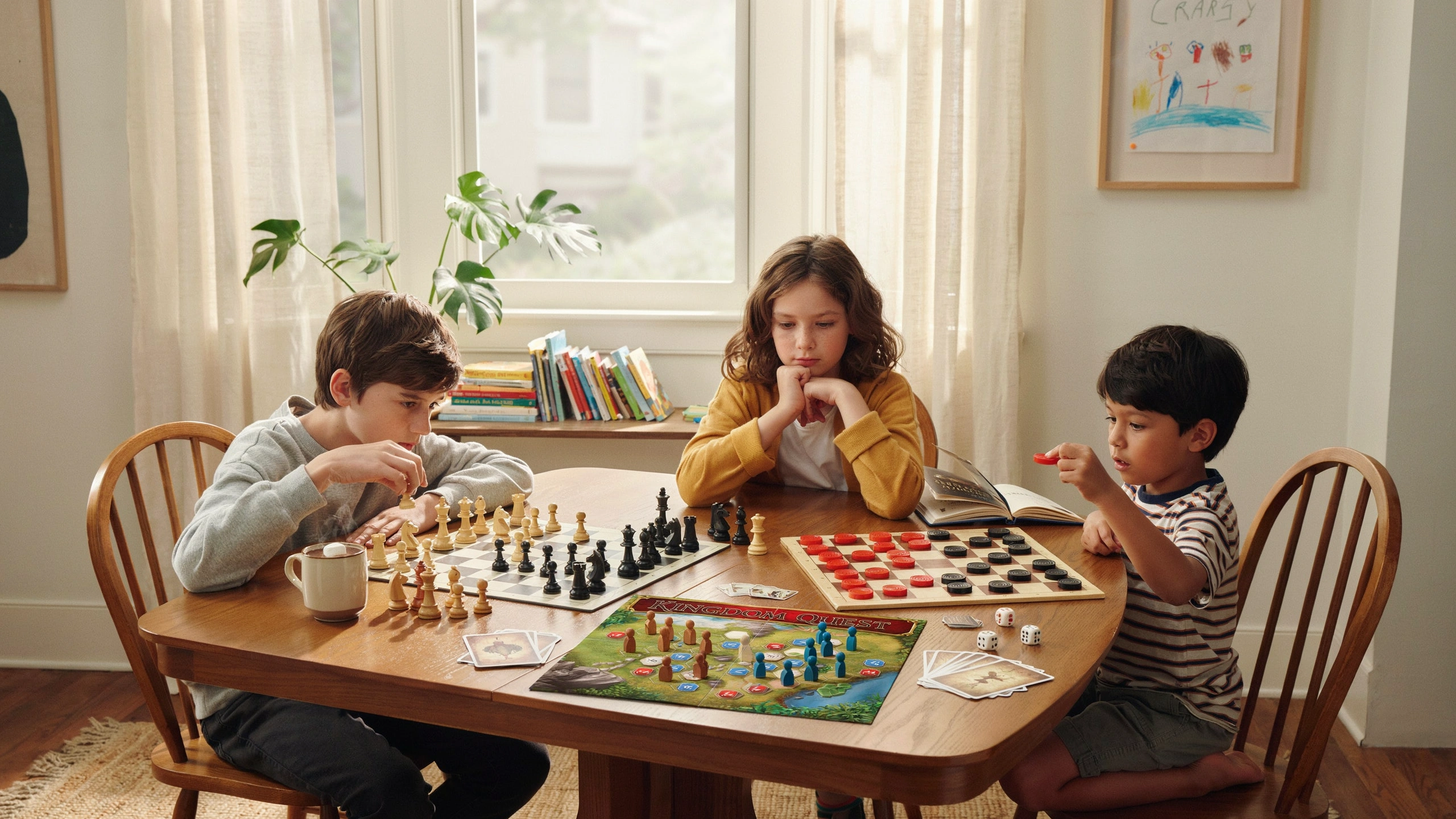
Introduction
Every day, children make dozens of decisions—from choosing what to wear to solving school assignments and working with friends. Learning how to make thoughtful decisions is an essential life skill, and strategy games provide one of the most enjoyable ways to develop it.
Unlike games that depend mostly on luck, strategy games encourage children to think ahead, evaluate different options, predict possible outcomes, and adapt when situations change. Whether played with board games, card games, puzzles, or simple family activities, strategy games help young learners become confident problem solvers and independent thinkers.
What Are Strategy Games?
Strategy games are activities that require planning and thoughtful decision-making rather than random guessing. Players must consider their choices carefully and think about the consequences before making a move.
Examples include:
- Chess
- Checkers
- Connect Four
- Tic-Tac-Toe
- Sudoku
- Tangrams
- Logic puzzles
- Escape room challenges
Each game encourages children to use reasoning instead of relying on chance.
1. Strategy Games Teach Children to Think Ahead
One of the greatest benefits of strategy games is learning to plan ahead.
Instead of asking, “What should I do now?” children begin asking:
- What will happen next?
- What choices do I have?
- Which option is the best?
- What could my opponent do?
Thinking several steps ahead helps children make smarter decisions in everyday life.
Skills Developed:
- Planning
- Prediction
- Decision-making
- Logical reasoning
2. Children Learn That Every Choice Has Consequences
Every move in a strategy game creates new opportunities—or new challenges.
As children play, they begin to understand that thoughtful decisions often lead to better results than acting too quickly.
This important lesson transfers to:
- Schoolwork
- Friendships
- Sports
- Daily responsibilities
3. Strategy Games Build Problem-Solving Skills
Many games present unexpected situations that require children to adjust their plans.
Instead of giving up, they learn to:
- Analyze the problem
- Consider multiple solutions
- Test different strategies
- Learn from mistakes
This flexibility helps children become confident problem solvers.
4. They Encourage Patience
Successful strategy players rarely rush.
Children gradually discover that taking a little extra time to think often produces better outcomes than making quick decisions.
Patience becomes a valuable habit both inside and outside the classroom.
5. Kids Learn to Adapt
Even the best plan doesn’t always work.
Strategy games teach children how to:
- Change their approach
- Learn from experience
- Stay calm under pressure
- Find alternative solutions
Adaptability is an essential skill for lifelong learning.
6. Memory and Attention Improve Naturally
Many strategy games require children to remember previous moves, recognize patterns, and stay focused throughout the game.
These activities strengthen:
- Working memory
- Concentration
- Attention to detail
- Mental organization
These skills support better academic performance.
7. Strategy Games Encourage Logical Thinking
Rather than making random choices, children begin evaluating evidence before acting.
They ask themselves:
- Which move gives me the biggest advantage?
- What are the risks?
- Is there a smarter solution?
Logical thinking becomes a natural habit through repeated practice.
8. Children Build Confidence Through Experience
Winning is exciting, but learning from mistakes is equally valuable.
As children improve over time, they realize that success comes from practice, careful thinking, and persistence—not simply natural talent.
This builds healthy self-confidence and a growth mindset.
9. Playing with Others Develops Social Skills
Many strategy games involve two or more players, creating opportunities to practice important social behaviors.
Children learn to:
- Take turns
- Respect rules
- Communicate clearly
- Accept both wins and losses gracefully
- Cooperate during team games
These experiences strengthen emotional intelligence as well as logical thinking.
10. Strategy Games Prepare Children for Real-Life Decisions
The thinking habits developed during games are useful in everyday situations.
Children become better at:
- Organizing school projects
- Solving conflicts with friends
- Managing their time
- Making responsible choices
- Planning long-term goals
These practical skills continue to benefit them throughout life.
Choosing the Right Strategy Games by Age
Ages 3–5
Choose simple games that teach matching, taking turns, and basic planning.
Examples:
- Tic-Tac-Toe
- Matching games
- Simple shape puzzles
Ages 6–9
Introduce games with more rules and decision-making.
Examples:
- Connect Four
- Checkers
- Beginner chess
- Tangrams
Ages 10+
Older children enjoy more advanced challenges.
Examples:
- Chess
- Sudoku
- Logic puzzles
- Escape room games
- Strategy card games
Increasing the level of challenge gradually keeps children motivated without causing frustration.
Tips for Parents and Teachers
Help children get the most from strategy games by:
- Asking them to explain their thinking.
- Praising thoughtful decisions instead of only winning.
- Allowing mistakes to become learning opportunities.
- Playing together regularly.
- Choosing games that are both challenging and enjoyable.
- Encouraging children to try different strategies.
Conclusion
Strategy games are much more than entertainment—they are powerful tools for developing smarter decision-making skills. Through planning, analyzing, adapting, and reflecting, children learn how to think logically and solve problems with confidence.
Whether playing chess, solving puzzles, or enjoying a family board game night, every thoughtful move helps build the critical thinking skills children need for success in school and everyday life. By making strategy games part of your family’s routine, you create fun learning experiences that prepare children for a lifetime of wise decisions.