
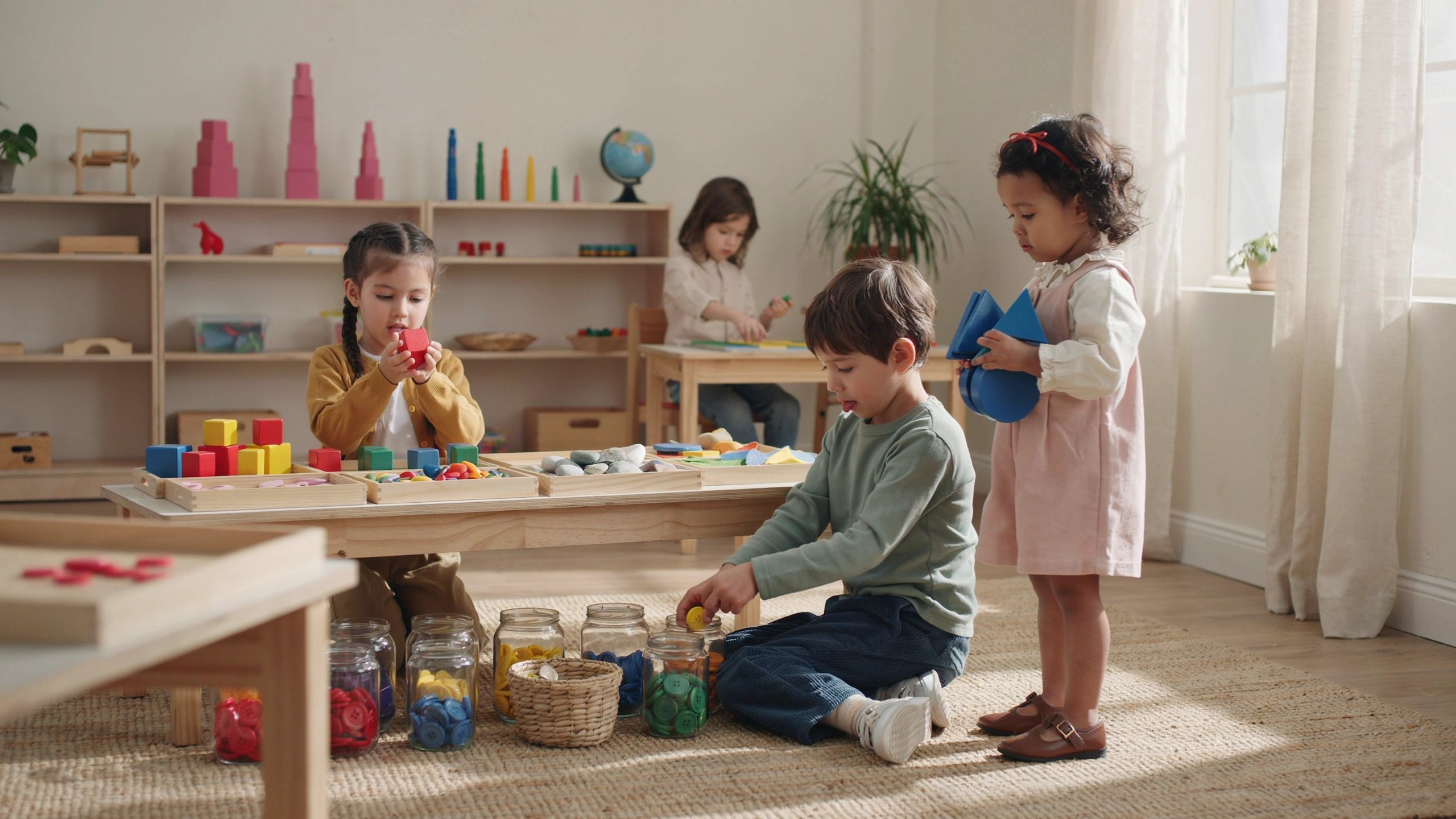
Object sorting is one of the simplest yet most effective learning activities for young children. By grouping everyday items according to their color, shape, size, texture, or purpose, children develop important cognitive skills that support early learning. While sorting may seem like a basic task, it requires careful observation, concentration, memory, and logical thinking.
Sorting games help children notice similarities and differences, recognize patterns, and organize information—all of which are essential for success in reading, mathematics, science, and everyday problem-solving.
In this article, you’ll discover engaging object sorting games that enhance attention to detail while making learning fun and interactive.
Why Sorting Activities Matter
Sorting is one of the first classification skills children learn. It teaches them how to compare objects, identify common characteristics, and organize information into meaningful groups.
Regular sorting activities help develop:
- Attention to detail
- Visual discrimination
- Observation skills
- Logical reasoning
- Concentration
- Working memory
- Vocabulary development
- Fine motor coordination
These foundational skills prepare children for more advanced learning as they grow.
1. Color Sorting Game
Gather a variety of colorful objects such as:
- Building blocks
- Buttons
- Pom-poms
- Bottle caps
- Toy animals
Ask children to sort the objects into groups based on color.
To increase the challenge, ask questions such as:
- Which color has the most objects?
- Which color has the fewest?
- Can you find two objects with the same shade?
This activity strengthens both observation and mathematical thinking.
2. Shape Sorting Challenge
Provide objects with different shapes, including:
- Circles
- Squares
- Triangles
- Rectangles
- Stars
Children sort them into matching groups while learning basic geometry concepts.
3. Size Sorting Activity
Collect objects of different sizes.
Examples include:
- Small, medium, and large balls
- Different-sized cups
- Building blocks
- Leaves collected outdoors
Children arrange them from smallest to largest or largest to smallest.
This activity introduces comparison and sequencing skills.
4. Texture Sorting Game
Encourage children to explore objects through touch.
Gather items that are:
- Soft
- Rough
- Smooth
- Bumpy
- Fuzzy
Children sort the objects based on how they feel.
This sensory activity develops observation while expanding descriptive vocabulary.
5. Nature Sorting Adventure
Take a walk outside and collect natural treasures such as:
- Leaves
- Stones
- Pinecones
- Flowers
- Twigs
After returning indoors, sort them by:
- Color
- Shape
- Size
- Type
Nature sorting encourages curiosity and scientific observation.
6. Kitchen Item Sorting
Use safe household items like:
- Spoons
- Forks
- Measuring cups
- Plastic bowls
- Wooden spoons
Children classify the objects according to their purpose, size, or material.
This activity connects learning to everyday life.
7. Animal Sorting Game
Prepare pictures or toy animals.
Children organize them into groups such as:
- Farm animals
- Wild animals
- Ocean animals
- Birds
- Insects
This strengthens vocabulary while encouraging logical classification.
8. Food Sorting Activity
Provide pictures or toy foods.
Children sort them into categories like:
- Fruits
- Vegetables
- Dairy products
- Grains
- Healthy snacks
This game also introduces healthy eating habits.
9. Alphabet Sorting
Write uppercase and lowercase letters on separate cards.
Children match:
- A → a
- B → b
- C → c
Older children can sort letters into vowels and consonants.
This supports early literacy development.
10. Mixed Object Challenge
Place a variety of unrelated objects in a basket.
Examples include:
- Toy car
- Apple
- Pencil
- Sock
- Spoon
- Leaf
- Ball
Invite children to decide how they would sort the objects.
There is often more than one correct answer, encouraging flexible thinking and creativity.
Ways to Increase the Challenge
As children’s sorting skills improve, make the activities more advanced by:
- Using more objects.
- Introducing multiple sorting rules.
- Timing the activity.
- Asking children to explain their reasoning.
- Combining color, shape, and size into one challenge.
- Encouraging children to invent their own sorting categories.
These challenges strengthen critical thinking and decision-making.
Tips for Parents and Teachers
To make sorting games more engaging:
- Use familiar objects from everyday life.
- Keep activities short and enjoyable.
- Rotate materials regularly.
- Encourage discussion during sorting.
- Ask open-ended questions.
- Celebrate effort and creative thinking.
Allowing children to explain why they grouped objects together helps deepen understanding.
Skills Developed Through Sorting Games
Object sorting supports many important developmental areas, including:
- Attention to detail
- Visual perception
- Memory
- Logical reasoning
- Language development
- Mathematical thinking
- Scientific observation
- Independent problem-solving
These skills provide a strong foundation for lifelong learning.
Everyday Opportunities for Sorting
Sorting can become part of daily routines through simple activities such as:
- Organizing toys.
- Matching socks after laundry.
- Separating recycling materials.
- Arranging books by size.
- Grouping crayons by color.
- Sorting groceries before putting them away.
These everyday tasks reinforce learning in meaningful ways.
Final Thoughts
Object sorting games are enjoyable, inexpensive, and highly effective for developing attention to detail in young children. By comparing, organizing, and classifying everyday objects, children strengthen essential cognitive skills while gaining confidence in their ability to observe and solve problems.
Whether using household items, toys, classroom materials, or treasures from nature, sorting activities transform ordinary moments into valuable learning experiences. With regular practice, children develop sharper observation skills, stronger logical thinking, and greater independence that will benefit them throughout their education and beyond.