
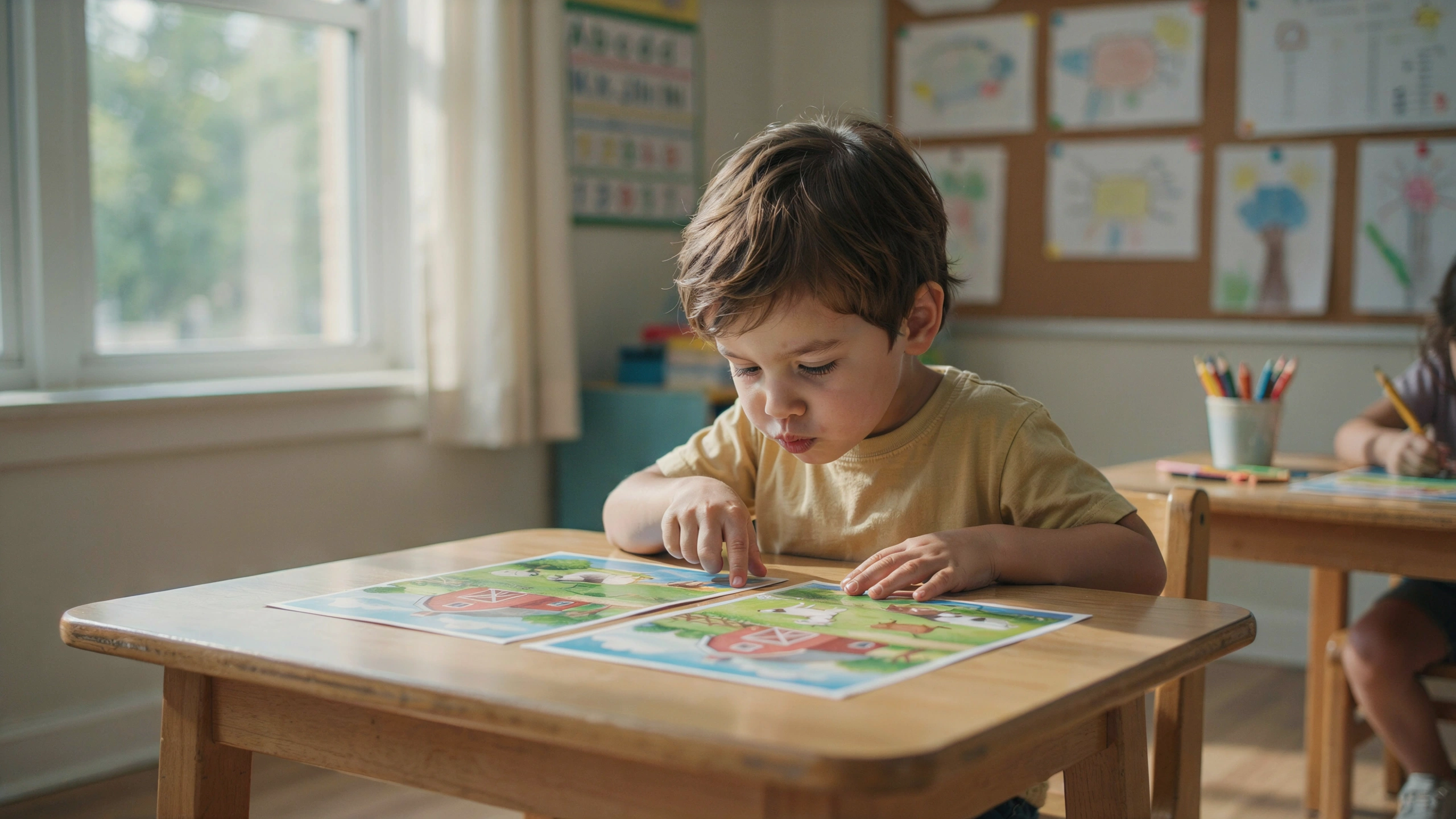
Spot-the-difference activities have been a favorite pastime for children for generations. At first glance, two pictures may appear identical, but careful observation reveals small changes hidden within the details. Finding these differences is more than just a fun challenge—it is an excellent way to strengthen focus, visual attention, memory, and problem-solving skills.
Whether used at home, in the classroom, or during travel, spot-the-difference games encourage children to slow down, observe carefully, and think critically. These activities also help develop the concentration needed for reading, writing, mathematics, and everyday learning.
In this article, you’ll discover why spot-the-difference activities are so valuable and explore creative ways to use them to support children’s cognitive development.
Why Observation Skills Are Important
Observation is one of the key building blocks of learning. Children use observation every day to:
- Recognize letters and numbers
- Identify shapes and colors
- Read pictures and diagrams
- Follow visual instructions
- Complete puzzles
- Notice patterns
- Solve everyday problems
The ability to notice small details improves academic performance while building confidence and curiosity.
Benefits of Spot-the-Difference Activities
These visual games help children strengthen:
- Attention span
- Visual memory
- Concentration
- Observation skills
- Problem-solving abilities
- Logical thinking
- Patience
- Perseverance
Because children enjoy the challenge, they often stay engaged for longer periods without realizing they are learning.
How Spot-the-Difference Games Work
Children compare two nearly identical pictures and search for small changes.
Differences might include:
- A missing object
- A different color
- A changed shape
- An extra item
- A missing pattern
- A character with different clothing
Each discovered difference encourages careful visual scanning and sustained attention.
1. Animal Difference Challenge
Use pictures of animals with several hidden differences.
Examples might include:
- Missing tail
- Different ear shape
- Changed fur color
- Extra spots
Children enjoy comparing familiar animals while improving observation.
2. Nature Scenes
Create two pictures of a park, forest, or garden.
Hide small differences such as:
- A missing flower
- Different clouds
- Extra butterfly
- Changed tree leaves
Nature-themed puzzles encourage curiosity about the environment.
3. Classroom Picture Game
Design two classroom scenes with subtle differences.
Examples include:
- Missing pencil
- Different backpack color
- Extra notebook
- Moved chair
This familiar setting helps children relate the activity to everyday life.
4. Holiday Spot-the-Difference
Celebrate special occasions with themed puzzles.
Ideas include:
- Christmas decorations
- Halloween costumes
- Easter egg hunts
- Birthday parties
Seasonal activities keep learning exciting throughout the year.
5. Transportation Challenge
Use pictures featuring:
- Cars
- Trains
- Airplanes
- Boats
- Bicycles
Children compare the images to find hidden changes while expanding transportation vocabulary.
6. Underwater Adventure
Create colorful ocean scenes with fish, turtles, starfish, and coral reefs.
Children search for small differences while learning about sea life.
7. Fairy Tale Scenes
Use illustrations inspired by classic fairy tales.
Examples include:
- Castles
- Dragons
- Princesses
- Knights
- Magical forests
These imaginative puzzles encourage storytelling along with observation.
8. Build Your Own Spot-the-Difference
Invite children to draw a picture.
Photocopy or print it twice.
Together, change a few details in one version.
Children exchange puzzles with friends or family members.
Creating puzzles develops creativity as well as attention to detail.
Ways to Increase the Difficulty
As children become more skilled, make the puzzles more challenging by:
- Increasing the number of differences.
- Using more detailed illustrations.
- Setting a time limit.
- Asking children to explain each difference.
- Hiding very small changes.
- Comparing three pictures instead of two.
Gradually increasing the challenge keeps children motivated and learning.
Tips for Parents and Teachers
To make these activities more enjoyable:
- Choose age-appropriate images.
- Encourage children to work slowly.
- Praise careful observation rather than speed.
- Take breaks if children become frustrated.
- Let children create puzzles for others.
- Discuss each difference after it is found.
Positive encouragement helps children develop persistence and confidence.
Skills Developed Through Spot-the-Difference Activities
Regular practice supports many important areas of development, including:
- Visual discrimination
- Working memory
- Attention to detail
- Reading readiness
- Spatial awareness
- Critical thinking
- Concentration
- Independent learning
These skills transfer directly to classroom learning and everyday problem-solving.
Everyday Ways to Practice Observation
Observation skills can be strengthened outside of worksheets by encouraging children to:
- Compare two similar toys.
- Notice changes in a room after someone moves an object.
- Find matching leaves during a nature walk.
- Look for differences between family photos.
- Observe changes in the weather.
- Compare book illustrations.
These simple activities help children become more attentive and curious about the world around them.
Final Thoughts
Spot-the-difference activities are much more than entertaining puzzles. They help children develop focus, observation, memory, and critical thinking through enjoyable visual challenges. Every small detail they discover strengthens the cognitive skills needed for reading, mathematics, science, and everyday learning.
By incorporating these activities into home and classroom routines, parents and teachers can provide children with meaningful opportunities to practice concentration while having fun. With regular play, young learners become more confident observers, better problem-solvers, and more focused students.