Puzzle games have entertained children for generations, but their benefits go far beyond fun. Every puzzle solved helps young minds develop important cognitive skills such as attention, memory, logical reasoning, and problem-solving. Whether children are completing a jigsaw puzzle, fitting shape pieces together, or solving simple brain teasers, they are learning to think carefully, stay focused, and overcome challenges.
Because puzzles combine learning with play, they are one of the best educational activities for preschoolers and young learners. In this article, you’ll discover how puzzle games improve attention span and problem-solving skills, along with practical ideas for choosing the right puzzles for different ages.
Why Puzzle Games Are Important
Puzzles encourage children to slow down, observe carefully, and think through each step before making a decision. Unlike fast-paced digital entertainment, puzzles reward patience and persistence.
Regular puzzle play helps children develop:
- Attention span
- Concentration
- Visual perception
- Logical reasoning
- Spatial awareness
- Memory
- Fine motor skills
- Confidence
These abilities support success in both academic learning and everyday life.
How Puzzles Improve Attention Span
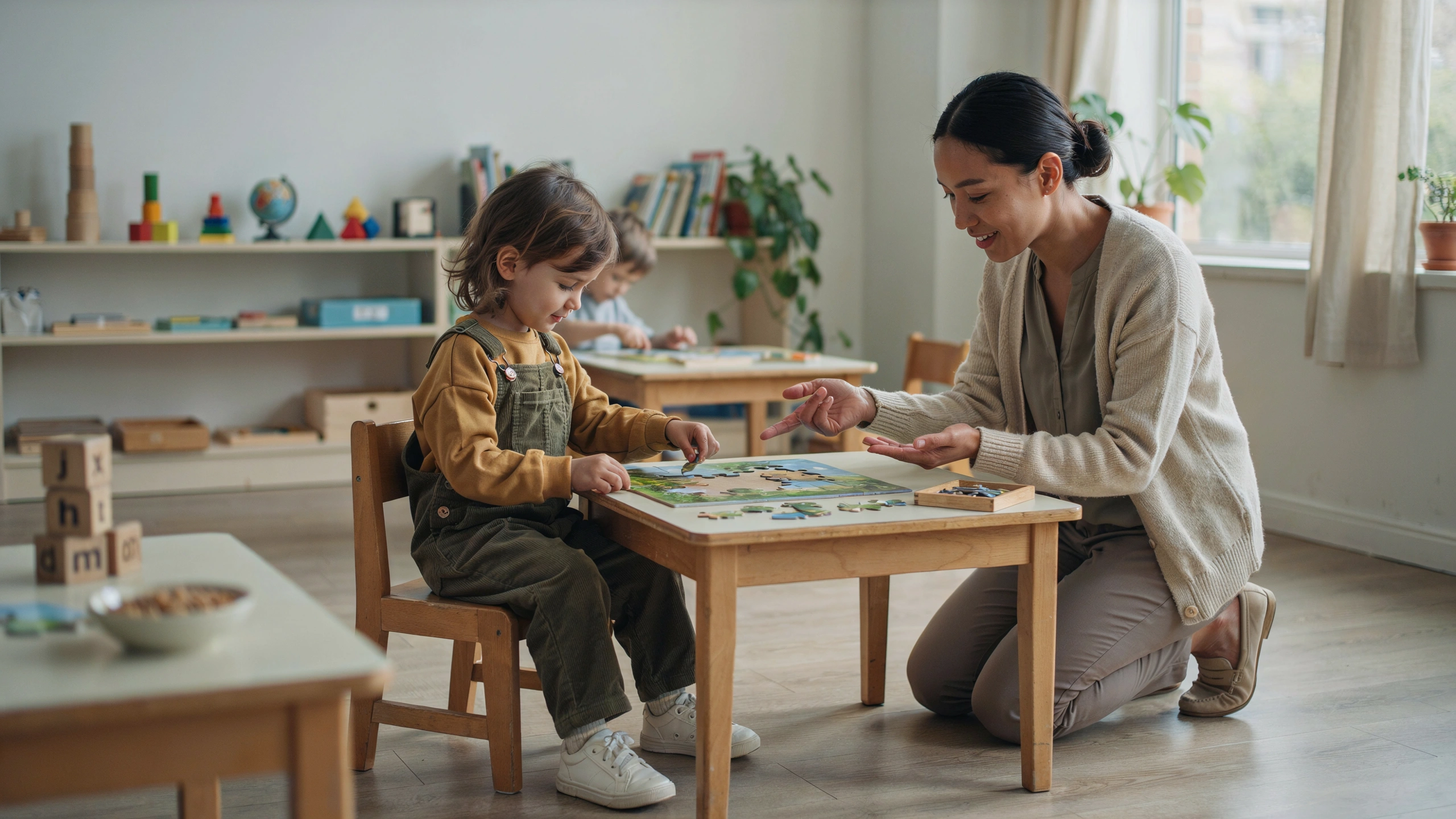
To complete a puzzle, children must stay focused on a single task for an extended period. They learn to ignore distractions while searching for matching shapes, colors, or patterns.
As children practice regularly, they gradually become better at:
- Concentrating for longer periods
- Following a plan
- Completing tasks without giving up
- Paying attention to small details
- Remaining patient when challenges arise
These skills transfer to classroom activities such as reading, writing, and mathematics.
Building Stronger Problem-Solving Skills
Every puzzle presents a challenge that requires children to think critically.
They begin asking themselves questions like:
- Which piece belongs here?
- What shape fits next?
- What happens if I turn this piece?
- Is there another solution?
This process encourages flexible thinking and teaches children that mistakes are part of learning.
Types of Puzzle Games for Young Children
Different puzzles develop different cognitive skills. Offering a variety of puzzle activities keeps children engaged while supporting multiple areas of development.
1. Jigsaw Puzzles
Jigsaw puzzles are excellent for improving:
- Visual memory
- Shape recognition
- Concentration
- Patience
Begin with puzzles containing large pieces before gradually increasing the difficulty.
2. Shape Sorters
Shape sorters introduce children to basic geometric shapes while encouraging logical thinking.
Children learn to compare:
- Circles
- Squares
- Triangles
- Rectangles
- Stars
Finding the correct opening strengthens observation and reasoning skills.
3. Pattern Puzzles
Pattern puzzles ask children to complete repeating sequences using colors, shapes, or objects.
For example:
Red – Blue – Red – Blue – ?
Recognizing patterns supports mathematical thinking and attention to detail.
4. Tangram Puzzles
Tangrams use geometric pieces to create animals, people, and everyday objects.
These puzzles improve:
- Spatial reasoning
- Creativity
- Planning
- Problem-solving
5. Maze Puzzles
Simple mazes encourage children to think ahead before making each move.
They develop:
- Planning skills
- Visual tracking
- Decision-making
- Persistence
6. Picture Sequence Puzzles
Children arrange picture cards in the correct order to tell a story.
This strengthens:
- Logical sequencing
- Memory
- Language development
- Comprehension
Making Puzzle Time More Engaging
Keep puzzle activities exciting by:
- Choosing themes your child enjoys.
- Working together as a family.
- Timing older children for an extra challenge.
- Letting children create their own puzzles from drawings.
- Rotating puzzles regularly to maintain interest.
Positive encouragement helps children stay motivated, even when a puzzle becomes difficult.
Choosing Age-Appropriate Puzzles
Selecting the right puzzle is important for building confidence.
Ages 2–3
- Large wooden puzzles
- Shape sorters
- 4–8 piece puzzles
Ages 3–4
- 12–24 piece jigsaw puzzles
- Color and pattern puzzles
- Simple mazes
Ages 4–6
- 24–60 piece puzzles
- Tangrams
- Picture sequence activities
- Logic puzzles
Gradually increasing the difficulty allows children to experience success while continuing to grow.
Everyday Puzzle Activities
Puzzle-solving doesn’t always require store-bought games.
You can create puzzles using:
- Family photographs cut into pieces
- Homemade matching cards
- Building blocks
- LEGO® bricks
- Paper shape puzzles
- Alphabet and number cards
- Household objects arranged into patterns
Creative homemade puzzles make learning both affordable and personalized.
Benefits Beyond Cognitive Development
Puzzle games also encourage valuable social and emotional skills, including:
- Patience
- Perseverance
- Teamwork
- Communication
- Self-confidence
- Independent thinking
- Goal setting
Completing a puzzle gives children a sense of accomplishment that motivates them to tackle new challenges.
Tips for Parents and Teachers
To maximize the benefits of puzzle play:
- Provide a quiet, distraction-free space.
- Encourage children to solve problems independently before offering help.
- Celebrate effort rather than speed.
- Break larger puzzles into smaller sections if needed.
- Include puzzle time in your weekly learning routine.
- Allow children to explain their thinking as they solve puzzles.
These strategies help children develop confidence while strengthening their thinking skills.
Final Thoughts
Puzzle games are one of the most effective ways to build attention span and problem-solving abilities in young children. Each puzzle encourages careful observation, logical thinking, and persistence while making learning enjoyable.
Whether children are completing jigsaw puzzles, solving mazes, arranging patterns, or building with blocks, they are developing essential cognitive skills that will benefit them throughout their education and beyond. By including puzzle games in daily play, parents and teachers can create engaging learning experiences that inspire curiosity, confidence, and a lifelong love of learning.