
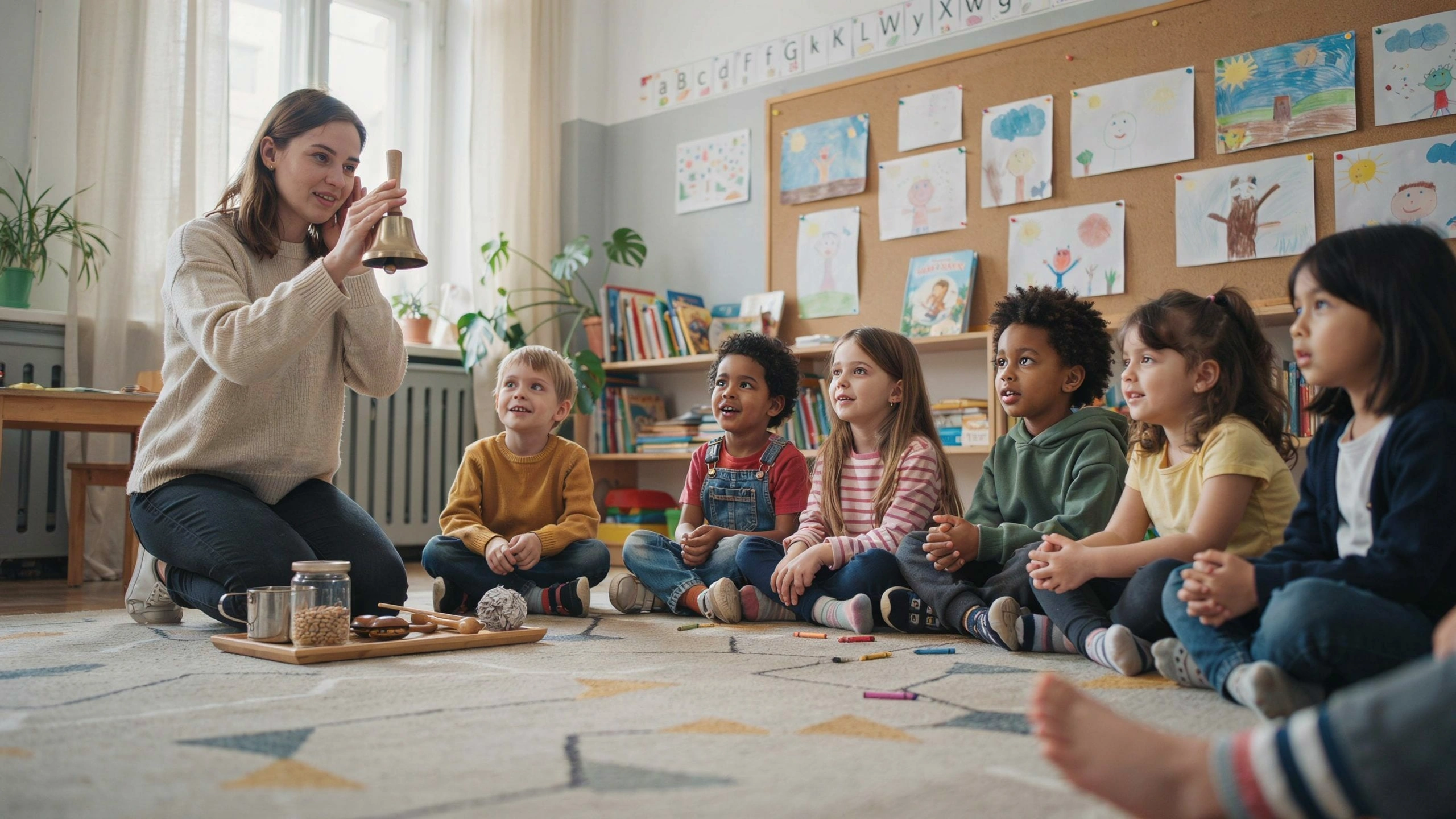
Listening is one of the first and most important skills children develop. Before they learn to read or write, children rely on listening to understand instructions, communicate with others, and explore the world around them. Strong listening skills also help build auditory memory—the ability to remember and process information that is heard.
Listening games provide a fun and engaging way to strengthen focus, improve memory, and support language development. Whether at home, in the classroom, or during playtime, these simple activities encourage children to pay close attention while enjoying the learning process.
In this article, you’ll discover a variety of listening games that help children improve focus and auditory memory through play.
What Is Auditory Memory?
Auditory memory is the ability to hear, store, and recall spoken information. Children use this skill every day when they:
- Follow verbal instructions
- Remember songs and rhymes
- Learn new vocabulary
- Answer questions after listening to a story
- Participate in classroom discussions
- Complete multi-step tasks
A well-developed auditory memory makes learning easier and helps children become more confident communicators.
Why Listening Games Are Important
Listening games strengthen many essential learning skills, including:
- Active listening
- Attention span
- Working memory
- Language comprehension
- Vocabulary development
- Sequencing skills
- Critical thinking
- Self-control
Because these games are interactive, children stay engaged while naturally improving their listening abilities.
1. Simon Says
“Simon Says” is a classic listening game that teaches children to pay close attention before acting.
For example:
- Simon says touch your ears.
- Simon says jump twice.
- Simon says clap your hands.
If the instruction does not begin with “Simon says,” children should not move.
Skills Developed:
- Listening accuracy
- Focus
- Self-control
- Working memory
2. Repeat the Word Chain
Begin with one word.
Example:
“Apple.”
The next player repeats the word and adds another.
“Apple, banana.”
Continue adding one word each turn.
As the chain grows longer, children strengthen their auditory memory and concentration.
3. Follow Multi-Step Directions
Give children a series of spoken instructions.
For example:
- Pick up the red block.
- Place it on the chair.
- Clap three times.
- Sit down quietly.
Gradually increase the number of steps as children improve.
4. Sound Detective
Create sounds using everyday household objects without showing them.
Examples include:
- Ringing a bell
- Tapping a spoon on a cup
- Shaking keys
- Closing a book
- Crumpling paper
Children guess which object made each sound.
This activity sharpens listening and sound discrimination skills.
5. Story Listening Challenge
Read a short story aloud.
Afterward, ask questions such as:
- Who was the main character?
- What happened first?
- Where did the story take place?
- How did the story end?
This activity improves listening comprehension and recall.
6. Clap the Rhythm
Clap a simple rhythm and ask children to repeat it exactly.
Start with three beats before increasing the complexity.
You can also use tapping, stomping, or snapping to create different patterns.
7. Whisper Message Game
Children sit in a line or circle.
Whisper a short sentence to the first child.
Each child quietly repeats the message to the next person.
The final child says the message aloud to compare it with the original.
This fun activity improves careful listening and memory.
8. Animal Sound Guessing
Play or imitate different animal sounds.
Examples include:
- Dog barking
- Cat meowing
- Cow mooing
- Duck quacking
- Sheep bleating
Children identify the animal and can imitate the sound themselves.
9. Musical Freeze
Play music while children dance.
When the music stops, everyone must freeze immediately.
Listening carefully for the music to stop helps improve attention and impulse control.
10. Finish the Sentence
Start a familiar sentence and pause before the last word.
For example:
- Twinkle, twinkle, little…
- The wheels on the bus go round and…
Children complete the sentence from memory.
This activity builds language skills and auditory recall.
Tips for Improving Listening Skills
Children develop listening abilities gradually, so it’s important to create a supportive learning environment.
Here are some helpful strategies:
- Speak clearly and at a comfortable pace.
- Minimize background noise during activities.
- Make eye contact before giving instructions.
- Keep directions short for younger children.
- Praise careful listening and effort.
- Practice listening games regularly.
Consistency helps children become stronger and more confident listeners.
Everyday Opportunities to Practice Listening
Listening skills can be strengthened throughout the day with simple activities such as:
- Singing songs together
- Reading bedtime stories
- Following cooking instructions
- Listening for sounds during a nature walk
- Playing “I Hear…” while outside
- Giving simple household tasks with verbal directions
These everyday experiences make learning natural and enjoyable.
Benefits Beyond Listening
Strong auditory memory supports many areas of development, including:
- Reading readiness
- Language and communication
- Classroom participation
- Social interaction
- Problem-solving
- Confidence
- Independent learning
Children who listen carefully are often better prepared to understand new concepts and follow instructions successfully.
Final Thoughts
Listening games are a simple yet powerful way to help children improve focus, auditory memory, and communication skills. Activities like “Simon Says,” rhythm copying, story recall, and sound guessing encourage children to pay attention, remember information, and respond thoughtfully.
By including these games in your daily routine, you can turn ordinary moments into valuable learning opportunities. Just a few minutes of listening practice each day can help children develop the attention and memory skills they need for lifelong learning and success.