
Introduction
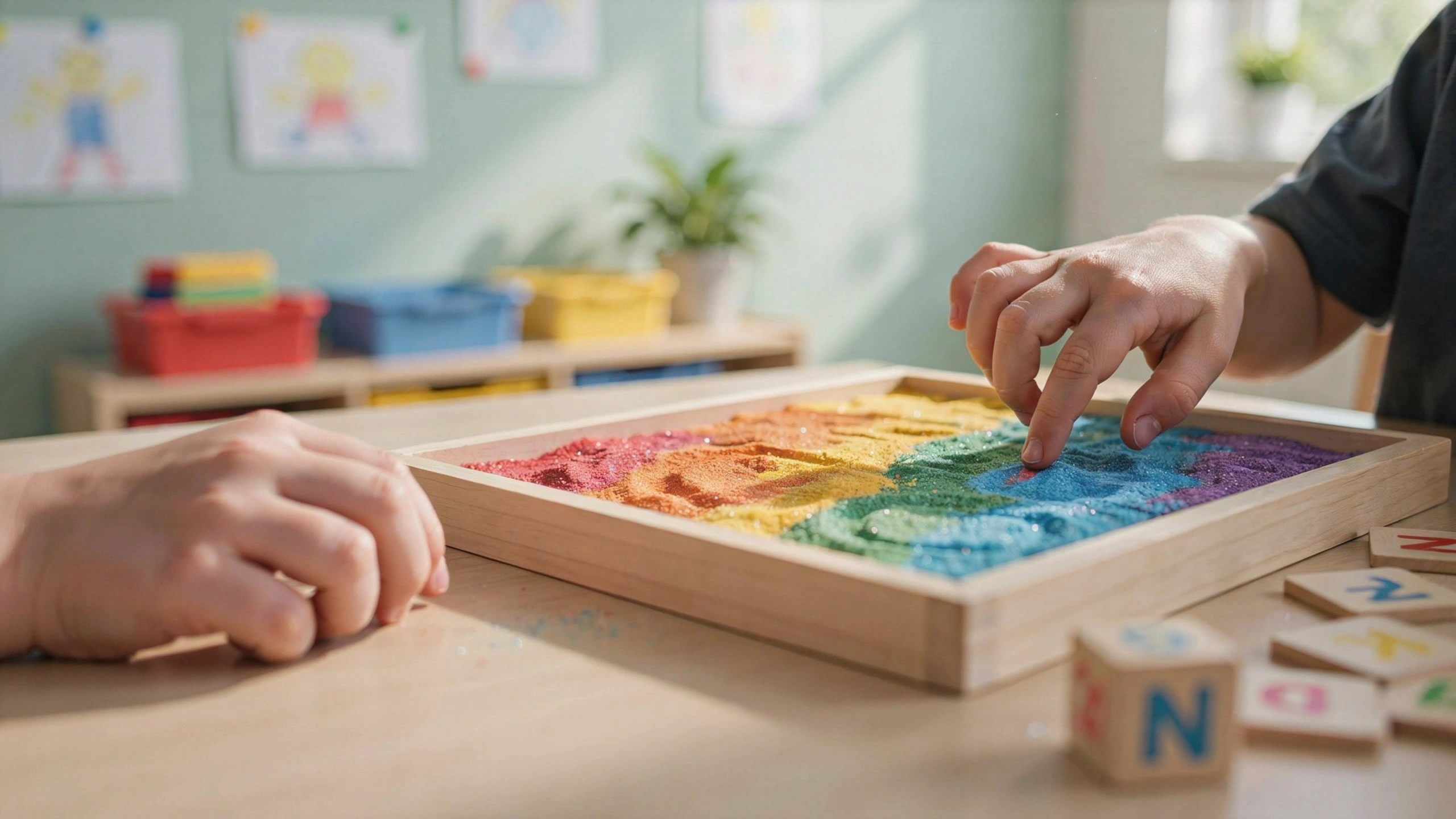
Children learn best when they can see, touch, and explore. Before they begin writing letters on paper, they need opportunities to practice the movements of handwriting in fun, low-pressure ways. One of the most engaging sensory activities for early learners is the Rainbow Salt Tray Letter Pre-Writing Practice.
In this colorful activity, children use their fingers or a writing tool to trace lines, shapes, and letters in a tray filled with brightly colored salt. The soft texture and vibrant colors make learning exciting while helping children develop the fine motor skills, letter formation, and confidence needed for handwriting.
Perfect for preschoolers, kindergarten students, homeschooling families, and early childhood classrooms, this activity combines sensory play with meaningful pre-writing practice.
Why Sensory Writing Activities Are Effective
Sensory experiences help children remember what they learn by engaging multiple senses at the same time. Tracing letters in salt allows children to feel every movement while seeing the shapes they create.
This type of activity helps children:
- Develop fine motor control.
- Improve finger strength.
- Learn correct letter formation.
- Increase hand-eye coordination.
- Build muscle memory for writing.
- Gain confidence without worrying about mistakes.
Since children can simply shake the tray and start again, they are encouraged to practice without fear of making errors.
Materials You’ll Need
You only need a few inexpensive supplies:
- Fine table salt
- Food coloring (one or more colors)
- Shallow tray or baking pan
- Mixing bowl
- Spoon
- Alphabet cards or printable letter guides (optional)
- Paintbrush, craft stick, or pencil with an eraser (optional)
You can prepare several colors and change them throughout the week to keep the activity fresh and exciting.
How to Prepare Rainbow Salt
Making colorful salt is quick and easy.
- Pour salt into a mixing bowl or zip-top bag.
- Add a few drops of food coloring.
- Mix until the color is evenly distributed.
- Spread the salt on a tray or baking sheet to dry completely.
- Pour the dry colored salt into a shallow tray.
Once dry, the salt can be stored in an airtight container and reused many times.
How to Play
- Spread a thin layer of colored salt evenly across the tray.
- Show your child a simple line, shape, or letter.
- Ask them to trace it slowly with one finger.
- Shake the tray gently to erase the drawing.
- Repeat with new shapes, patterns, or letters.
As children gain confidence, encourage them to write their names or simple words.
Skills Children Develop
The Rainbow Salt Tray activity supports a wide range of pre-writing abilities.
Fine Motor Control
Tracing in the salt strengthens finger muscles while improving precise hand movements.
Letter Formation
Children practice the correct sequence of strokes for forming letters before using a pencil.
Hand-Eye Coordination
Watching their fingers move through the salt helps children connect visual information with motor actions.
Sensory Awareness
The texture of the salt provides tactile feedback that reinforces learning and improves body awareness.
Concentration
Children focus on tracing carefully, helping them develop patience and attention to detail.
Fun Activity Variations
Keep the learning experience exciting with these creative ideas.
Shape Tracing
Begin with straight lines, curves, circles, squares, triangles, and zigzags before introducing letters.
Name Writing Practice
Invite children to trace the letters in their own names.
Number Fun
Practice writing numbers from 1 to 20 while counting aloud.
Sight Word Challenge
Older children can trace simple sight words such as “cat,” “sun,” or “play.”
Mystery Letter Game
Draw a letter secretly and ask your child to guess it by tracing over it with their finger.
Tips for Parents and Teachers
Help children enjoy the activity with these practical suggestions:
- Start with simple lines before moving to letters.
- Demonstrate each movement slowly.
- Encourage correct stroke direction whenever possible.
- Praise effort rather than perfection.
- Refresh the salt if it becomes uneven.
- Keep sessions short and enjoyable, around 10 to 15 minutes.
Allow children to experiment freely while offering gentle guidance.
Extending the Learning Experience
This sensory activity can easily be connected to other learning areas.
Try asking children to:
- Trace uppercase and lowercase letters.
- Match letters to beginning sounds.
- Draw simple pictures in the salt.
- Copy patterns from flashcards.
- Practice spelling short words.
- Create numbers and simple math symbols.
These extensions strengthen literacy and early math skills while maintaining the sensory experience.
Benefits Beyond Pre-Writing
The Rainbow Salt Tray activity offers many additional developmental benefits, including:
- Creativity
- Sensory exploration
- Visual discrimination
- Memory development
- Problem-solving
- Independent learning
- Confidence in trying new skills
Because mistakes disappear with a quick shake of the tray, children are more willing to experiment and practice.
Safety Tips
To ensure a safe activity:
- Supervise young children at all times.
- Remind children that the colored salt is not for eating.
- Use non-toxic food coloring.
- Clean the workspace after each session to prevent slipping on spilled salt.
- Store the colored salt in sealed containers for future use.
Conclusion
The Rainbow Salt Tray Letter Pre-Writing Practice is a simple, affordable, and engaging way to prepare children for handwriting. By tracing lines, shapes, letters, and words in colorful salt, children strengthen fine motor control, develop letter formation skills, and build confidence through sensory exploration.
Whether used at home or in the classroom, this enjoyable activity transforms early writing practice into a playful learning adventure. With regular practice, children develop the strong foundation they need for successful handwriting and a lifelong love of learning.