
Introduction
Before children can confidently write letters and words, they need to develop the ability to guide their eyes and hands together. One of the most important pre-writing skills is visual tracking—the ability to follow lines, shapes, and patterns smoothly. A fun way to strengthen this skill is through the Maze Sticker Adventure.
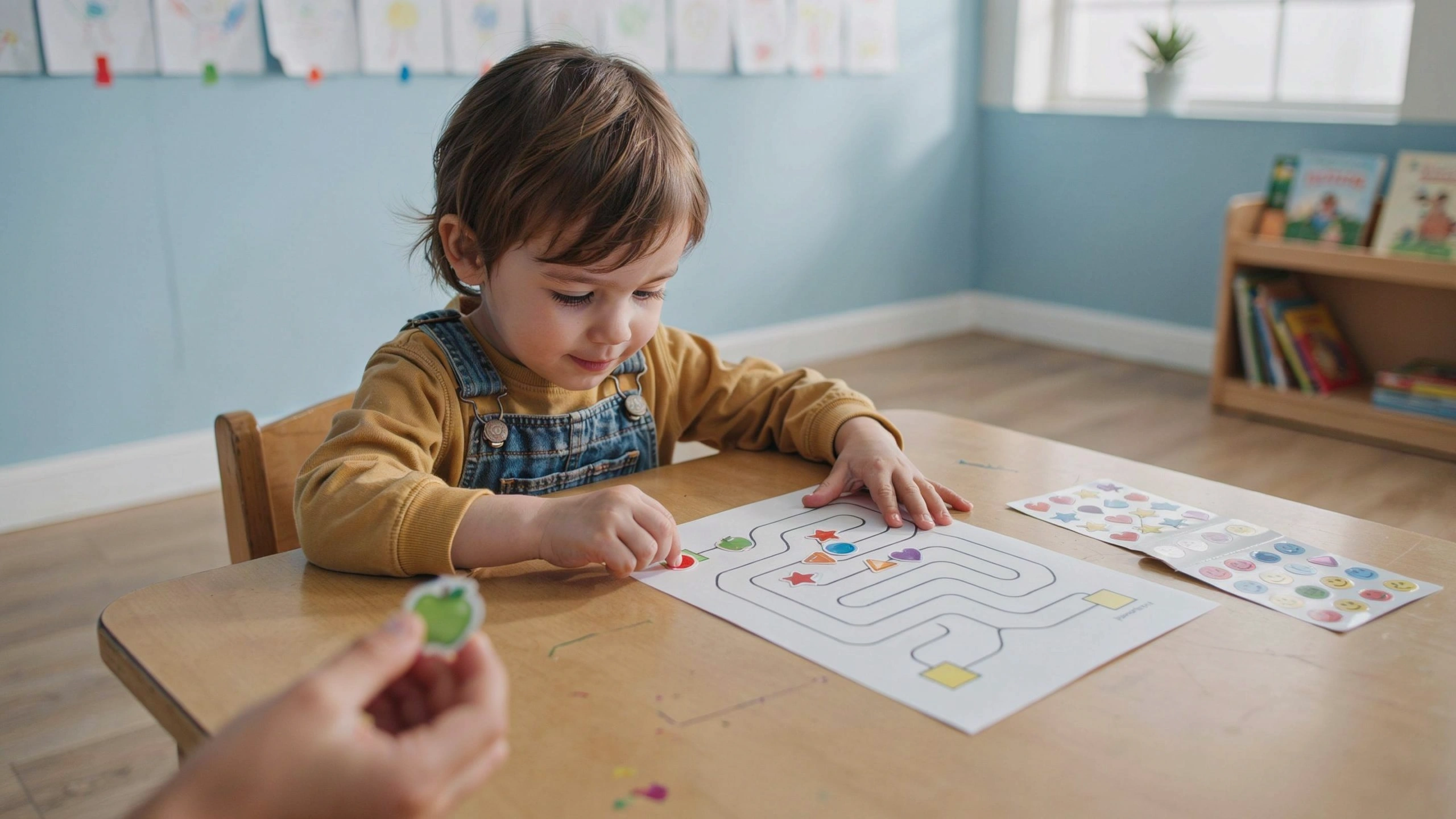
In this exciting activity, children place colorful stickers along the paths of simple mazes while carefully following the correct route from start to finish. As they complete each maze, they improve hand-eye coordination, visual attention, and pencil readiness without even realizing they are practicing essential learning skills.
The Maze Sticker Adventure is perfect for preschoolers, kindergarten children, homeschool activities, and early childhood classrooms.
Why Visual Tracking Is Important for Writing
Visual tracking allows children to move their eyes smoothly across a page while controlling their hand movements. This skill is essential for handwriting, reading, drawing, and many daily activities.
Strong visual tracking helps children:
- Follow lines from left to right.
- Trace shapes and letters accurately.
- Maintain proper spacing when writing.
- Improve reading readiness.
- Strengthen hand-eye coordination.
- Increase attention and focus.
Developing these abilities early makes learning to write much easier.
Materials You’ll Need
This activity requires only a few simple materials:
- Colorful dot stickers or small reward stickers
- Printed maze worksheets or hand-drawn mazes
- Blank paper
- Markers or crayons
- Pencil (optional for advanced learners)
- Small container for stickers
Choose large stickers for younger children and smaller stickers for older learners to provide an appropriate level of challenge.
How to Play
- Print or draw a simple maze with a clear start and finish.
- Give your child a sheet of stickers.
- Ask them to begin at the starting point.
- Place one sticker at a time along the correct path.
- Continue until they reach the finish without leaving the maze.
- Encourage children to complete additional mazes with different designs and levels of difficulty.
As children improve, introduce narrower paths and more complex maze patterns.
Skills Children Develop
The Maze Sticker Adventure strengthens many important pre-writing skills.
Visual Tracking
Children practice following winding paths with their eyes while coordinating precise hand movements.
Hand-Eye Coordination
Carefully placing stickers along the maze helps children connect visual information with accurate motor control.
Fine Motor Skills
Peeling and placing small stickers strengthens finger muscles and improves finger dexterity.
Pencil Control
The careful movements used during the activity prepare children for tracing lines and forming letters with a pencil.
Concentration and Patience
Completing a maze encourages children to focus on one task while working carefully toward a goal.
Creative Maze Challenges
Keep children motivated with these exciting variations.
Animal Rescue Maze
Create a maze leading to a lost puppy, kitten, or bunny. Children place stickers along the correct path to rescue the animal.
Treasure Hunt Maze
Design a maze that leads to hidden treasure. Reward children with a small prize or sticker after completing the challenge.
Alphabet Maze
Place letters throughout the maze and ask children to follow the path while naming each letter they pass.
Number Maze
Add numbers along the route and encourage children to count aloud as they place each sticker.
Rainbow Path Challenge
Use different colored stickers to create colorful patterns while completing the maze.
Tips for Parents and Teachers
Help children succeed by following these simple suggestions:
- Begin with large, easy mazes before introducing more complex designs.
- Encourage slow and careful sticker placement.
- Allow children to solve the maze independently whenever possible.
- Praise persistence and problem-solving instead of speed.
- Offer different maze themes to maintain excitement.
- Keep sessions short, enjoyable, and age-appropriate.
Regular practice helps children build confidence and improve visual-motor coordination.
Extending the Learning Experience
Once children complete the sticker maze, you can add additional learning opportunities.
Invite them to:
- Trace the completed maze with a crayon or pencil.
- Draw their own simple maze for a family member or friend.
- Count the number of stickers used.
- Describe the directions they followed using words such as left, right, straight, and turn.
- Color the maze after finishing the activity.
These extensions reinforce language, creativity, and early math skills while continuing to strengthen pre-writing abilities.
Benefits Beyond Pre-Writing
The Maze Sticker Adventure also supports many other developmental skills, including:
- Visual perception
- Problem-solving
- Decision-making
- Spatial awareness
- Independent learning
- Confidence
- Perseverance
Because children enjoy solving puzzles, they remain engaged while developing valuable cognitive and motor skills.
Safety Tips
To create a safe learning environment:
- Use child-safe stickers that are easy to peel.
- Supervise younger children during the activity.
- Keep unused stickers stored in a container when not in use.
- Ensure the workspace is clean and well-lit.
- Encourage children to handle stickers carefully rather than rushing.
Conclusion
The Maze Sticker Adventure is a creative and effective pre-writing activity that helps children strengthen visual tracking, hand-eye coordination, and fine motor control. By following maze paths with colorful stickers, young learners build the skills they need for successful handwriting while enjoying a playful challenge.
With just a few simple materials and a little imagination, parents and teachers can transform an ordinary maze into an exciting learning experience. Regular practice with activities like this gives children the confidence, coordination, and focus needed for a strong start on their writing journey.