
Introduction
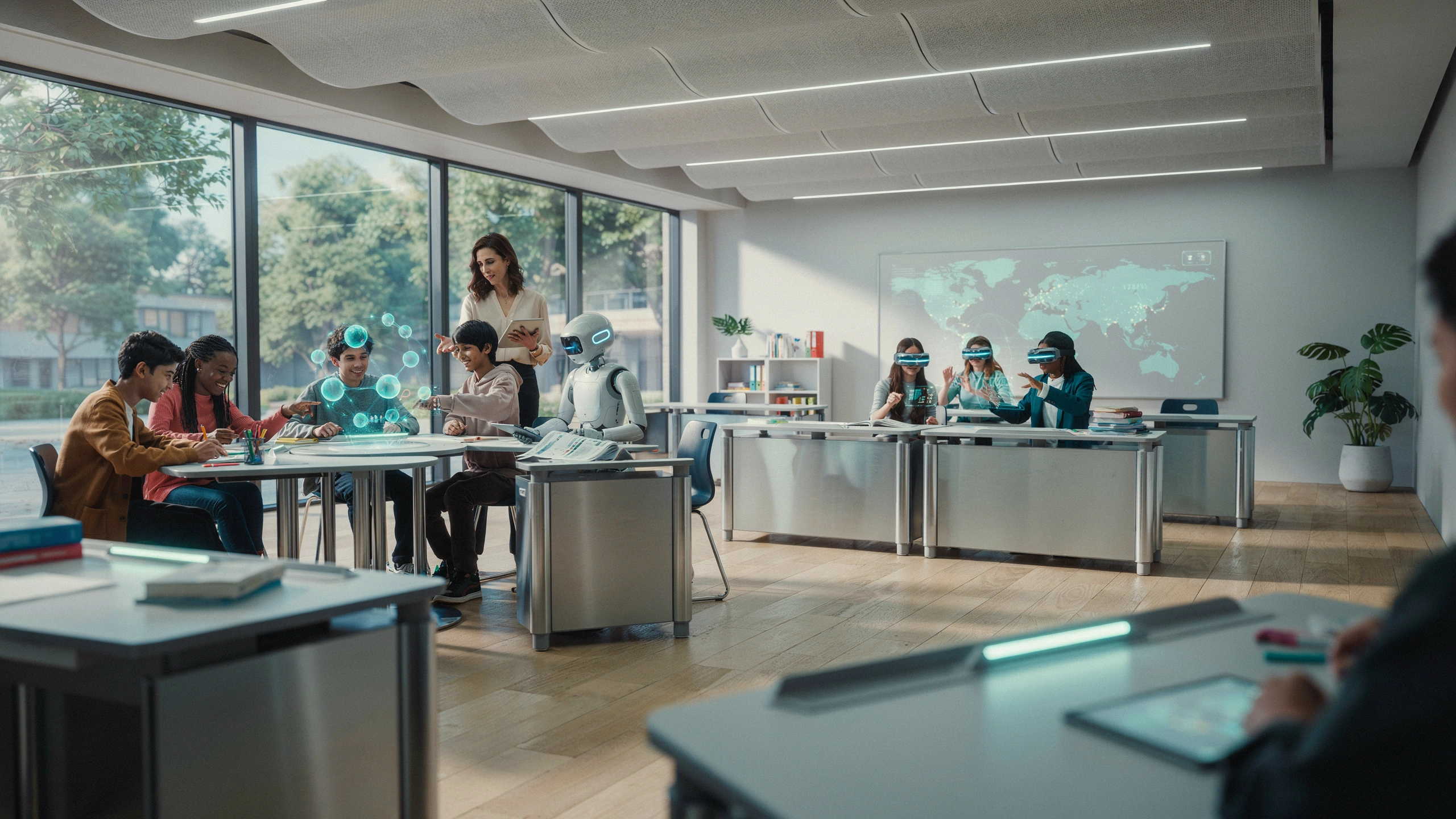
Education is evolving faster than ever before. Advances in technology, changes in workforce demands, and a growing understanding of how students learn are transforming classrooms around the world. Schools are moving beyond traditional teaching methods to create learning environments that are more engaging, inclusive, and personalized.
The next decade will bring exciting opportunities for educators, students, and families. By understanding these emerging trends, schools can better prepare learners for a future filled with innovation, collaboration, and lifelong learning.
1. Personalized Learning Takes Center Stage
One of the biggest trends in education is personalized learning. Instead of using a one-size-fits-all approach, teachers are adapting lessons to meet each student’s unique needs, interests, and learning pace.
With digital learning platforms and adaptive technologies, students receive customized activities that help them master concepts before moving on. This approach increases confidence, improves academic performance, and encourages independent learning.
2. Artificial Intelligence Becomes a Learning Partner
Artificial Intelligence (AI) is becoming an important educational tool. AI-powered systems can provide instant feedback, generate practice exercises, identify learning gaps, and support teachers by automating administrative tasks.
Rather than replacing teachers, AI enhances their ability to focus on what matters most—building relationships, inspiring curiosity, and providing personalized support.
3. Hybrid and Flexible Learning Continues to Grow
The experience of remote learning has shown that education can happen anywhere. Many schools are now adopting hybrid learning models that combine face-to-face instruction with online learning.
Flexible learning allows students to access educational resources anytime, making it easier to review lessons, collaborate with classmates, and learn at their own pace.
4. Social-Emotional Learning Becomes Essential
Academic success is only one part of education. Schools are increasingly recognizing the importance of developing emotional intelligence, empathy, resilience, communication skills, and self-awareness.
Social-Emotional Learning (SEL) helps students manage emotions, solve conflicts peacefully, and build healthy relationships—skills that are valuable throughout life.
5. Technology Creates More Interactive Classrooms
Modern classrooms are becoming more interactive through smart boards, educational apps, virtual laboratories, and digital collaboration tools.
Emerging technologies such as Virtual Reality (VR) and Augmented Reality (AR) allow students to explore ancient civilizations, conduct science experiments safely, and visit distant planets without leaving the classroom.
6. Project-Based Learning Gains Popularity
Instead of memorizing facts for exams, students are increasingly learning through real-world projects.
Project-Based Learning encourages teamwork, creativity, research, communication, and critical thinking. Students solve authentic problems, design innovative solutions, and present their work to others, making learning more meaningful.
7. Digital Literacy Is a Core Skill
Today’s students must learn more than how to use technology—they must understand how to evaluate online information, protect their privacy, communicate responsibly, and recognize misinformation.
Digital literacy has become as important as reading, writing, and mathematics in preparing students for modern society.
8. Lifelong Learning Becomes the New Normal
Rapid technological change means that learning does not end with graduation. Individuals will need to continually update their skills throughout their careers.
Schools are beginning to foster a mindset of lifelong learning by teaching students how to learn independently, adapt to change, and embrace continuous personal growth.
9. Greater Focus on Inclusion and Accessibility
Future classrooms are becoming more inclusive by ensuring that every student, regardless of ability or background, has equal opportunities to succeed.
Assistive technologies, accessible learning materials, differentiated instruction, and universal design principles are helping schools create environments where all learners can thrive.
10. Sustainability Education Expands
Climate change and environmental challenges are encouraging schools to integrate sustainability into the curriculum.
Students learn about renewable energy, biodiversity, conservation, recycling, and responsible citizenship while participating in projects that improve their communities and protect the environment.
Challenges Ahead
While these trends offer exciting possibilities, they also present important challenges:
- Ensuring equal access to technology.
- Training teachers to use new educational tools effectively.
- Protecting student privacy and data security.
- Maintaining meaningful human interaction in technology-rich classrooms.
- Reducing educational inequalities between different communities.
Addressing these challenges will require collaboration among educators, governments, technology companies, and families.
Conclusion
The future of education is becoming more personalized, technology-driven, collaborative, and student-centered. Emerging trends such as artificial intelligence, hybrid learning, project-based instruction, social-emotional learning, and digital literacy are reshaping how students learn and how teachers teach.
As education continues to evolve, the ultimate goal remains unchanged: helping every learner reach their full potential. By embracing innovation while preserving the essential human connection between teachers and students, schools can prepare the next generation to succeed in an ever-changing world.
The classrooms of tomorrow will not simply teach knowledge—they will develop adaptable, creative, compassionate, and lifelong learners ready to meet the challenges and opportunities of the future.