
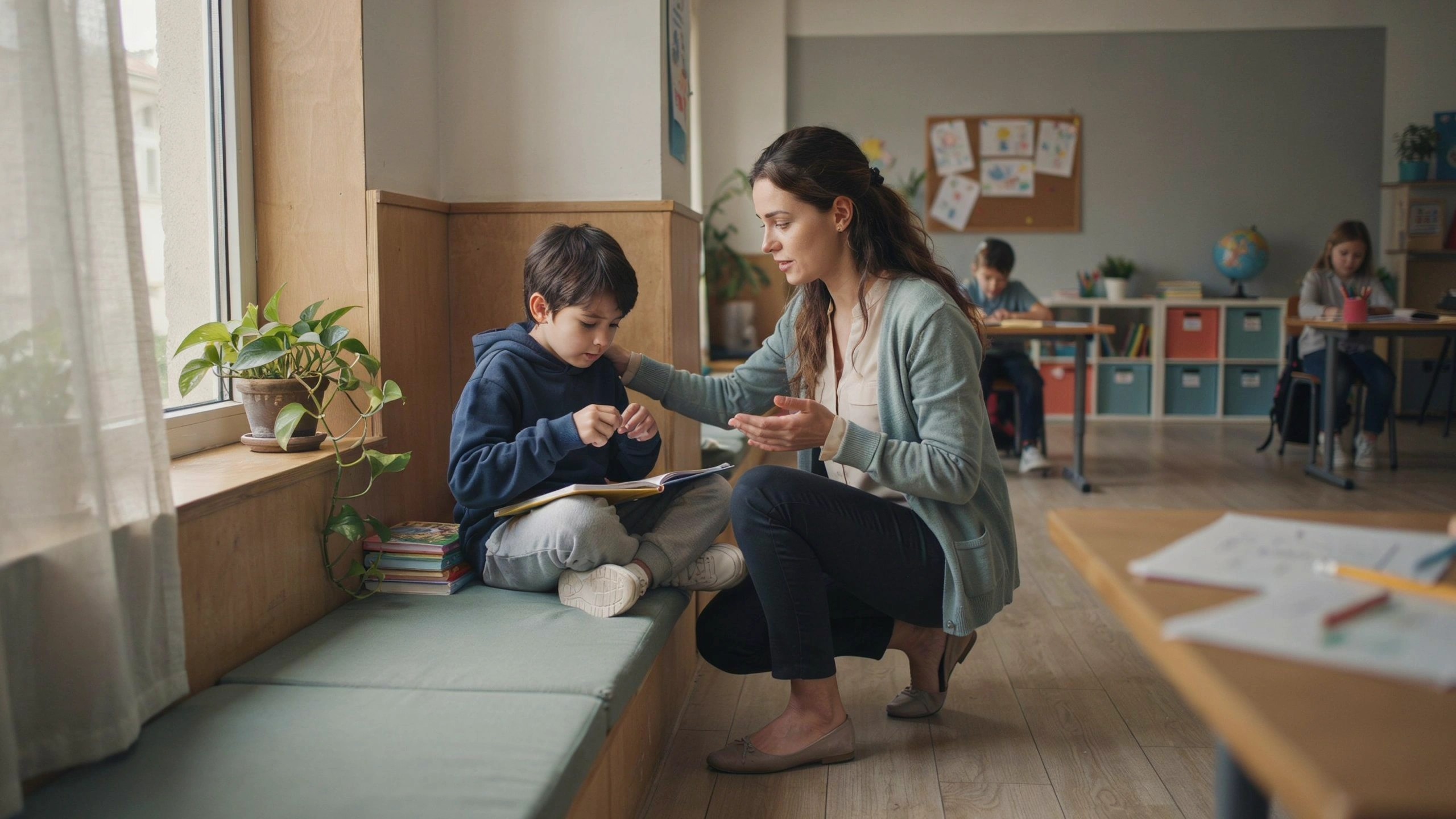
Introduction
Students with Attention-Deficit/Hyperactivity Disorder (ADHD) often face challenges that extend beyond attention and hyperactivity. Many also experience anxiety and stress, especially when they struggle to keep up with classroom expectations, manage assignments, or cope with social situations.
Anxiety can make it even harder for students with ADHD to focus, regulate emotions, and perform academically. Fortunately, teachers can make a significant difference by creating a classroom environment that promotes safety, predictability, and emotional well-being.
This article explores practical classroom strategies that help reduce anxiety and stress while supporting the academic and personal growth of students with ADHD.
Understanding the Link Between ADHD and Anxiety
Although ADHD and anxiety are different conditions, they often occur together.
Students with ADHD may become anxious because they:
- Forget assignments.
- Have difficulty staying organized.
- Worry about making mistakes.
- Receive frequent corrections.
- Struggle with social interactions.
- Feel overwhelmed by large tasks.
Over time, repeated challenges may lower self-confidence and increase emotional stress.
Recognizing these feelings is the first step toward providing effective support.
1. Create a Predictable Classroom Routine
Predictability helps students feel safe and prepared.
Teachers can reduce anxiety by:
- Following consistent daily routines.
- Displaying visual schedules.
- Explaining changes in advance.
- Beginning and ending lessons in familiar ways.
When students know what to expect, they can focus more on learning and less on uncertainty.
2. Give Clear and Simple Instructions
Complex or lengthy instructions can overwhelm students with ADHD.
Instead:
- Give one direction at a time.
- Use simple language.
- Write instructions on the board.
- Check for understanding before beginning the activity.
Breaking tasks into manageable steps helps students feel more confident and reduces stress.
3. Break Large Assignments Into Smaller Tasks
Long projects can seem impossible for anxious students.
Teachers can divide assignments into smaller milestones.
Example:
Instead of assigning a complete research project at once:
- Choose a topic.
- Gather information.
- Create an outline.
- Write one section at a time.
- Edit the final draft.
Each completed step builds confidence and reduces feelings of being overwhelmed.
4. Encourage Positive Self-Talk
Students with ADHD sometimes develop negative thoughts such as:
- “I always fail.”
- “I’m not smart enough.”
- “I’ll never finish.”
Teachers can encourage healthier thinking by modeling positive language.
Examples:
- “Mistakes help us learn.”
- “Progress is more important than perfection.”
- “Let’s focus on one step at a time.”
Positive self-talk helps students develop resilience.
5. Provide a Calm Learning Environment
The physical classroom can influence stress levels.
Teachers can reduce anxiety by:
- Keeping the classroom organized.
- Limiting unnecessary noise.
- Reducing visual clutter.
- Providing quiet workspaces when possible.
- Maintaining a calm tone of voice.
A peaceful environment helps students concentrate more effectively.
6. Use Positive Reinforcement
Students with ADHD often hear more criticism than encouragement.
Positive reinforcement helps reduce anxiety by recognizing effort rather than only results.
Teachers can praise:
- Persistence.
- Improvement.
- Responsibility.
- Kindness.
- Organization.
- Participation.
For example:
“I noticed how carefully you followed today’s instructions. Excellent work.”
Positive feedback strengthens confidence and motivation.
7. Allow Short Movement Breaks
Physical movement helps reduce both stress and restlessness.
Teachers can include:
- Stretching.
- Deep breathing.
- Short walks.
- Classroom exercises.
- Brain breaks.
Movement allows students to release tension before returning to academic tasks.
8. Teach Relaxation Techniques
Simple relaxation strategies can help students manage anxiety independently.
Examples include:
Deep Breathing
Students slowly inhale through the nose and exhale through the mouth.
Progressive Muscle Relaxation
Students gently tighten and relax different muscle groups.
Mindfulness Activities
Students spend a few moments focusing on breathing or observing their surroundings.
Practicing these techniques regularly helps students remain calm during stressful situations.
9. Promote a Supportive Classroom Culture
Students are less anxious when they feel accepted and respected.
Teachers can encourage:
- Kindness.
- Cooperation.
- Respect for differences.
- Teamwork.
- Inclusive classroom discussions.
Bullying or teasing should be addressed immediately to maintain emotional safety.
10. Offer Flexible Ways to Demonstrate Learning
Some students experience anxiety during traditional tests.
Teachers can provide alternative assessment methods such as:
- Oral presentations.
- Visual projects.
- Group assignments.
- Practical demonstrations.
- Digital presentations.
Flexible assessments allow students to demonstrate their knowledge without unnecessary stress.
11. Help Students Develop Problem-Solving Skills
Instead of solving every problem for students, teachers can guide them through a problem-solving process.
Ask questions like:
- What is the challenge?
- What are your possible solutions?
- Which solution seems best?
- What can you try first?
This approach builds confidence and independence.
12. Maintain Strong Communication with Families
Parents can provide valuable information about a child’s emotional needs and successful coping strategies.
Regular communication allows teachers and families to:
- Share observations.
- Celebrate progress.
- Address concerns early.
- Maintain consistent support.
Working together helps students feel secure in both home and school environments.
Common Mistakes to Avoid
Teachers should avoid:
- Publicly criticizing students.
- Comparing students with classmates.
- Giving too many instructions at once.
- Using punishment as the primary response to mistakes.
- Ignoring signs of emotional distress.
A supportive approach encourages growth rather than fear.
Conclusion
Reducing anxiety and stress in students with ADHD is an essential part of creating an effective learning environment. Through predictable routines, positive reinforcement, clear instructions, movement opportunities, relaxation techniques, and strong teacher-student relationships, educators can help students feel safe, capable, and motivated.
When anxiety decreases, students are better able to focus, participate, solve problems, and enjoy learning.
A classroom that nurtures emotional well-being is one where students with ADHD can build confidence, overcome challenges, and achieve lasting success.