
Introduction
Academic achievement is an important goal of education, but success in school also depends on strong social skills. Students with Attention-Deficit/Hyperactivity Disorder (ADHD) may experience challenges in building friendships, working in groups, communicating effectively, and managing emotions during social interactions.
These difficulties are often linked to impulsivity, inattention, emotional regulation, and executive functioning rather than a lack of interest in making friends. Fortunately, social skills can be taught, practiced, and strengthened through everyday classroom experiences.
By intentionally incorporating social learning into daily activities, teachers can help students with ADHD develop communication, cooperation, empathy, and self-confidence while creating a more positive classroom community.
Why Social Skills Matter
Social skills help students:
- Build healthy friendships.
- Work successfully in teams.
- Resolve conflicts peacefully.
- Express thoughts respectfully.
- Understand others’ feelings.
- Participate confidently in classroom activities.
Strong social skills contribute not only to academic success but also to emotional well-being and lifelong personal development.
Social Challenges Experienced by Students with ADHD
Students with ADHD may experience difficulties such as:
- Interrupting conversations.
- Speaking before thinking.
- Missing social cues.
- Difficulty taking turns.
- Becoming frustrated during disagreements.
- Struggling to maintain friendships.
- Misunderstanding others’ intentions.
These behaviors are usually connected to ADHD symptoms rather than intentional misbehavior.
Teachers who understand these challenges can provide supportive guidance rather than punishment.
1. Model Positive Social Behavior
Children learn by observing adults.
Teachers should consistently model:
- Active listening.
- Respectful communication.
- Patience.
- Kindness.
- Cooperation.
- Problem-solving.
Students are more likely to imitate positive behaviors when they see them demonstrated regularly.
2. Teach Social Skills Explicitly
Social skills should be taught just like reading or mathematics.
Teachers can introduce lessons on:
- Greeting others politely.
- Listening without interrupting.
- Sharing ideas respectfully.
- Asking for help.
- Giving compliments.
- Managing disagreements.
Direct instruction helps students understand what appropriate social behavior looks like.
3. Use Role-Playing Activities
Role-playing provides a safe environment to practice social situations.
Students can act out scenarios such as:
- Joining a group activity.
- Resolving a disagreement.
- Asking a classmate for help.
- Apologizing after making a mistake.
- Welcoming a new student.
After each activity, the class can discuss what worked well and how communication could improve.
4. Encourage Cooperative Learning
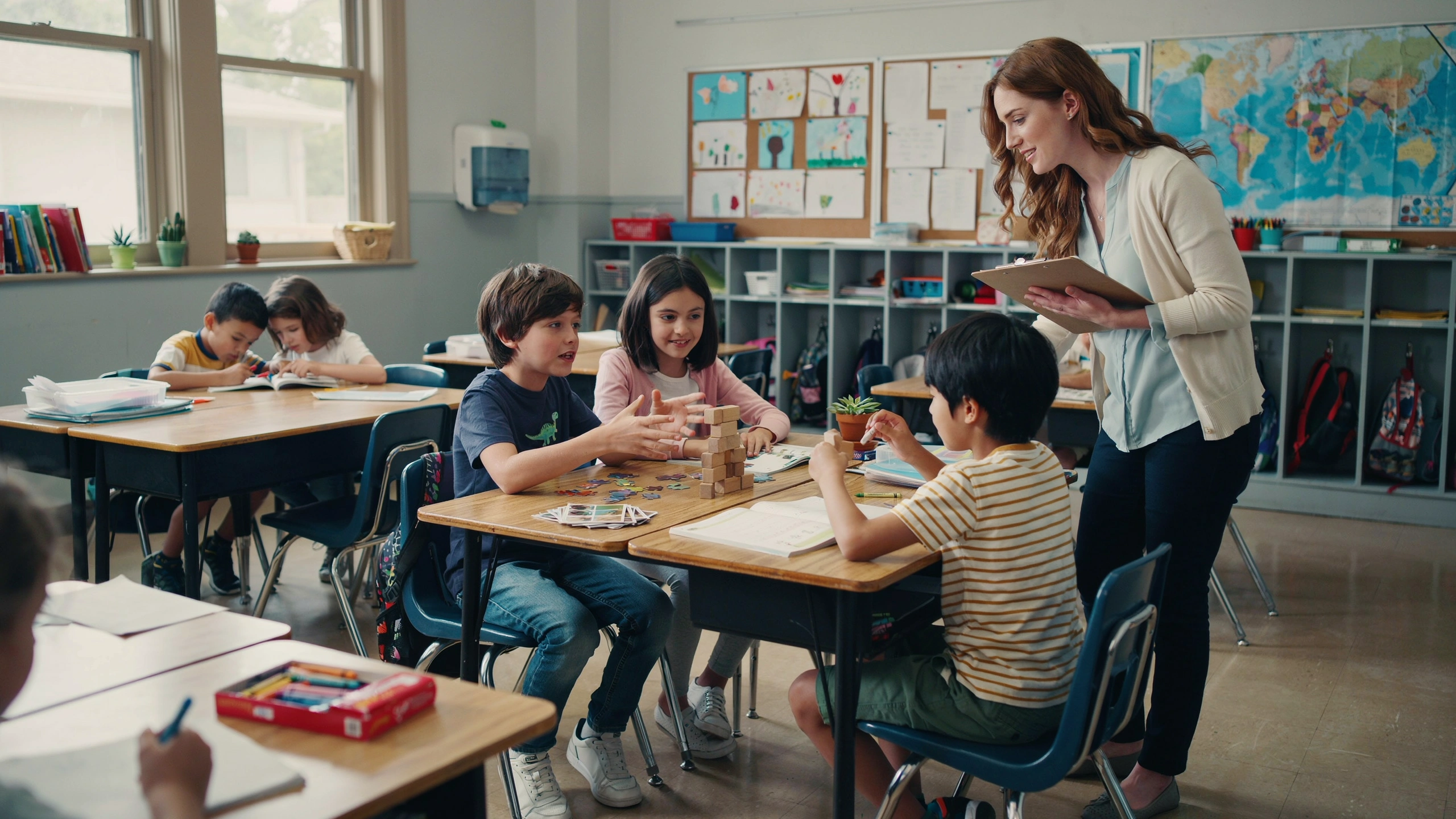
Group activities allow students to practice social skills naturally.
Examples include:
- Team projects.
- Science experiments.
- Reading partners.
- Problem-solving challenges.
- Collaborative art activities.
Teachers should clearly define each student’s role to encourage participation and reduce confusion.
5. Teach Active Listening
Listening is an essential social skill that many students with ADHD find challenging.
Teachers can encourage active listening by asking students to:
- Look at the speaker.
- Wait until the speaker finishes.
- Think before responding.
- Ask questions for clarification.
- Summarize what they heard.
Practicing these habits improves communication and reduces misunderstandings.
6. Teach Emotional Regulation
Managing emotions is closely connected to successful social interactions.
Teachers can help students learn to:
- Recognize their emotions.
- Identify emotional triggers.
- Use calming strategies.
- Express feelings respectfully.
- Solve problems before reacting impulsively.
Simple techniques such as deep breathing or counting to ten can help students respond more calmly.
7. Reinforce Positive Social Behaviors
Positive reinforcement encourages students to repeat appropriate interactions.
Teachers can praise behaviors such as:
- Sharing materials.
- Waiting patiently.
- Helping classmates.
- Taking turns.
- Solving conflicts peacefully.
For example:
“I noticed how patiently you listened to your partner’s ideas. That showed great respect.”
Specific feedback helps students understand successful social behaviors.
8. Use Classroom Meetings
Regular classroom meetings provide opportunities to discuss:
- Cooperation.
- Respect.
- Friendship.
- Conflict resolution.
- Classroom responsibilities.
Students learn to express opinions, listen to others, and solve problems together.
These meetings also strengthen the classroom community.
9. Encourage Peer Support
Positive peer relationships can improve both social and academic success.
Teachers can encourage:
- Peer mentoring.
- Learning partners.
- Cooperative games.
- Mixed-ability groups.
Supportive classmates provide positive role models and opportunities to practice social skills.
10. Teach Problem-Solving Strategies
Conflicts are a natural part of school life.
Teachers can teach a simple problem-solving process:
- Identify the problem.
- Stay calm.
- Think of possible solutions.
- Choose the best solution.
- Reflect on the outcome.
Learning this process helps students manage disagreements more independently.
11. Create an Inclusive Classroom Environment
Students with ADHD are more likely to develop positive relationships when they feel accepted.
Teachers can promote inclusion by:
- Respecting individual differences.
- Preventing bullying.
- Encouraging kindness.
- Celebrating diversity.
- Providing equal opportunities for participation.
A welcoming classroom benefits every student.
12. Partner With Families
Parents play an important role in reinforcing social skills at home.
Teachers and families can work together by:
- Sharing successful strategies.
- Discussing social goals.
- Celebrating progress.
- Practicing communication skills in different settings.
Consistency between home and school strengthens learning.
Common Mistakes to Avoid
When teaching social skills, teachers should avoid:
- Publicly criticizing students for social mistakes.
- Assuming students already know appropriate behaviors.
- Comparing students with their peers.
- Ignoring positive interactions.
- Expecting immediate perfection.
Social development requires patience, repetition, and encouragement.
Benefits of Strong Social Skills
Students with ADHD who develop strong social skills are more likely to:
- Build lasting friendships.
- Participate actively in class.
- Work effectively in teams.
- Develop self-confidence.
- Reduce behavioral challenges.
- Improve emotional well-being.
- Experience greater academic success.
Social competence supports success both inside and outside the classroom.
Conclusion
Teaching social skills through everyday classroom activities helps students with ADHD build meaningful relationships, improve communication, and develop emotional resilience. By modeling positive behavior, providing structured practice, encouraging cooperation, and reinforcing successful interactions, teachers create learning environments where every student can grow socially as well as academically.
Social skills are not learned overnight—they develop through daily practice, guidance, and positive experiences.
When classrooms intentionally teach empathy, cooperation, and respectful communication, students with ADHD gain the confidence and skills needed to build strong relationships and succeed throughout life.