
Introduction
For many students with Autism Spectrum Disorder (ASD), the classroom environment can have a significant impact on their ability to learn, communicate, and participate. While some students easily adapt to traditional classrooms, others may experience difficulties because of sensory differences related to sounds, lights, movement, textures, or crowded spaces.
A sensory-friendly learning environment helps reduce unnecessary stress and creates conditions where autistic students can focus, engage, and develop their abilities. By understanding sensory needs and making thoughtful adjustments, educators can create classrooms that support not only students with autism but all learners.
1. Understanding Sensory Processing in Autism
Sensory processing refers to the way the brain receives, organizes, and responds to information from the senses.
The main sensory systems include:
- Visual system: processing light, colors, and movement.
- Auditory system: responding to sounds and voices.
- Tactile system: experiencing touch and textures.
- Vestibular system: processing balance and movement.
- Proprioceptive system: understanding body position and pressure.
Many autistic students experience sensory differences, meaning they may react more strongly or less strongly than others to sensory information.
2. Sensory Challenges Students with Autism May Experience
Sensory experiences can affect learning, behavior, and emotional regulation.
Sensory Overload
Some students may become overwhelmed by:
- Loud classroom discussions.
- Sudden noises.
- Bright fluorescent lights.
- Strong smells.
- Busy classroom decorations.
- Large groups of people.
When sensory input becomes too intense, students may experience:
- Stress.
- Anxiety.
- Difficulty concentrating.
- Need to escape the situation.
Sensory Seeking Behaviors
Some autistic students may seek additional sensory input through:
- Movement.
- Touching objects.
- Repetitive actions.
- Making sounds.
These behaviors may help them regulate their emotions and attention.
3. Why Sensory-Friendly Classrooms Matter
A sensory-friendly classroom supports students by:
Reducing Anxiety
When students feel comfortable in their environment, they are more prepared to learn.
Improving Concentration
Reducing distractions allows students to focus better on academic tasks.
Supporting Emotional Regulation
Sensory tools can help students manage stress and remain engaged.
Increasing Independence
Students learn strategies to recognize and manage their own sensory needs.
4. Creating a Sensory-Friendly Classroom Environment
Teachers can make simple changes that have a significant impact.
a. Organizing the Physical Space
A well-organized classroom can reduce confusion and stress.
Helpful strategies include:
- Creating clear learning areas.
- Keeping materials organized.
- Reducing unnecessary visual clutter.
- Labeling classroom resources.
- Providing predictable seating arrangements.
A structured environment helps students understand where activities happen.
b. Creating a Quiet Area
A quiet space gives students a place to calm down when they feel overwhelmed.
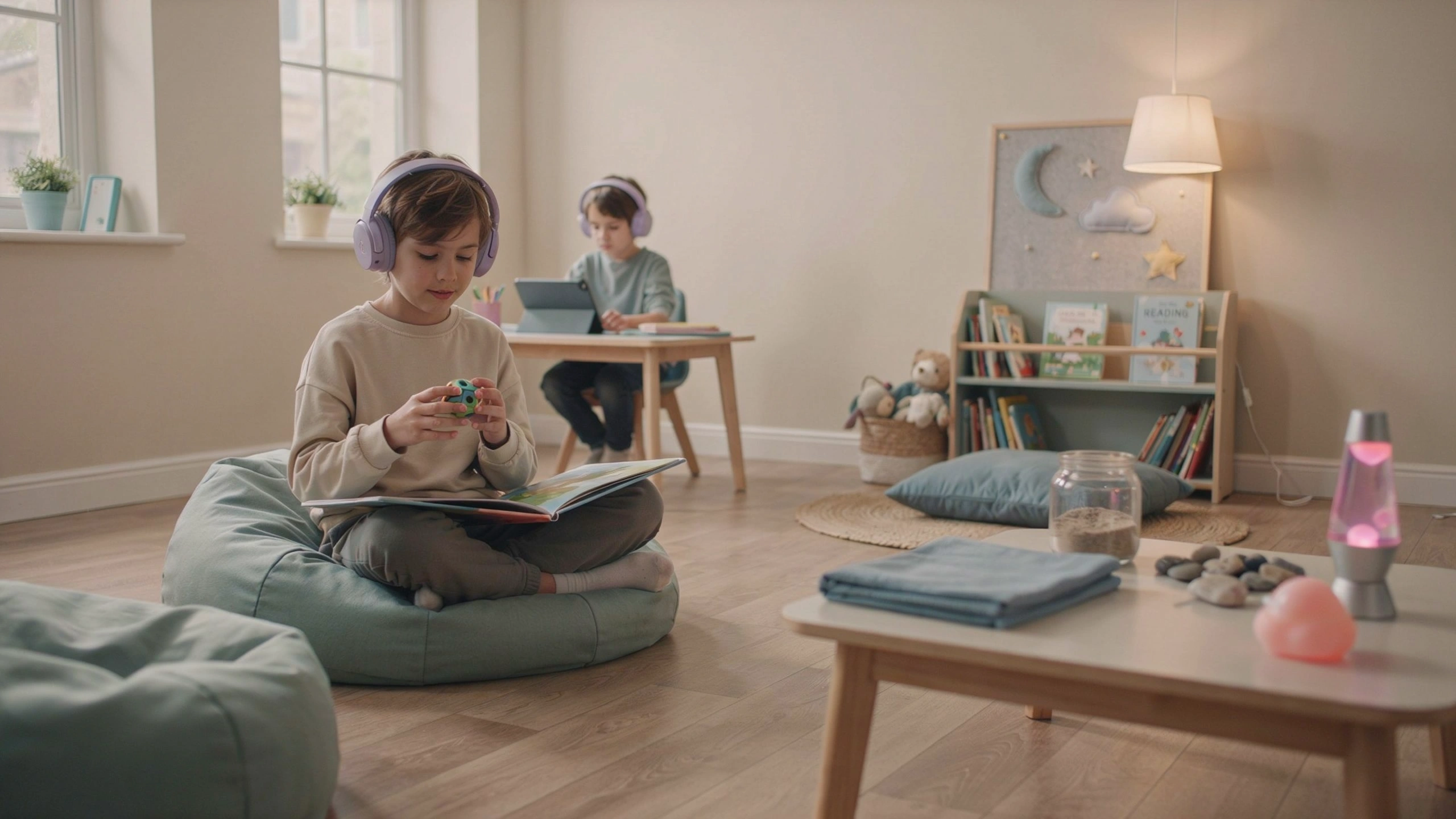
A sensory-friendly corner may include:
- Comfortable seating.
- Noise-reduction headphones.
- Books.
- Calm activities.
- Visual relaxation tools.
This area should not be used as punishment. It should be a supportive place for self-regulation.
c. Managing Classroom Noise
Noise is one of the most common sensory challenges.
Teachers can:
- Reduce unnecessary background sounds.
- Give warnings before loud activities.
- Allow students to use headphones when appropriate.
- Create quiet working periods.
Simple changes can make the classroom more comfortable.
d. Adjusting Lighting
Some autistic students are sensitive to bright lights.
Possible solutions include:
- Using natural light when possible.
- Avoiding flickering lights.
- Allowing students to sit away from strong light sources.
- Using softer classroom lighting.
5. Using Sensory Tools to Support Learning
Sensory tools can help students maintain attention and emotional balance.
Examples include:
- Fidget tools.
- Stress balls.
- Weighted items.
- Movement breaks.
- Sensory cushions.
- Noise-canceling headphones.
These tools should be introduced carefully and used according to individual needs.
6. Incorporating Movement Opportunities
Many autistic students benefit from regular movement.
Teachers can include:
- Stretching activities.
- Short movement breaks.
- Classroom jobs involving physical activity.
- Standing work options.
Movement can improve:
- Attention.
- Energy regulation.
- Participation.
7. Supporting Transitions Between Activities
Changes can be difficult for some autistic learners.
Teachers can make transitions easier by:
- Using visual schedules.
- Giving advance warnings.
- Using timers.
- Explaining what will happen next.
Example:
“In five minutes, we will finish reading and begin mathematics.”
Predictability reduces stress.
8. Teaching Students About Their Sensory Needs
Students can gradually learn to understand their own sensory preferences.
Teachers can encourage students to identify:
- What sounds bother them.
- What helps them concentrate.
- When they need a break.
- Which tools support them.
Developing self-awareness promotes independence.
9. Working with Families and Specialists
Families and specialists can provide important information about sensory needs.
Collaboration may involve:
- Sharing successful strategies.
- Understanding sensory triggers.
- Creating consistent approaches between home and school.
Occupational therapists can also provide guidance on sensory support strategies.
10. Benefits for All Students
A sensory-friendly classroom is not only beneficial for autistic students.
It can help:
- Students with attention difficulties.
- Students experiencing anxiety.
- Young learners who need structure.
- Students who learn better in calm environments.
Features such as clear organization, predictable routines, and quiet spaces improve learning for everyone.
11. Avoiding Common Mistakes
When creating sensory-friendly environments, educators should avoid:
Assuming Every Autistic Student Has the Same Needs
Sensory preferences vary greatly.
Using Sensory Tools Without Purpose
Tools should support learning, not become distractions.
Removing All Challenges
The goal is not to eliminate every sensory experience but to help students develop effective coping strategies.
Conclusion
Sensory-friendly learning environments play an important role in helping students with autism succeed at school. By understanding sensory differences, organizing classrooms thoughtfully, providing appropriate tools, and supporting emotional regulation, educators can create spaces where students feel safe and ready to learn.
An inclusive classroom recognizes that learning does not happen in the same way for everyone. When schools adapt environments to meet diverse needs, autistic students have greater opportunities to participate, develop confidence, and achieve their goals.