
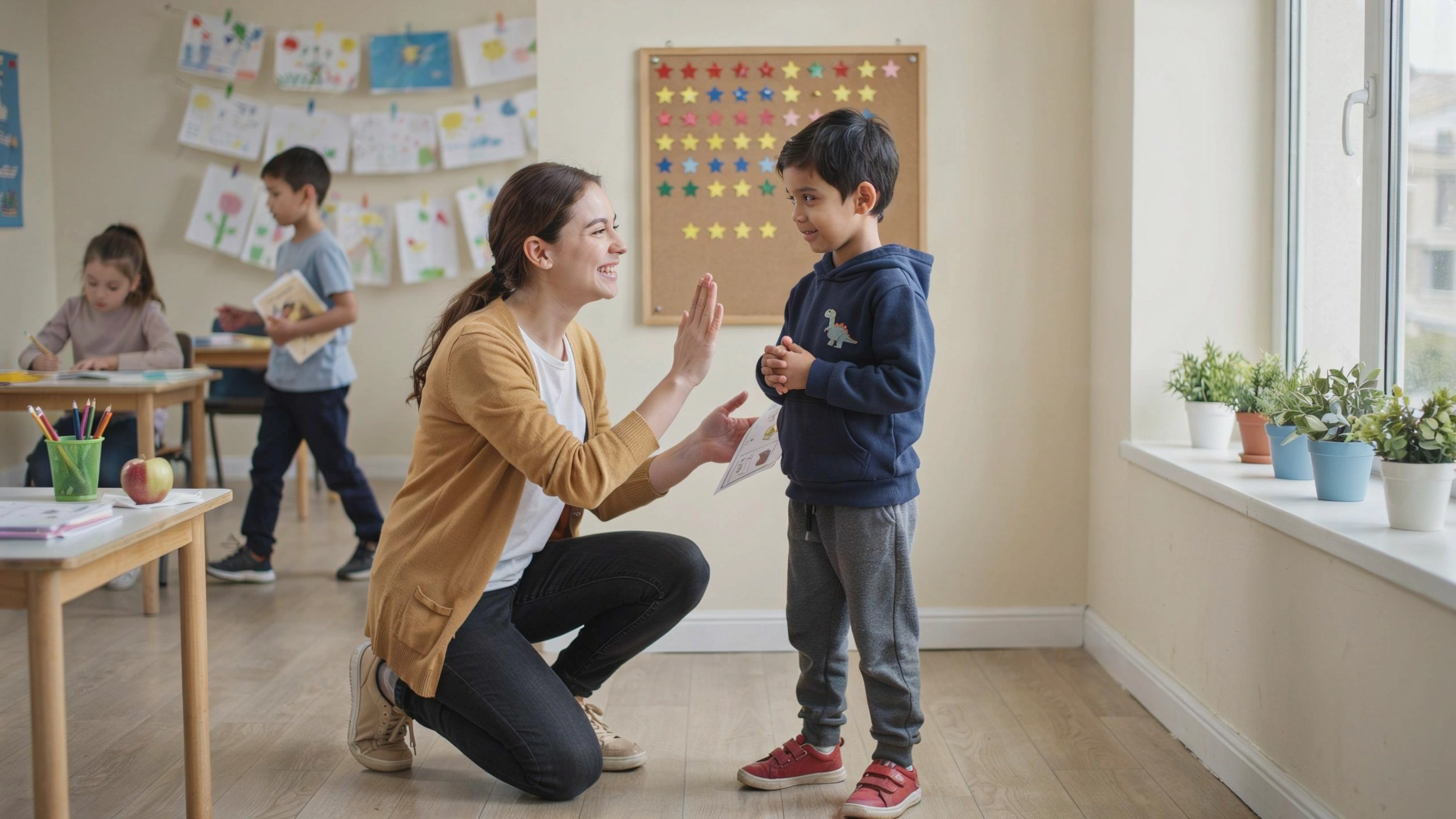
Introduction
Creating a supportive learning environment is essential for helping students with Autism Spectrum Disorder (ASD) reach their full potential. Many autistic students benefit from teaching approaches that recognize their efforts, encourage positive behaviors, and build confidence.
Positive reinforcement is one of the most effective strategies used in autism education. It focuses on rewarding desired behaviors and skills, helping students understand expectations and become more motivated to participate in learning activities.
Positive reinforcement is not about controlling students; it is about recognizing success, encouraging growth, and creating positive learning experiences.
1. What Is Positive Reinforcement?
Positive reinforcement is a teaching strategy where a desirable consequence is provided after a specific behavior occurs, increasing the likelihood that the behavior will happen again.
In simple terms:
Student demonstrates a positive behavior → Student receives encouragement or reward → Student is more likely to repeat the behavior.
Example:
A student raises their hand before speaking.
Teacher says:
“Great job waiting for your turn!”
The student learns that this behavior is valued.
2. Why Is Positive Reinforcement Important for Students with Autism?
Students with autism may experience challenges related to:
- Communication.
- Social interaction.
- Emotional regulation.
- Understanding expectations.
- Adapting to classroom routines.
Positive reinforcement helps by:
Building Confidence
Recognizing achievements helps students feel capable and successful.
Increasing Motivation
Students are more likely to participate when they understand the benefits of their efforts.
Teaching New Skills
Reinforcement helps students learn:
- Academic skills.
- Communication skills.
- Social behaviors.
- Independence skills.
Reducing Frustration
When students receive clear feedback, they better understand what is expected.
3. Types of Positive Reinforcement
Positive reinforcement can take different forms depending on the student’s preferences and needs.
a. Verbal Praise
Words of encouragement are simple but powerful.
Examples:
- “Excellent work!”
- “You tried very hard.”
- “Great job following instructions.”
- “I like how you asked for help.”
Specific praise is more effective than general praise.
Instead of:
“Good job.”
Say:
“Good job organizing your materials before starting the activity.”
b. Social Reinforcement
Many students appreciate positive social responses.
Examples:
- Smiles.
- High-fives.
- Applause.
- Positive attention.
- Encouraging comments.
c. Tangible Rewards
Some students may respond well to concrete rewards.
Examples:
- Stickers.
- Tokens.
- Small prizes.
- Preferred activities.
These should be used carefully and combined with natural motivation.
d. Activity-Based Reinforcement
Students can earn opportunities to participate in preferred activities.
Examples:
- Extra drawing time.
- Computer activity.
- Playing a favorite game.
- Choosing a classroom activity.
4. Identifying What Motivates Each Student
A key principle of positive reinforcement is understanding individual preferences.
Not all students are motivated by the same things.
A teacher may discover that a student enjoys:
- Music.
- Animals.
- Technology.
- Art.
- Social interaction.
- Specific games.
Using personal interests makes reinforcement more meaningful.
5. Using Positive Reinforcement to Teach Academic Skills
Positive reinforcement can support learning in many subjects.
Reading
Example:
A student completes a reading activity.
Teacher provides:
“You focused on the story and answered the questions carefully. Excellent work!”
Mathematics
Example:
A student completes a challenging problem.
Teacher reinforces:
“You kept trying even when it was difficult. That shows persistence.”
Writing
Example:
A student writes several sentences independently.
Teacher recognizes:
“You organized your ideas clearly. Well done!”
6. Supporting Communication Through Reinforcement
Positive reinforcement encourages students to communicate.
Examples:
A student uses a communication device to request help.
Teacher responds:
“Great communication! You told me exactly what you needed.”
This encourages future communication attempts.
7. Encouraging Social Skills
Social behaviors can also be strengthened through positive reinforcement.
Examples:
When a student:
- Shares materials.
- Waits for their turn.
- Greets classmates.
- Participates in group work.
The teacher can provide immediate positive feedback.
Example:
“You waited patiently for your classmate. That was very respectful.”
8. Reinforcing Independence Skills
Positive reinforcement helps students become more independent.
Skills may include:
- Organizing school materials.
- Completing routines.
- Managing personal tasks.
- Asking for assistance appropriately.
Example:
A student prepares their desk without help.
Teacher says:
“You organized everything by yourself. Great independence!”
9. The Importance of Consistency
For reinforcement to be effective, it should be:
Immediate
Feedback should happen soon after the behavior.
Clear
Students should understand what behavior is being recognized.
Consistent
Teachers and caregivers should use similar approaches.
Appropriate
Rewards should match the student’s age and preferences.
10. Avoiding Common Mistakes
Educators should avoid:
Only Focusing on Problems
Students need to hear about what they do well.
Using Rewards Without Teaching Skills
Reinforcement should support learning, not replace instruction.
Comparing Students
Every student has individual goals and progress.
Ignoring Small Improvements
Small steps are important achievements.
11. Positive Reinforcement and Emotional Well-Being
A classroom based on encouragement helps students develop:
- Self-esteem.
- Confidence.
- Trust.
- Motivation.
- A positive attitude toward learning.
Students who feel valued are more likely to engage and take risks.
12. Working with Families
Positive reinforcement strategies are more effective when school and home use similar approaches.
Families can support by:
- Recognizing achievements.
- Encouraging independence.
- Celebrating progress.
- Sharing successful strategies with teachers.
Consistency creates stronger learning outcomes.
13. Moving Toward Self-Motivation
The long-term goal of reinforcement is to help students become internally motivated.
Over time, teachers can gradually reduce external rewards and encourage students to experience satisfaction from:
- Learning.
- Achievement.
- Independence.
- Personal growth.
Conclusion
Positive reinforcement is a powerful approach in autism education because it focuses on strengths, progress, and possibilities. By recognizing students’ efforts and celebrating achievements, educators can create classrooms where autistic learners feel confident and motivated.
When used thoughtfully, positive reinforcement helps students develop academic abilities, communication skills, social behaviors, and independence. More importantly, it builds a foundation of trust and encouragement that allows every learner to succeed.