
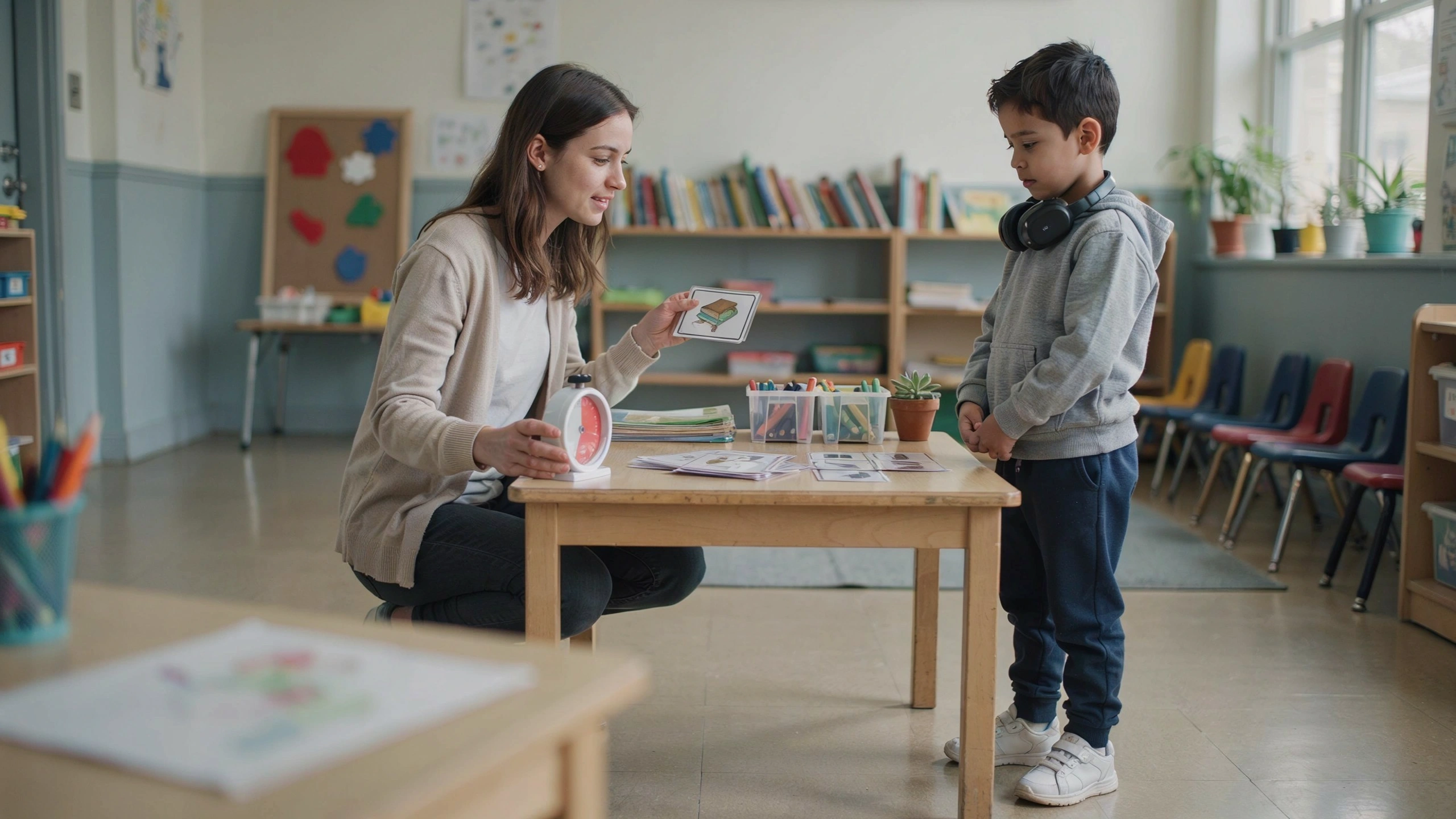
Introduction
Transitions are a natural part of every school day. Moving from one activity to another, changing classrooms, ending a preferred activity, or adapting to unexpected changes can be challenging for many students with Autism Spectrum Disorder (ASD).
For some autistic learners, transitions may create stress because they involve uncertainty, changes in routine, and shifting attention from one task to another. However, with appropriate strategies and support, students can learn to manage transitions more successfully and develop greater independence.
Helping students transition confidently is not about avoiding all changes; it is about teaching them the skills and providing the tools they need to handle changes effectively.
1. Understanding Why Transitions Can Be Difficult for Autistic Students
Transitions require several skills at the same time:
- Stopping a current activity.
- Accepting a change.
- Understanding what happens next.
- Preparing mentally for a new task.
- Managing emotions.
Some autistic students may experience difficulties because of:
A Need for Predictability
Many autistic learners feel more comfortable when they know what to expect. Unexpected changes may create anxiety.
Example:
A student expects mathematics after reading, but a surprise school event changes the schedule.
Difficulty Shifting Attention
Moving from a preferred activity to a less preferred one can be challenging.
Example:
Stopping a computer game to begin writing work.
Sensory Challenges
Transitions often involve:
- Moving through crowded hallways.
- Loud noises.
- Different environments.
These sensory changes can increase stress.
2. The Importance of Preparing Students for Transitions
Preparation reduces uncertainty and helps students feel more in control.
Teachers can prepare students by explaining:
- What will happen.
- When the change will occur.
- What activity comes next.
- What is expected.
Example:
“In five minutes, we will finish the art activity and begin reading.”
This gives the student time to prepare.
3. Using Visual Supports for Successful Transitions
Visual tools are especially helpful for many autistic students.
Visual Schedules
A visual schedule shows the order of activities.
Example:
🌞 Arrival
↓
📖 Reading
↓
➕ Mathematics
↓
🍎 Break
↓
🎨 Art
Students can see what is happening now and what comes next.
Transition Cards
Teachers can use cards showing:
➡️ “Next activity”
⏰ “Time to finish”
🎒 “Pack your bag”
These reminders make changes clearer.
First-Then Boards
First-Then boards show the relationship between tasks.
Example:
First: Finish worksheet
Then: Play with blocks
This helps students understand expectations.
4. Giving Transition Warnings
Sudden changes can be stressful. Warnings help students prepare.
Teachers can use:
Time Warnings
Examples:
- “Ten minutes left.”
- “Five minutes until cleanup.”
- “One minute before we move.”
Visual Timers
Timers allow students to see how much time remains.
They help develop:
- Time awareness.
- Preparation skills.
- Independence.
5. Creating Consistent Transition Routines
A predictable transition routine helps students know what to do.
Example:
End of Activity Routine:
- Put materials away.
- Check the schedule.
- Move to the next area.
- Begin the new activity.
Repeating the same steps builds confidence.
6. Teaching Transition Skills Explicitly
Transitions are skills that can be taught.
Teachers can practice:
- How to stop an activity.
- How to organize materials.
- How to move calmly.
- How to ask for help.
Role-playing and practice activities can make transitions easier.
Example:
Before a classroom change, students practice:
“When the bell rings, I put my book away and walk to my next class.”
7. Supporting Difficult Transitions
Some transitions may be harder than others.
Teachers can identify:
- Which activities are difficult to leave.
- Which times of day create stress.
- What triggers frustration.
Possible solutions:
Offer Choices
Choices provide a sense of control.
Example:
“Would you like to put your notebook away first or your pencil case?”
Use Preferred Activities as Motivation
A challenging transition can be followed by a preferred activity.
Example:
“After we finish the group activity, you can choose a reading book.”
Provide Extra Support When Needed
Some students may need:
- Adult guidance.
- Visual reminders.
- Additional preparation time.
8. Encouraging Independence During Transitions
The ultimate goal is for students to manage transitions independently.
Teachers can gradually reduce support:
Beginning:
Teacher gives direct instructions.
Next:
Student follows a visual schedule.
Later:
Student checks the schedule independently.
This gradual approach builds confidence.
9. Managing Unexpected Changes
Although routines are helpful, unexpected events happen.
Teachers can teach flexibility by:
- Practicing small changes.
- Using social stories.
- Explaining reasons for changes.
- Showing alternative plans.
Example:
“The playground is closed today, so we will have indoor games instead.”
10. Using Technology to Support Transitions
Technology can provide additional support.
Examples:
- Digital schedules.
- Reminder apps.
- Visual timers.
- Tablet-based communication tools.
Students can use technology to:
- Check routines.
- Receive reminders.
- Prepare for changes.
11. Collaboration Between School and Family
Consistency between home and school helps students develop transition skills.
Families and teachers can share:
- Successful strategies.
- Difficult situations.
- Useful visual supports.
The same approach across environments makes learning easier.
12. Celebrating Successful Transitions
Positive feedback encourages students to continue developing skills.
Examples:
“You moved to the next activity calmly. Great job!”
“You checked your schedule by yourself. That shows independence.”
Recognizing progress builds motivation.
Conclusion
Transitions are an important part of learning and daily life. For autistic students, changes between activities may require additional support, but with the right strategies, they can become more manageable.
Visual supports, predictable routines, advance warnings, explicit teaching, and positive encouragement help students develop confidence and independence.
A successful transition is not simply moving from one activity to another; it is an opportunity for students to practice flexibility, self-management, and lifelong skills.